







Misconfigured TLS Certificate Exposes North Korean Hangro VPN Infrastructure
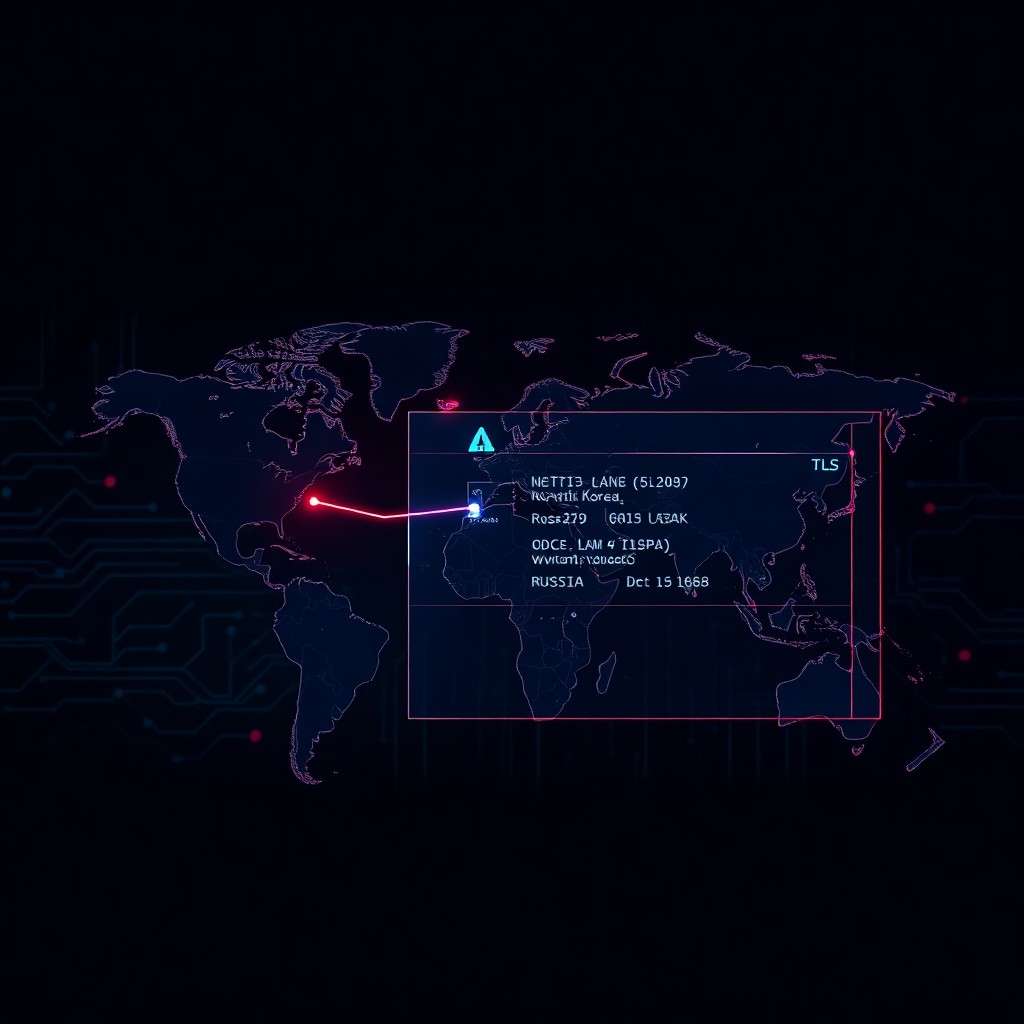
A TLS certificate misconfiguration has exposed critical infrastructure details of North Korea’s Hangro VPN platform, revealing servers located in both North Korea and Russia. The certificate leak disclosed internal IP addresses and domain names that should have remained private, providing unprecedented visibility into VPN infrastructure used by North Korean officials and trade representatives. This exposure offers valuable intelligence for tracking state-sponsored activities and highlights the risks of improper certificate management even within highly controlled networks.
Introduction
North Korea’s digital infrastructure rarely surfaces in public view, making any exposure of its internal systems particularly significant. Recently, security researchers discovered a misconfigured TLS certificate associated with the Hangro VPN platform—a service believed to be used by North Korean officials and trade representatives operating both domestically and abroad.
The certificate, issued for the Hangro VPN service, contained Subject Alternative Names (SANs) and internal network details that revealed the geographical distribution of servers across North Korea and Russia. This leak provides cybersecurity teams and threat intelligence analysts with actionable indicators to track North Korean state infrastructure and potential command-and-control channels.
The incident underscores how even nations with stringent operational security can fall victim to basic configuration errors, and demonstrates why monitoring certificate transparency logs remains a crucial intelligence-gathering technique.
Background & Context
North Korea operates one of the most isolated and controlled internet infrastructures globally. The country maintains a limited number of IP address ranges and carefully manages external connectivity through a small number of international links. Most North Korean internet activity routes through Chinese telecommunications infrastructure, though the country has developed alternative pathways through Russia.
The Hangro VPN platform appears to serve as a secure communications channel for North Korean personnel operating outside the country, particularly trade representatives and diplomatic staff who require secure connections back to domestic networks. VPN infrastructure is critical for maintaining confidential communications between overseas personnel and headquarters in Pyongyang.
TLS certificates have increasingly become a valuable source of infrastructure intelligence. Certificate Transparency (CT) logs, which publicly record all issued certificates to prevent fraudulent issuance, inadvertently create a searchable database of domains and infrastructure. When organizations include internal hostnames or IP addresses in certificates—particularly in the SAN field—they unintentionally broadcast their internal network topology to anyone monitoring these logs.
Previous incidents have shown that nation-state actors and intelligence services regularly make operational security mistakes in certificate management, providing adversaries with reconnaissance data that would otherwise require active network scanning or intrusion.
Technical Breakdown
The exposed certificate contained several critical information disclosures within its metadata fields. The Subject Alternative Names section included multiple entries that revealed:
- Internal IP addresses belonging to North Korean address space
- Server hostnames following internal naming conventions
- At least one server located within Russian IP ranges
- Domain names associated with the Hangro VPN platform
Certificate transparency logs show the certificate was issued by a certificate authority and recorded in public CT logs, where researchers discovered the anomalous entries. The inclusion of internal RFC 1918 private IP addresses or domestically-routed North Korean IPs in a publicly-facing certificate represents a fundamental configuration error.
The Russian infrastructure connection is particularly noteworthy. Analysis of the IP addresses suggests hosting within Russian telecommunications networks, indicating North Korea has established VPN egress points in Russia—likely to diversify routing beyond their traditional Chinese telecommunications dependencies.
The certificate’s Common Name and issuer details further confirmed its association with official North Korean infrastructure rather than third-party services. Cross-referencing the discovered IP addresses with known North Korean autonomous system numbers (ASNs) validated the attribution.
Researchers likely discovered this certificate through routine monitoring of CT logs using tools such as:
curl -s "https://crt.sh/?q=%.kp&output=json" | jq .

# Or using certstream for real-time monitoring
certstream --full | grep -i "hangro\|kp"
The certificate’s validity period and renewal patterns may also provide intelligence about operational timelines and infrastructure maintenance cycles.
Impact & Risk Assessment
This exposure carries several significant implications for different stakeholder groups:
For Intelligence Communities: The revealed infrastructure provides targetable IP addresses and domains for monitoring North Korean state communications. Security services can now track connections to these servers, potentially identifying personnel locations and communication patterns.
For Corporate Security Teams: Organizations should cross-reference the exposed IP addresses against their logs to identify any potential reconnaissance or intrusion attempts originating from these North Korean VPN egress points. Previous North Korean state-sponsored operations like the Lazarus Group have used state infrastructure for financially-motivated attacks against cryptocurrency exchanges and financial institutions.
For Regional Organizations: Entities in South Korea, Japan, and other Asia-Pacific nations should treat connections from these IPs as high-risk and apply enhanced scrutiny. North Korean cyber operations frequently target regional adversaries for espionage and disruption.
For Diplomatic Security: The revelation that North Korean officials rely on this VPN infrastructure provides counterintelligence opportunities. Monitoring these communication channels could reveal the locations and activities of North Korean representatives abroad.
The risk severity is elevated because VPN infrastructure often serves as a pivot point for lateral movement and command-and-control communications in advanced persistent threat campaigns.
Vendor Response
As of this publication, there has been no public statement from North Korean authorities regarding the certificate exposure. Given the country’s approach to information security and international communications, no official acknowledgment is expected.
The certificate authority that issued the certificate has not made any public statements, though certificate transparency logs are functioning as designed—the exposure resulted from the certificate applicant’s misconfiguration rather than CA failure.
Security researchers who discovered the exposure have shared findings through threat intelligence communities and integrated the indicators into commercial and open-source threat feeds.
Mitigations & Workarounds
Organizations should implement the following defensive measures:
Network-Level Blocking: Add the exposed IP addresses to deny lists on perimeter firewalls and web proxies:
# Example firewall rule (iptables)
iptables -A INPUT -s  -j DROP
iptables -A OUTPUT -d  -j DROP
Threat Intelligence Integration: Incorporate the exposed indicators into SIEM correlation rules and threat intelligence platforms. Tag these IPs with appropriate risk scores for North Korean state infrastructure.
Enhanced Monitoring: Configure alerts for any connection attempts to or from the identified infrastructure:
# Example Sigma rule concept
detection:
  selection:
    destination_ip:
      - ''
      - ''
  condition: selection
Email Security: Update email gateway filters to flag messages routing through the exposed infrastructure, particularly for organizations in sectors historically targeted by North Korean operations (cryptocurrency, finance, defense, media).
Detection & Monitoring
Security teams should implement comprehensive detection strategies:
Log Analysis: Search historical network flow data for connections to the exposed IP addresses:
# Example query for Zeek/Bro logs
cat conn.log | zeek-cut id.orig_h id.resp_h id.resp_p |
grep -E ''
Certificate Monitoring: Establish ongoing monitoring of certificate transparency logs for North Korean-related infrastructure:
# Pseudocode for CT monitoring
monitor_domains = ['.kp', 'hangro', 'dprk']
for cert in ct_log_stream:
    if any(domain in cert.domains for domain in monitor_domains):
        alert_security_team(cert)
Endpoint Detection: Configure EDR platforms to alert on communications with the identified infrastructure, particularly suspicious VPN client installations or configuration files containing the exposed domains.
DNS Monitoring: Track DNS queries for domains associated with the Hangro VPN platform, which may indicate reconnaissance or compromise.
Best Practices
This incident reinforces several critical security practices:
Certificate Hygiene: Never include internal IP addresses, hostnames, or infrastructure details in publicly-facing certificates. Use separate internal certificate authorities for internal services.
Pre-Issuance Review: Implement approval workflows requiring security team review before certificate issuance, particularly for sensitive infrastructure.
CT Log Monitoring: Regularly monitor certificate transparency logs for your own organization to detect misconfigurations before adversaries exploit them.
Network Segmentation: Assume that infrastructure details will eventually leak. Design networks with defense-in-depth so that infrastructure knowledge alone doesn’t compromise security.
Intelligence-Driven Defense: Maintain updated threat intelligence feeds and integrate geopolitical indicators into security monitoring programs.
For organizations managing sensitive infrastructure, consider using private CAs and avoiding public certificate authorities for internal systems that shouldn’t be externally accessible.
Key Takeaways
- A misconfigured TLS certificate exposed North Korea’s Hangro VPN infrastructure, including servers in North Korea and Russia
- The certificate contained internal IP addresses and domain names in its Subject Alternative Names field
- This infrastructure is believed to support communications for North Korean officials and trade representatives
- Security teams should block the exposed IPs and monitor for connections to this infrastructure
- Certificate transparency logs continue to be valuable sources of infrastructure intelligence
- Even nations with sophisticated operational security make basic configuration errors
- Organizations should review their own certificate issuance processes to prevent similar exposures
References
- Certificate Transparency Project: https://certificate.transparency.dev/
- crt.sh Certificate Search: https://crt.sh/
- MITRE ATT&CK – North Korean Groups: https://attack.mitre.org/groups/
- RFC 6962: Certificate Transparency
- North Korean Internet Infrastructure Analysis (Multiple OSINT sources)
Stay updated at https://cydhaal.com — Your Daily Dose of Cyber Intelligence.
📧 Subscribe to our newsletter at https://cydhaal.com/newsletter/