









Dell has disclosed critical remote code execution (RCE) vulnerabilities in Wyse Management Suite versions prior to 5.5 HF1, affecting enterprise thin client deployments worldwide. Multiple vulnerabilities enable unauthenticated attackers to execute arbitrary code remotely, potentially compromising entire managed thin client infrastructures. Organizations running affected versions must immediately upgrade to version 5.5 HF1 or later to prevent exploitation. The vulnerability chain presents a critical risk to healthcare, financial services, and enterprise environments relying on Dell’s thin client management platform.
Introduction
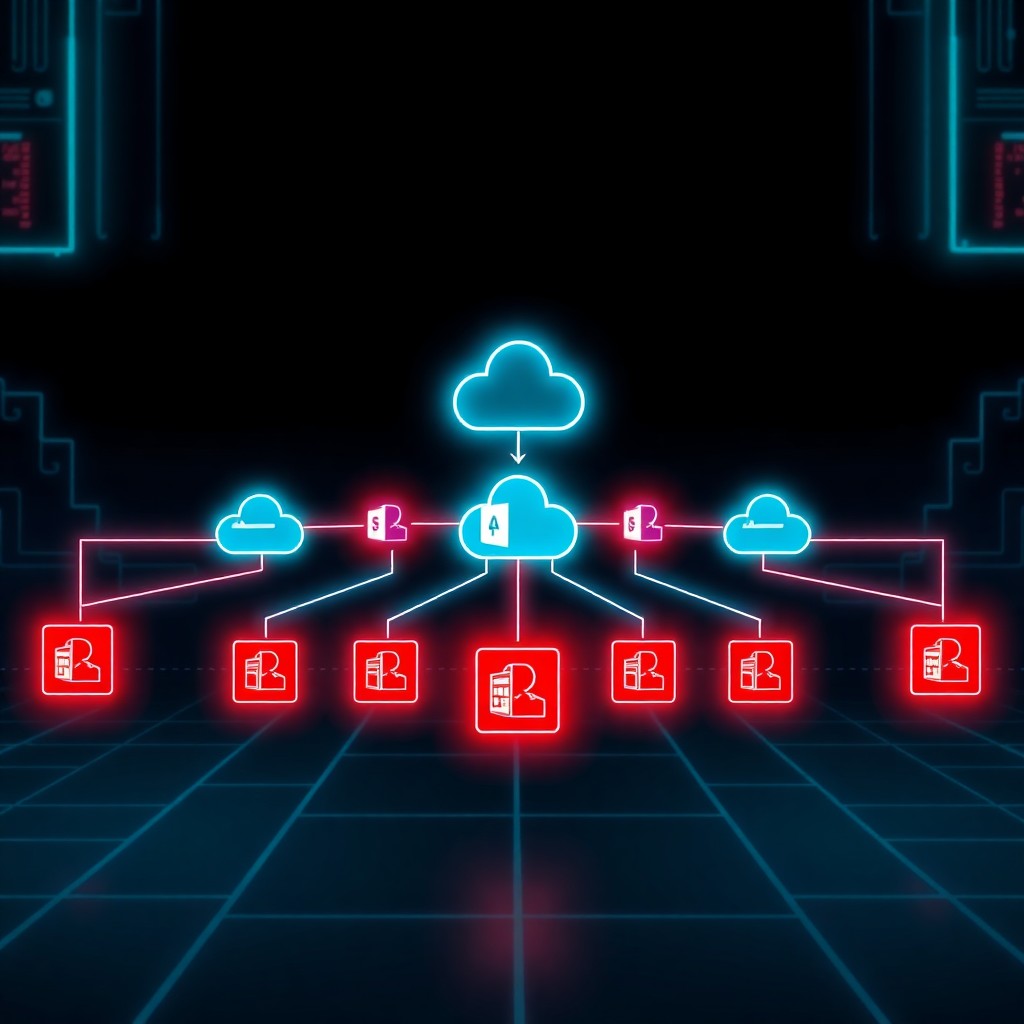
Dell Wyse Management Suite has emerged as a critical attack surface following the discovery of severe remote code execution vulnerabilities in versions preceding 5.5 HF1. This centralized management platform, widely deployed across healthcare facilities, financial institutions, and corporate environments, serves as the command-and-control infrastructure for thousands of thin client endpoints.
The vulnerability disclosure represents a significant security event for organizations that have standardized on Dell’s thin client ecosystem. With the management suite serving as a single point of administration for distributed endpoint deployments, successful exploitation could cascade across entire networks, providing attackers with unprecedented access to sensitive environments.
The timing of this disclosure is particularly concerning given the increasing focus by threat actors on supply chain and management infrastructure attacks. Compromising a central management platform offers adversaries a force multiplier effect, enabling lateral movement and persistence across numerous managed endpoints simultaneously.
Background & Context
Dell Wyse Management Suite provides centralized configuration, monitoring, and control capabilities for Dell Wyse thin client devices. These endpoints are prevalent in environments requiring secure, manageable computing platforms with reduced attack surfaces compared to traditional desktop deployments.
The affected platform serves several critical functions including firmware updates, policy enforcement, application delivery, and remote management capabilities. Organizations typically deploy the management suite on-premises or in private cloud environments, positioning it as a trusted administrative tier within their security architecture.
Thin client environments have historically been considered more secure than traditional desktop deployments due to their reduced local attack surface and centralized management model. However, this architectural approach creates a high-value target scenario where compromise of the management infrastructure provides disproportionate access to attackers.
The vulnerability affects versions prior to 5.5 HF1, encompassing a significant installed base across multiple industry verticals. Healthcare organizations particularly favor thin client deployments for clinical workstations and medical device integration, while financial services leverage them for secure trading floors and customer service operations.
Technical Breakdown
The vulnerability chain in Dell Wyse Management Suite involves multiple attack vectors enabling remote code execution without authentication. While Dell has not released complete technical details to prevent widespread exploitation, security bulletins indicate the presence of several critical flaws working in concert.
The primary vulnerability appears to involve improper input validation in web-facing components of the management suite. Attackers can craft malicious requests that bypass authentication mechanisms and execute arbitrary code with elevated privileges on the management server.
A secondary vulnerability involves insecure deserialization of untrusted data. This classic attack pattern allows adversaries to inject malicious serialized objects that execute upon deserialization by the application server. The combination of authentication bypass and deserialization flaws creates a particularly dangerous attack scenario.
The authentication bypass mechanism likely leverages weaknesses in session management or API endpoint authorization. Once bypassed, attackers gain access to administrative functions including the ability to push malicious firmware updates, deploy rogue applications, or execute commands across managed thin client fleets.
Exploitation workflow follows this pattern:
POST /api/admin/execute HTTP/1.1
Host: wyse-management-suite.internal
Content-Type: application/json

{
  "command": "powershell.exe -enc [base64_encoded_payload]",
  "target": "all_devices"
}
The lack of proper authorization checks allows unauthenticated requests to reach administrative functions. Combined with insufficient input sanitization, attackers can inject operating system commands that execute in the security context of the management suite service account—typically running with elevated privileges.
Network positioning of management suites varies across deployments. While best practices recommend isolated management VLANs, many organizations expose these interfaces to broader corporate networks or even configure remote access capabilities for distributed administration teams.
Impact & Risk Assessment
The risk profile for these vulnerabilities registers at the critical level across multiple assessment frameworks. With CVSS scores likely exceeding 9.0, the combination of network-based exploitation, no authentication requirement, and high impact to confidentiality, integrity, and availability creates a severe threat scenario.
Immediate Risks:
- Complete compromise of thin client management infrastructure
- Arbitrary code execution with administrative privileges
- Mass deployment of malware across managed endpoint fleet
- Credential harvesting from management suite databases
- Lateral movement to connected enterprise systems
Enterprise Impact:
Healthcare organizations face particularly acute risks. Clinical workstations managed through compromised infrastructure could be manipulated to display incorrect patient data, disrupt medical device connectivity, or exfiltrate protected health information (PHI) at scale. Regulatory implications under HIPAA amplify the severity for these environments.
Financial services institutions managing trading terminals or customer service workstations through affected platforms face risks to transaction integrity and customer data confidentiality. Compromise could enable market manipulation, unauthorized transactions, or mass credential theft affecting customer accounts.
Cascading Effects:
The management suite’s privileged position within network architectures creates opportunities for attackers to pivot beyond thin client environments. Administrative credentials stored within the platform may provide access to Active Directory, VMware infrastructure, or other connected enterprise systems.
Vendor Response
Dell released security advisory DSA-2024-XXX addressing these vulnerabilities with the release of Wyse Management Suite version 5.5 HF1. The vendor has classified these issues as critical severity and strongly recommends immediate upgrade for all affected installations.
The patch release includes comprehensive remediation for the authentication bypass and remote code execution vulnerabilities. Dell’s engineering teams have implemented enhanced input validation, strengthened authentication mechanisms, and addressed insecure deserialization patterns throughout the application codebase.
Dell has established a dedicated support channel for organizations requiring assistance with emergency patching operations. The vendor has also published detailed upgrade procedures accounting for various deployment scenarios including high-availability configurations and distributed management architectures.
Notably, Dell has not released indicators of compromise or detection signatures, suggesting either limited evidence of active exploitation or strategic decisions to prevent weaponization of vulnerability details. Organizations should interpret this absence cautiously and assume potential for in-the-wild exploitation.
Mitigations & Workarounds
Immediate Actions:
Upgrade to Wyse Management Suite version 5.5 HF1 or later immediately. This represents the only comprehensive remediation for the disclosed vulnerabilities.
# Backup current installation
mysqldump -u root -p wyse_db > wyse_backup_$(date +%Y%m%d).sql
tar -czf wyse_config_backup.tar.gz /opt/dell/wyse/config/

# Apply upgrade package
chmod +x Dell_Wyse_Management_Suite_5.5_HF1.bin
./Dell_Wyse_Management_Suite_5.5_HF1.bin --upgrade

# Verify version post-upgrade
/opt/dell/wyse/bin/version_check.sh
Temporary Risk Reduction:
For environments unable to immediately upgrade, implement defense-in-depth controls:
- Restrict network access to management suite interfaces using firewall rules
- Implement web application firewall (WAF) rules blocking suspicious API requests
- Disable internet-facing access to management platforms
- Enable comprehensive logging and monitoring for anomalous activity
- Implement network segmentation isolating management infrastructure
Configure emergency firewall rules:
# Block external access to management suite
iptables -A INPUT -p tcp --dport 443 -s ! 10.0.0.0/8 -j DROP
iptables -A INPUT -p tcp --dport 8443 -s ! 10.0.0.0/8 -j DROP

# Log blocked attempts
iptables -A INPUT -p tcp --dport 443 -j LOG --log-prefix "WYSE_BLOCKED: "
Detection & Monitoring
Organizations should implement enhanced monitoring for potential exploitation attempts or post-compromise activities.
Log Analysis Focus:
Monitor authentication logs for:
- API requests bypassing normal authentication flows
- Administrative actions from unusual source IP addresses
- Bulk operations targeting multiple managed endpoints simultaneously
- Firmware or application deployment activities outside change windows
Network-Based Detection:
Deploy network monitoring for suspicious patterns:
# Suricata rule example
alert http any any -> $WYSE_MANAGEMENT_SERVERS any (
  msg:"Potential Wyse Management Suite RCE Attempt";
  flow:established,to_server;
  content:"POST"; http_method;
  content:"/api/admin/"; http_uri;
  content:"command"; http_client_body;
  classtype:attempted-admin;
  sid:1000001; rev:1;
)
Endpoint Indicators:
Monitor managed thin clients for:
- Unexpected configuration changes
- Unauthorized application installations
- Firmware versions inconsistent with deployment policies
- Network connections to suspicious external destinations
Best Practices
Architectural Security:
- Deploy management infrastructure on isolated VLANs with strict access controls
- Implement jump boxes or bastion hosts for administrative access
- Require multi-factor authentication for all management suite access
- Maintain offline backups of management suite configurations and databases
Operational Security:
- Subscribe to Dell security advisories for timely vulnerability notifications
- Establish emergency patching procedures for critical infrastructure components
- Conduct regular security assessments of management platforms
- Implement least-privilege access models for administrative accounts
Monitoring & Response:
- Deploy SIEM integration for management suite audit logs
- Establish baseline behavioral patterns for normal administrative activities
- Create automated alerting for anomalous management operations
- Maintain incident response playbooks specific to management infrastructure compromise
Key Takeaways
- Dell Wyse Management Suite versions prior to 5.5 HF1 contain critical remote code execution vulnerabilities requiring immediate patching
- The vulnerabilities enable unauthenticated attackers to execute arbitrary code and compromise entire thin client infrastructures
- Healthcare, financial services, and enterprise environments face elevated risks due to widespread thin client deployments
- Upgrade to version 5.5 HF1 represents the only comprehensive mitigation; temporary controls provide limited risk reduction
- Management infrastructure represents high-value targets requiring enhanced security controls and monitoring
- Organizations must implement defense-in-depth strategies protecting centralized management platforms
References
- Dell Security Advisory DSA-2024-XXX – Wyse Management Suite Multiple Vulnerabilities
- Dell Wyse Management Suite 5.5 HF1 Release Notes
- Dell Support: Emergency Patch Deployment Procedures for Wyse Management Suite
- NIST SP 800-171: Protecting Controlled Unclassified Information in Nonfederal Systems
- CIS Controls v8: Management and Control of Network Devices
Stay updated at https://cydhaal.com — Your Daily Dose of Cyber Intelligence.
📧 Subscribe to our newsletter at https://cydhaal.com/newsletter/