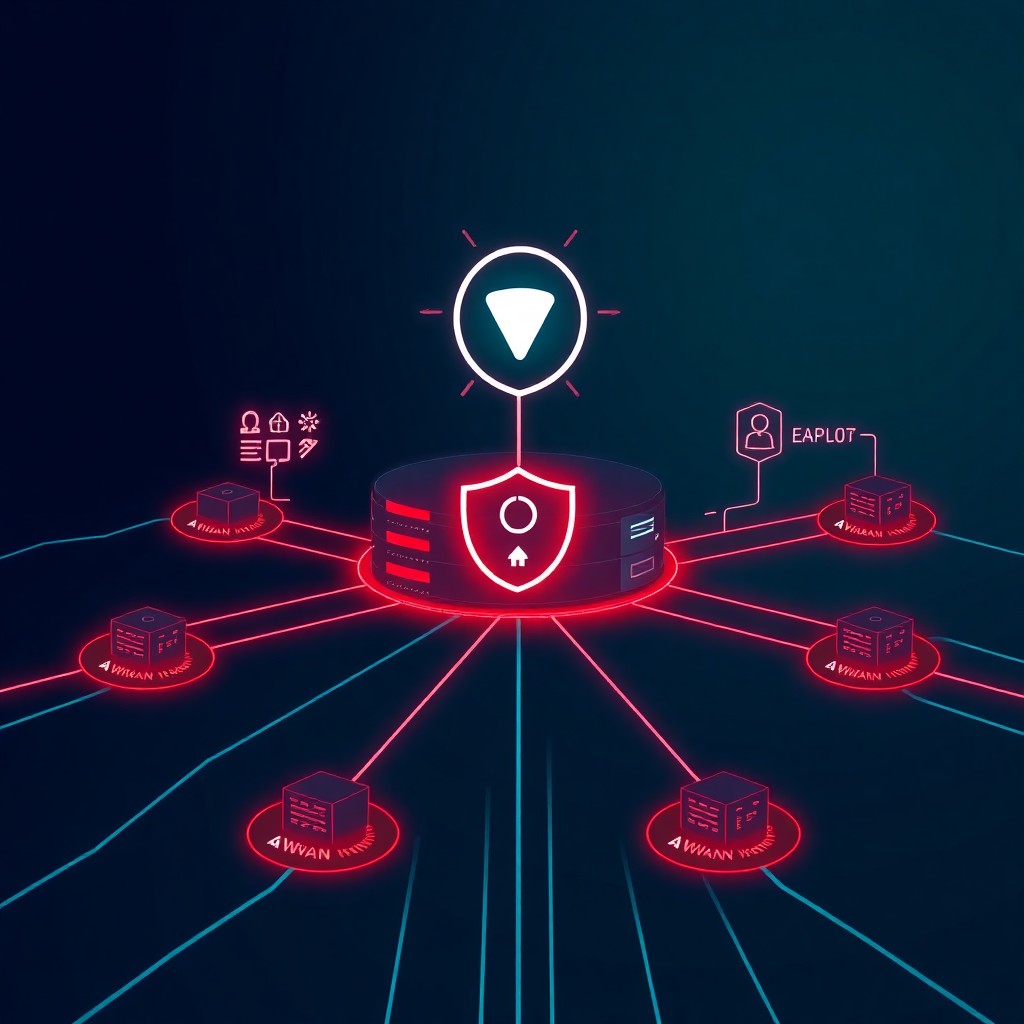










The Department of Homeland Security (DHS) has confirmed a security breach of the Homeland Security Information Network (HSIN), a critical platform used by federal, state, local, and private sector entities to share sensitive information. The breach potentially exposed communications, operational data, and intelligence shared among law enforcement, emergency management, and critical infrastructure partners across multiple sectors. This incident raises significant concerns about the security of inter-agency communication channels and could impact national security coordination efforts.
Introduction
In a significant cybersecurity incident affecting government operations, the Department of Homeland Security has acknowledged a breach of the Homeland Security Information Network (HSIN). This platform serves as a trusted information-sharing mechanism for over 70,000 users across various sectors including law enforcement, emergency services, critical infrastructure operators, and intelligence communities.
The breach represents a critical compromise of a system designed specifically for secure communication and coordination during emergencies, threat situations, and intelligence operations. HSIN facilitates real-time information exchange on terrorism, cybersecurity threats, natural disasters, and other homeland security matters, making its compromise particularly concerning for national security operations.
The confirmation comes amid increasing attacks on government infrastructure and raises questions about the security posture of platforms entrusted with sensitive, multi-jurisdictional information sharing.
Background & Context
HSIN was established in the aftermath of September 11, 2001, to address critical gaps in information sharing among federal, state, local, tribal, and territorial partners. The platform provides multiple Communities of Interest (COIs) tailored to specific sectors including:
- Law enforcement sensitive information exchange
- Critical infrastructure coordination (energy, healthcare, financial services)
- Emergency management and disaster response
- Cybersecurity threat intelligence
- Border security operations
- Counter-terrorism initiatives
The network operates at different classification levels, handling everything from Sensitive But Unclassified (SBU) information to Law Enforcement Sensitive (LES) data. Users include first responders, intelligence analysts, critical infrastructure owners, emergency managers, and private sector security personnel who rely on HSIN for situational awareness and coordinated response.
HSIN’s architecture connects thousands of organizations across all 50 states, territories, and major metropolitan areas, serving as a backbone for homeland security coordination. The platform includes document sharing, secure messaging, collaborative workspaces, and alert dissemination capabilities.
The breach of such a widely-used, trust-based system creates cascading security implications across multiple jurisdictions and sectors that depend on HSIN for operational coordination.
Technical Breakdown
While DHS has not released comprehensive technical details about the breach vector, preliminary information suggests the compromise involved unauthorized access to HSIN systems that potentially exposed:
Compromised Data Categories:
- User credentials and authentication information
- Shared intelligence reports and threat assessments
- Operational communications between agencies
- Critical infrastructure vulnerability assessments
- Emergency response plans and protocols
- Contact information for security personnel across sectors
Potential Attack Vectors:
The breach likely involved one or more of the following methods:
1. Credential compromise through phishing or social engineering
- Exploitation of web application vulnerabilities
- Insider threat or privileged access abuse
- Supply chain compromise affecting HSIN infrastructure
- API or integration point vulnerabilities
HSIN’s web-based architecture and the need to accommodate thousands of diverse users across various security environments create inherent security challenges. The platform must balance accessibility with security, often creating potential exposure points.
System Access Indicators:
# Indicators organizations should check for:
- Unusual login patterns from HSIN user accounts
- Access from unexpected geographic locations
- Downloaded datasets or bulk information retrieval
- Modified user permissions or added accounts
- Unusual API calls or data queries
The breach timeline remains unclear, but forensic investigations are examining system logs, access patterns, and data exfiltration indicators to determine the scope and duration of unauthorized access.
Impact & Risk Assessment
The HSIN breach carries profound implications across multiple dimensions:
National Security Impact:
- Exposure of ongoing investigations and operations
- Compromise of threat intelligence shared among agencies
- Revelation of security vulnerabilities in critical infrastructure
- Potential identification of confidential sources
- Disruption of trust-based information sharing
Operational Risks:
- Emergency response coordination could be compromised
- Law enforcement operations may be exposed to adversaries
- Critical infrastructure protection strategies revealed
- Inter-agency communication trust degraded
- Need to reassess and potentially relocate sensitive communications
Affected Sectors:
Over 70,000 users across multiple sectors face potential exposure:
- Federal law enforcement and intelligence agencies
- State and local police departments
- Emergency management organizations
- Energy sector operators
- Healthcare facility security personnel
- Financial services security teams
- Transportation system operators
Adversary Advantages:
Hostile actors with access to HSIN data gain:
- Insight into U.S. threat priorities and intelligence gaps
- Understanding of inter-agency coordination mechanisms
- Critical infrastructure vulnerability information
- Emergency response capabilities and limitations
- Law enforcement tactics and operational patterns
The risk severity rates as CRITICAL given the sensitive nature of information exchanged and the broad user base potentially affected.
Vendor Response
The Department of Homeland Security has taken several immediate actions following breach confirmation:
Official Statement:
DHS acknowledged the incident and stated that it has “initiated a comprehensive security review” of HSIN infrastructure and is working with the Cybersecurity and Infrastructure Security Agency (CISA) to investigate the full scope of the breach.
Immediate Actions:
- Forced password resets for all HSIN user accounts
- Enhanced monitoring of system access and user behavior
- Engagement of third-party forensic investigators
- Notifications to affected partner organizations
- Temporary suspension of certain high-sensitivity COIs pending security review
Coordination Efforts:
DHS is coordinating with:
- FBI for criminal investigation
- CISA for technical analysis and mitigation
- Intelligence Community for counterintelligence assessment
- Individual state and local agencies for impact evaluation
Communication Protocol:
DHS has established a dedicated communication channel for partner organizations to report suspicious activity and receive updates on the investigation. Individual notifications are being sent to organizations whose specific data may have been compromised.
The department has committed to transparency with partner organizations while balancing operational security requirements for the ongoing investigation.
Mitigations & Workarounds
Organizations and users affected by the HSIN breach should implement the following immediate mitigations:
Account Security:
# Immediate user actions:
- Change HSIN passwords immediately using strong, unique credentials
- Enable multi-factor authentication if available
- Review account activity logs for suspicious access
- Update recovery email addresses and security questions
- Check for unauthorized permission changes
Organizational Actions:
Priority 1 - Immediate:
- Reset all HSIN user credentials for your organization
- Review recent information shared via HSIN for sensitivity
- Assess operational impact of potential data exposure
- Implement alternative secure communication channels for critical operations
- Document what information may have been compromised
Priority 2 - Short-term:
- Re-evaluate need-to-know access for HSIN users
- Reduce number of users with access privileges
- Implement additional local logging of HSIN activities
- Review and update security incident response plans
- Conduct security awareness training on phishing/social engineering
Alternative Communication Channels:
Organizations should identify backup secure communication platforms for critical operations:
- Defense Information Systems Network (DISN) for DOD partners
- FBI CJIS systems for law enforcement coordination
- State and regional fusion centers
- Sector-specific ISACs (Information Sharing and Analysis Centers)
- Encrypted email and messaging platforms for tactical coordination
Information Damage Control:
1. Inventory information shared through HSIN in past 12 months
- Assess sensitivity and potential adversary value
- Notify parties mentioned in compromised communications
- Update operational security measures if tactics were discussed
- Revise plans or procedures that may have been exposed
Detection & Monitoring
Organizations should implement enhanced monitoring for indicators of compromise related to the HSIN breach:
User Activity Monitoring:
Monitor for:
  - Login attempts using old credentials
  - Access patterns inconsistent with user roles
  - Data access outside normal working hours
  - Geographic anomalies in access location
  - Multiple failed authentication attempts
  - Unusual download activity or bulk data access
Network Indicators:
# Monitor network traffic for:
suspicious_domains=(
"Domains mimicking HSIN login pages"
"Phishing infrastructure targeting HSIN users"
"Command and control infrastructure"
)
# Check for unusual outbound connections:
- Large data transfers to external destinations
- Connections to known malicious IP ranges
- DNS queries for suspicious domains
- Encrypted traffic to unusual destinations
Email Security:
Red flags for HSIN-related phishing:
- Emails requesting password resets or credential verification
- Messages claiming to be from DHS but using external domains
- Urgent requests for re-authentication
- Links to domains not matching official HSIN infrastructure
- Requests for additional sensitive information beyond HSIN scope
Compromise Indicators:
Organizations should watch for:
- Evidence of exposed operational plans being known to adversaries
- Targeted attacks exploiting information shared via HSIN
- Social engineering attempts using details from HSIN communications
- Media exposure of sensitive information shared through the platform
- Unusual interest or surveillance of facilities discussed in HSIN
SIEM Integration:
-- Sample detection query for HSIN-related activity
SELECT user_id, timestamp, source_ip, activity_type
FROM security_logs
WHERE (
  application = 'HSIN'
  AND (activity_type = 'LOGIN_SUCCESS'
  AND source_ip NOT IN (known_good_ips))
)
OR (
  failed_login_attempts > 5
  AND timeframe < '30 minutes'
)
ORDER BY timestamp DESC;
Best Practices
This incident highlights critical security practices for information-sharing platforms and their users:
For Platform Operators:
- Zero Trust Architecture: Implement continuous authentication and authorization validation rather than perimeter-based security
- Microsegmentation: Separate different communities of interest with strict access controls
- Enhanced Logging: Maintain comprehensive audit trails of all data access and user activities
- Anomaly Detection: Deploy behavioral analytics to identify unusual access patterns
- Encryption Everywhere: Implement end-to-end encryption for data in transit and at rest
For User Organizations:
- Principle of Least Privilege: Grant HSIN access only to personnel with genuine need-to-know
- Regular Access Reviews: Quarterly audits of who has access and why
- Security Training: Regular education on phishing, social engineering, and secure communication practices
- Alternative Channels: Maintain backup secure communication methods
- Information Classification: Carefully evaluate sensitivity before sharing via any platform
For Individual Users:
Security Checklist:
☐ Use strong, unique passwords for HSIN (20+ characters)
☐ Enable MFA wherever possible
☐ Never reuse HSIN credentials on other platforms
☐ Verify URL before entering credentials (https://share.dhs.gov)
☐ Report suspicious emails or access requests
☐ Log out after each session, especially on shared devices
☐ Keep recovery contacts current
☐ Review account activity regularly
Information Sharing Hygiene:
- Assume all shared information may eventually be compromised
- Use most restrictive sharing settings appropriate for the data
- Avoid sharing information that could endanger sources or methods
- Include data handling and dissemination restrictions
- Consider offline or in-person sharing for most sensitive intelligence
Incident Response Preparation:
Organizations should have plans for:
- Rapid credential rotation across platforms
- Alternative communication activation
- Assessment of information exposure impact
- Stakeholder notification procedures
- Operational security adjustments post-breach
Key Takeaways
The HSIN breach delivers several critical lessons for cybersecurity and information sharing:
- No Platform Is Immune: Even purpose-built secure systems face sophisticated threats and require constant security evolution
- Trust Requires Verification: Information-sharing platforms must implement robust authentication and continuous monitoring to maintain trustworthiness
- Defense in Depth: Organizations cannot rely solely on platform security but must implement additional local controls and monitoring
- Shared Risk: In collaborative platforms, security is only as strong as the weakest participant; comprehensive security awareness across all users is essential
- Communication Alternatives: Critical operations require backup communication channels in case primary systems are compromised
- Rapid Response: The ability to quickly assess exposure, notify affected parties, and adjust operations determines overall impact of breaches
- Transparency Matters: Prompt disclosure allows partner organizations to implement protective measures and mitigate downstream risks
- Security-Usability Balance: While accessibility is important for emergency coordination, security cannot be sacrificed for convenience
Organizations participating in information-sharing platforms must treat them as potential single points of failure and implement appropriate compensating controls within their own environments.
References
- Department of Homeland Security Official Statement on HSIN Incident
- CISA Alert: Securing Information Sharing Platforms
- HSIN Platform Security Documentation
- NIST SP 800-150: Guide to Cyber Threat Information Sharing
- Multi-State Information Sharing and Analysis Center (MS-ISAC) Advisory
- FBI Private Industry Notification: Information Sharing Platform Security
- DHS Privacy Impact Assessment for HSIN
- Government Accountability Office Report: Federal Information Sharing Systems
Stay updated at https://cydhaal.com — Your Daily Dose of Cyber Intelligence.
📧 Subscribe to our newsletter at https://cydhaal.com/newsletter/