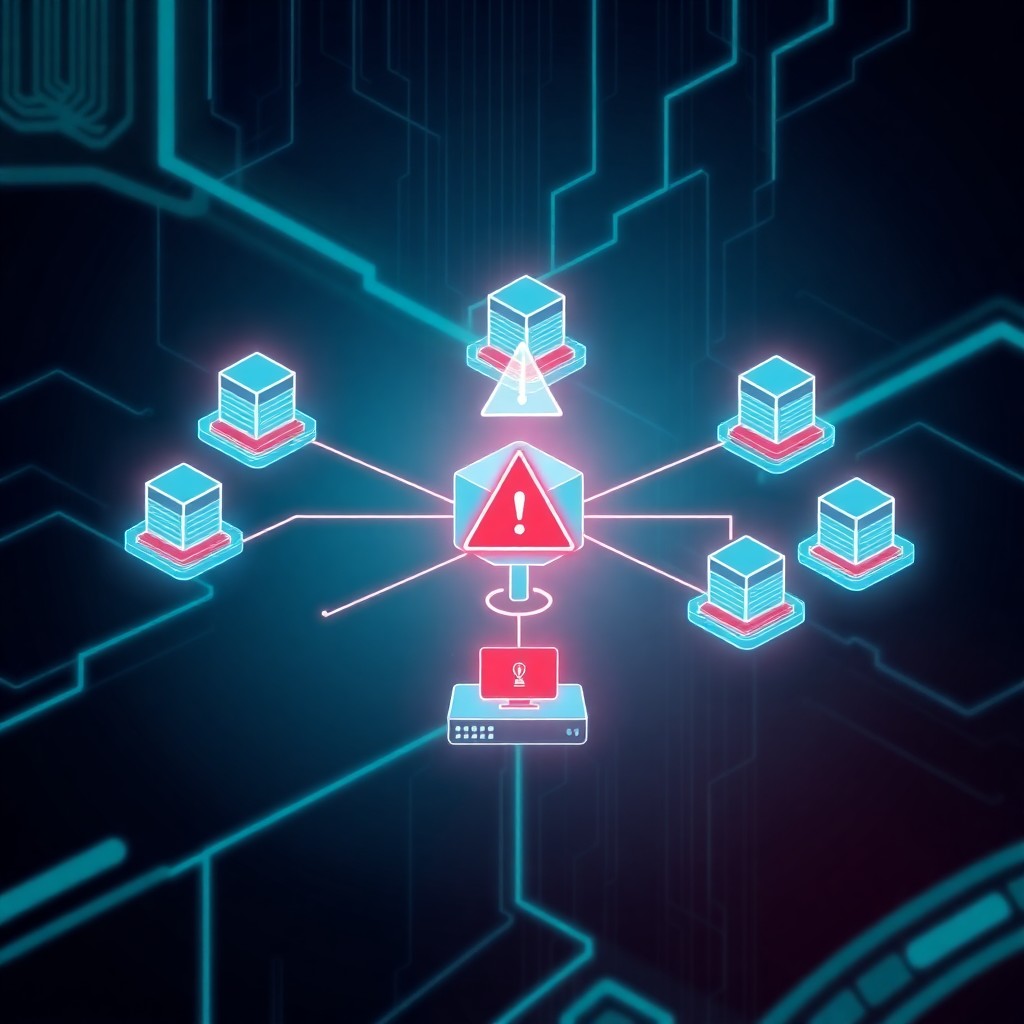









Silent Ransom Leverages Fast Flux Networks to Conceal Law Firm Extortion Operations
The Silent Ransom ransomware group has adopted fast flux networking techniques to hide their data leak sites targeting law firms. By rapidly rotating IP addresses through compromised botnets, the threat actors make their infrastructure resilient against takedown efforts while maintaining persistent access to extortion platforms. Law firms face heightened risk as attackers leverage fast flux to evade detection, complicate attribution, and sustain long-term campaigns against high-value legal sector targets.
Introduction
A sophisticated ransomware operation known as Silent Ransom has emerged with a troubling innovation: the use of fast flux networks to obscure their data leak sites specifically targeting law firms. This tactical evolution represents a significant challenge for law enforcement and security researchers attempting to dismantle ransomware infrastructure. Fast flux, a technique traditionally associated with phishing campaigns and botnet command-and-control, enables rapid IP address rotation that makes these extortion platforms nearly impossible to permanently shut down.
The legal sector has become an increasingly attractive target for ransomware operators due to the sensitive client data law firms maintain—including confidential case files, financial records, intellectual property, and privileged attorney-client communications. Silent Ransom’s adoption of advanced evasion techniques signals a maturation in ransomware tactics specifically designed to maximize pressure on victims while minimizing operational risk.
Background & Context
Fast flux is a DNS evasion technique that rapidly changes the IP addresses associated with a domain name. Traditional fast flux systems rotate through hundreds or thousands of compromised hosts acting as proxies, with DNS records updating every few minutes. This creates a constantly shifting network topology that frustrates takedown attempts and blocks.
Silent Ransom appears to be a relatively new entrant in the ransomware-as-a-service ecosystem, first observed in late 2023. The group operates a double extortion model—encrypting victim files while exfiltrating sensitive data that they threaten to publish on dedicated leak sites unless ransom demands are met. What distinguishes Silent Ransom is their deliberate focus on the legal sector, particularly mid-sized law firms with 50-500 employees.
Law firms represent high-value targets for several reasons. They maintain extensive privileged information about corporate clients, litigation strategies, merger and acquisition details, and personal data that can cause catastrophic reputational damage if exposed. Many law firms also lack robust cybersecurity infrastructure compared to corporate clients, creating an asymmetric opportunity for attackers.
The integration of fast flux networking into ransomware operations marks a concerning evolution. While ransomware groups have previously used Tor hidden services and bulletproof hosting, fast flux provides greater resilience and accessibility—victims can reach leak sites through standard browsers without requiring Tor, while the infrastructure remains highly resistant to disruption.
Technical Breakdown
Fast flux networks operate through several coordinated components. At the foundation lies a botnet of compromised hosts—typically residential computers, IoT devices, or poorly secured servers infected with malware. These compromised systems serve as flux agents, acting as reverse proxies that forward traffic to backend mothership servers hosting the actual leak site content.
The DNS infrastructure supporting Silent Ransom’s operations exhibits characteristic fast flux patterns:
DNS query for silentransom-leaks[.]com at 10:00 AM
Returns: 203.0.113.45 (TTL: 300 seconds)

DNS query for silentransom-leaks[.]com at 10:06 AM
Returns: 198.51.100.78 (TTL: 300 seconds)

DNS query for silentransom-leaks[.]com at 10:12 AM
Returns: 192.0.2.134 (TTL: 300 seconds)
This rapid IP rotation continues indefinitely, with each address belonging to a different compromised host. The low Time-To-Live (TTL) values force frequent DNS re-resolution, ensuring traffic quickly shifts away from identified or blocked nodes.
Silent Ransom employs double-flux in some instances, rotating both the A records (IP addresses) and NS records (nameservers), creating an additional obfuscation layer. This makes identifying and disrupting the authoritative DNS infrastructure significantly more complex.
The initial compromise vector for law firm victims appears to involve multiple attack chains. Observed techniques include:
- Spearphishing campaigns targeting legal staff with malicious Office documents
- Exploitation of internet-facing remote access services (RDP, VPN appliances)
- Compromised credentials obtained from info-stealer malware operations
- Supply chain attacks through compromised legal software vendors
Once inside the network, Silent Ransom affiliates conduct extensive reconnaissance, targeting document management systems, case management software, and backup repositories before deploying encryption payloads.
Impact & Risk Assessment
The consequences of Silent Ransom attacks on law firms extend far beyond immediate operational disruption. When legal practices lose access to critical case files, court deadlines may be missed, creating malpractice liability. Client trust evaporates when confidential information becomes public, triggering regulatory notifications under data breach laws.
The fast flux infrastructure amplifies these risks by ensuring leak sites remain accessible throughout negotiation periods. Traditional mitigation strategies like DNS sinkholes or IP blocking prove ineffective against infrastructure that continuously morphs. This persistence increases pressure on victims to pay ransoms, as the threat of data exposure remains credible and imminent.
Financial impact varies based on firm size. Ransom demands reportedly range from $50,000 for smaller practices to over $2 million for larger firms. However, total incident costs—including forensic investigation, legal counsel, regulatory fines, client notification, credit monitoring services, and reputational damage—typically exceed ransom amounts by 3-5x.
The legal sector faces systemic risk if Silent Ransom’s tactics proliferate. Confidence in attorney-client privilege protection could erode, and jurisdictional authorities may impose stricter cybersecurity requirements on law practices, increasing compliance burdens.
Vendor Response
Major security vendors have begun developing detection signatures for Silent Ransom’s encryption routines and associated tooling. However, the fast flux infrastructure poses unique challenges for traditional security controls.
DNS security providers including Cloudflare, Cisco Umbrella, and Quad9 have implemented detection mechanisms for fast flux domains, flagging domains exhibiting rapid IP rotation patterns and high entropy in associated infrastructure. These services can block access to identified Silent Ransom domains, though effectiveness varies as new domains are registered.
Endpoint detection and response (EDR) vendors have released behavioral detection rules targeting the pre-encryption reconnaissance activities characteristic of Silent Ransom operations. These signatures identify suspicious access patterns to legal document repositories and unusual data staging activities.
The FBI’s Internet Crime Complaint Center (IC3) has issued advisories specifically addressing ransomware threats to the legal sector, though no formal attribution or detailed technical analysis of Silent Ransom has been published by government agencies at this time.
Mitigations & Workarounds
Organizations in the legal sector should implement layered defenses specifically addressing both ransomware operations and fast flux infrastructure:
Network Security Measures:
- Deploy DNS security solutions that identify and block fast flux domains based on behavioral analysis
- Implement DNS filtering to prevent resolution of newly registered domains (NRDs) with less than 30-day age
- Configure firewall rules restricting outbound connections to residential IP ranges typically used in flux networks
Endpoint Protection:
Set-ExecutionPolicy -ExecutionPolicy Restricted -Scope LocalMachine

# Disable SMBv1 protocol
Disable-WindowsOptionalFeature -Online -FeatureName SMB1Protocol
Access Controls:
- Enforce multi-factor authentication (MFA) on all remote access services
- Implement privileged access management (PAM) for administrative accounts
- Apply principle of least privilege to document management system access
Data Protection:
- Maintain offline, immutable backups with 3-2-1 strategy (3 copies, 2 media types, 1 offsite)
- Encrypt sensitive data at rest with separate key management
- Implement data loss prevention (DLP) to detect bulk exfiltration
Email Security:
# SPF record example for email authentication
v=spf1 ip4:192.0.2.0/24 include:_spf.google.com ~all

# DMARC policy for phishing protection
v=DMARC1; p=quarantine; rua=mailto:dmarc@lawfirm.com
Detection & Monitoring
Identifying potential Silent Ransom compromise requires monitoring for indicators across multiple domains:
Network-Based Detection:
Monitor DNS query patterns for fast flux characteristics:
# Pseudocode for fast flux detection
if domain_ip_count > 10 AND average_ttl < 600:
    if unique_asn_count > 5 AND ip_geolocation_diversity > 3:
        flag_as_potential_fast_flux()
Key indicators include:
- High ratio of unique IP addresses per domain
- Low TTL values (typically < 600 seconds)
- IP addresses distributed across multiple autonomous systems (ASNs)
- Residential or dynamic IP address blocks
Endpoint-Based Detection:
Monitor for reconnaissance activities:
- Unusual process access to LSASS memory (credential dumping)
- Execution of network scanning tools (Advanced IP Scanner, SoftPerfect)
- Mass file access patterns across network shares
- Shadow copy deletion via vssadmin or wmic
Log Analysis:
Review authentication logs for:
Failed login attempts followed by successful authentication (credential stuffing)
Off-hours access from privileged accounts
Geographic impossibility (rapid location changes)
New device registrations for established user accounts
Implement SIEM correlation rules detecting the sequence: reconnaissance → lateral movement → data staging → encryption deployment.
Best Practices
Law firms should adopt comprehensive security frameworks tailored to their unique risk profile:
Governance and Compliance:
- Conduct annual cybersecurity risk assessments aligned with ABA Formal Opinion 483
- Implement incident response plans with specific ransomware scenarios
- Maintain cyber insurance with coverage explicitly including ransomware and data extortion
- Establish client notification procedures compliant with state breach notification laws
Technical Hardening:
- Segment networks isolating case management systems from general business operations
- Deploy application whitelisting preventing unauthorized executable execution
- Enable Windows Attack Surface Reduction (ASR) rules
- Implement email sandboxing for attachment analysis
Training and Awareness:
- Conduct quarterly security awareness training emphasizing phishing recognition
- Simulate ransomware scenarios through tabletop exercises
- Establish clear reporting procedures for suspicious activities
- Train staff on proper handling of sensitive client information
Vendor Management:
- Assess cybersecurity posture of third-party legal technology vendors
- Require contractual security commitments from cloud service providers
- Conduct due diligence on e-discovery and litigation support vendors
- Maintain inventory of third-party access to firm systems
Key Takeaways
- Silent Ransom’s adoption of fast flux networking represents a tactical evolution making ransomware infrastructure highly resilient to takedown efforts
- Law firms face elevated risk due to valuable sensitive data combined with often inadequate security postures
- Fast flux domains exhibit characteristic patterns including rapid IP rotation, low TTL values, and distributed infrastructure across residential networks
- Traditional blocking mechanisms prove ineffective; behavioral detection and DNS security become critical
- Defense requires layered approaches combining network security, endpoint protection, access controls, and robust backup strategies
- Early detection through monitoring of reconnaissance activities provides the best opportunity to prevent encryption and data exfiltration
- Legal sector organizations must prioritize cybersecurity investments proportional to the sensitivity of data they maintain
References
- FBI Internet Crime Complaint Center – Ransomware Advisories (https://www.ic3.gov)
- American Bar Association – Cybersecurity Resources for Law Firms (https://www.americanbar.org)
- CISA – Ransomware Guide (https://www.cisa.gov/stopransomware)
- Cisco Talos – Fast Flux Technique Analysis (https://blog.talosintelligence.com)
- SANS Institute – Detecting Fast Flux Networks (https://www.sans.org)
Stay updated at https://cydhaal.com — Your Daily Dose of Cyber Intelligence.
📧 Subscribe to our newsletter at https://cydhaal.com/newsletter/