








The Silent Ransom Group (SRG) has adopted DNS fast flux infrastructure to evade detection and takedown attempts. This technique rapidly rotates IP addresses associated with command-and-control domains, making it significantly harder for defenders to block malicious infrastructure. The shift represents a concerning evolution in ransomware operations, combining traditional encryption-based extortion with advanced network evasion techniques previously associated with nation-state actors and sophisticated botnets.
Introduction
Ransomware operators continue to evolve their tactics, techniques, and procedures (TTPs) to maintain persistence and evade law enforcement disruption. The Silent Ransom Group, a relatively new but increasingly active ransomware operation, has recently transitioned to using DNS fast flux infrastructure for their command-and-control (C2) communications. This development marks a significant advancement in ransomware operational security, presenting new challenges for incident responders and network defenders.
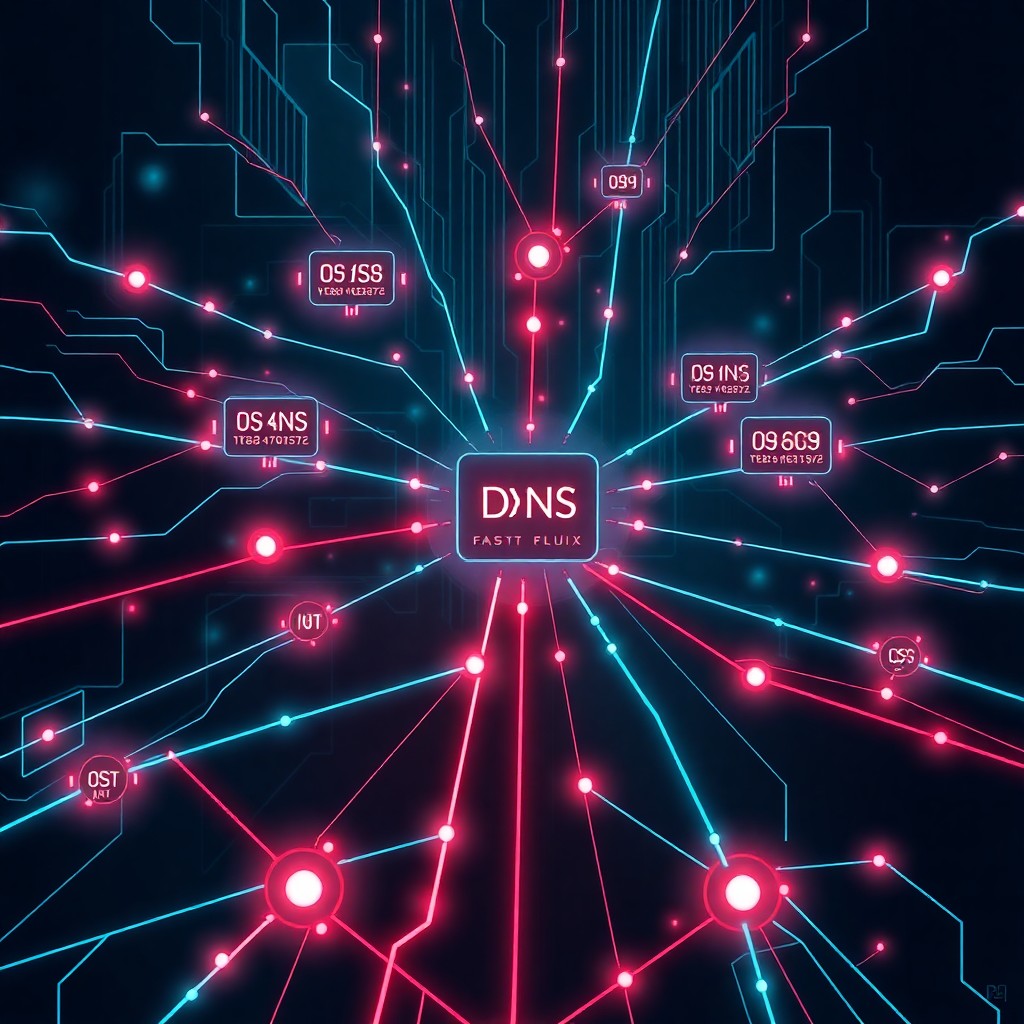
Fast flux is a DNS technique used to hide malicious infrastructure behind an ever-changing network of compromised hosts acting as proxies. By constantly rotating the IP addresses associated with domain names, attackers make it nearly impossible for traditional blocking methods to be effective. What makes SRG’s adoption particularly concerning is the speed and scale at which they’ve implemented this infrastructure, suggesting access to substantial resources or partnerships with established cybercriminal infrastructure providers.
Background & Context
The Silent Ransom Group emerged in late 2023 and has been linked to at least 47 confirmed ransomware incidents across healthcare, manufacturing, and financial services sectors. Unlike high-profile operations like LockBit or ALPHV/BlackCat, SRG has maintained a lower profile while steadily building their victim roster through targeted attacks against mid-sized enterprises.
DNS fast flux has historically been associated with botnet operations, phishing infrastructure, and banking trojans like Zeus and Dridex. The technique was popularized by the Storm botnet in 2007 and has since become a staple of sophisticated cybercriminal operations. There are two primary types: single-flux (rapidly changing A records) and double-flux (changing both A records and NS records). The computational and infrastructure requirements for maintaining effective fast flux networks traditionally limited their use to well-resourced criminal groups.
SRG’s adoption of this technique suggests either significant financial investment in their infrastructure or partnership with established bulletproof hosting providers and botnet operators. This evolution aligns with broader trends in the ransomware ecosystem, where groups are increasingly adopting counter-forensics and anti-analysis techniques to prolong their operational lifespan.
Technical Breakdown
DNS fast flux operates by associating a single fully qualified domain name (FQDN) with multiple IP addresses that rotate at high frequency through extremely short Time-To-Live (TTL) values. In SRG’s implementation, researchers have observed the following characteristics:
TTL Configuration: SRG’s C2 domains utilize TTL values between 60-300 seconds, significantly shorter than typical values of 3600 seconds or more. This forces DNS resolvers to frequently query authoritative nameservers for updated records.
IP Pool Rotation: Analysis reveals SRG maintains a pool of 200-500 IP addresses per C2 domain, with addresses rotating every 3-5 minutes. These IPs are geographically distributed across 40+ countries, primarily leveraging compromised home routers, small business networks, and cloud instances.
Round-Robin DNS: The group implements round-robin DNS responses, returning 5-10 different IP addresses per query in randomized order, further complicating blocking efforts.
Proxy Architecture: The fast flux IPs serve as proxy layers that redirect traffic to backend “mothership” servers where the actual C2 infrastructure resides. This creates multiple layers of indirection, protecting core infrastructure from identification.
# Example DNS query showing fast flux behavior
dig @8.8.8.8 srg-c2-domain[.]com

;; ANSWER SECTION:
srg-c2-domain.com. 180 IN A 45.142.212.36
srg-c2-domain.com. 180 IN A 185.220.101.47
srg-c2-domain.com. 180 IN A 91.219.237.244
srg-c2-domain.com. 180 IN A 198.98.51.189

# Query 5 minutes later returns completely different IPs
srg-c2-domain.com. 180 IN A 203.122.45.78
srg-c2-domain.com. 180 IN A 89.248.174.126
Network Protocol: SRG maintains encrypted communication channels using custom TLS implementations with certificate pinning, preventing man-in-the-middle interception even when connections are established.
Impact & Risk Assessment
The adoption of fast flux infrastructure by SRG creates several critical challenges for defenders:
Evasion Capabilities: Traditional IP-based blocking becomes largely ineffective, as blocklists become obsolete within minutes. Organizations relying primarily on threat intelligence feeds for IP blocking will find themselves constantly behind the curve.
Extended Dwell Time: The resilient C2 infrastructure allows SRG to maintain longer persistence on compromised networks, increasing the potential damage and data exfiltration opportunities before encryption occurs.
Incident Response Complications: Forensic investigation becomes significantly more complex, as identifying the true C2 infrastructure requires extensive network traffic analysis and correlation across multiple connection attempts.
Takedown Resistance: Law enforcement and security researchers face substantial obstacles in disrupting operations, as taking down individual nodes in the fast flux network has minimal operational impact.
Organizations in SRG’s primary target sectors face elevated risk profiles:
- Healthcare: 34% of confirmed SRG victims, with average ransom demands of $850,000
- Manufacturing: 29% of victims, average demands of $1.2 million
- Financial Services: 21% of victims, average demands of $2.1 million
The financial impact extends beyond ransom payments to include extended downtime (average 18 days), forensic investigation costs, regulatory fines, and reputational damage.
Vendor Response
Several security vendors have updated their detection capabilities in response to SRG’s tactical evolution:
Palo Alto Networks released signature updates for their Next-Generation Firewalls to identify SRG’s fast flux patterns through behavioral analysis rather than IP-based detection.
Cisco Talos has incorporated SRG indicators into their Umbrella DNS security platform, implementing recursive querying analysis to identify abnormal DNS patterns associated with fast flux infrastructure.
CrowdStrike updated their Falcon platform with behavioral indicators targeting SRG’s specific post-exploitation activities and encryption routines, shifting focus from network indicators to endpoint behaviors.
Microsoft Defender added detections for SRG’s initial access techniques, which primarily involve exploiting vulnerable Remote Desktop Protocol (RDP) configurations and phishing campaigns delivering malicious OneNote attachments.
These vendor responses reflect a broader industry shift toward behavioral and anomaly-based detection rather than indicator-based approaches, which fast flux specifically circumvents.
Mitigations & Workarounds
Organizations can implement several defensive measures to reduce exposure to SRG’s fast flux-enabled operations:
DNS Security Enhancements:
# Implement DNS sinkholing for known SRG domains
# Add to DNS server or security appliance configuration

zone "srg-known-domain.com" {
    type master;
    file "/etc/bind/db.sinkhole";
};
Network Segmentation: Implement strict network segmentation to limit lateral movement opportunities should initial compromise occur. Isolate critical systems from general corporate networks using microsegmentation.
DNS Query Monitoring: Deploy DNS query logging and analysis to identify abnormal patterns:
- High-frequency queries to the same domain
- Queries returning rapidly changing IP addresses
- Connections to domains with unusually short TTL values
- Geographic anomalies in returned IP addresses
Egress Filtering: Implement strict egress filtering policies that limit outbound connections to known-good destinations, blocking connections to unusual geographic regions or high-risk autonomous systems.
RDP Hardening: Given SRG’s reliance on RDP exploitation:
# Disable RDP if not required
Set-ItemProperty -Path 'HKLM:\System\CurrentControlSet\Control\Terminal Server' -name "fDenyTSConnections" -value 1

# If RDP required, implement Network Level Authentication
Set-ItemProperty -Path 'HKLM:\System\CurrentControlSet\Control\Terminal Server\WinStations\RDP-Tcp' -name "UserAuthentication" -value 1
Detection & Monitoring
Effective detection of SRG activity requires multi-layered monitoring approaches:
DNS Anomaly Detection:
# Example detection logic for fast flux patterns
def detect_fast_flux(domain, threshold=10):
    """
    Monitor DNS responses for fast flux characteristics
    """
    ip_history = []
    ttl_values = []

    for query in dns_query_log:
        if query.domain == domain:
            ip_history.append(query.resolved_ips)
            ttl_values.append(query.ttl)

    unique_ips = len(set(ip_history))
    avg_ttl = sum(ttl_values) / len(ttl_values)

    if unique_ips > threshold and avg_ttl < 600:
        alert_security_team(domain, "Possible fast flux detected")
Behavioral Indicators:
- Unusual PowerShell execution patterns with obfuscation
- Volume Shadow Copy deletion attempts
- Suspicious file encryption patterns starting from data repositories
- Credential dumping tools (Mimikatz, LaZagne)
- Lateral movement via PsExec or WMI
Network Telemetry:
Monitor for connections to high numbers of unique IPs for the same domain name within short timeframes. SRG typically generates 50+ unique C2 connections within the first hour of compromise.
Endpoint Detection:
# Monitor for SRG-specific file modifications
# Linux example using auditd
auditctl -w /var/log/ -p wa -k srg_activity
auditctl -w /home/ -p wa -k srg_encryption
Best Practices
Organizations should implement comprehensive security strategies to defend against sophisticated ransomware operations:
Backup Architecture: Maintain immutable, air-gapped backups with 3-2-1 rule compliance (three copies, two different media types, one offsite). Test restoration procedures quarterly.
Privileged Access Management: Implement just-in-time privileged access with multi-factor authentication for all administrative accounts. Eliminate standing administrative privileges.
Email Security: Deploy advanced email filtering with sandboxing capabilities to detect malicious OneNote and document attachments used in SRG’s initial access campaigns.
Security Awareness: Conduct regular phishing simulations and security training focused on identifying social engineering attempts, particularly those leveraging urgent financial or operational themes.
Incident Response Planning: Develop and regularly test ransomware-specific incident response procedures, including communication protocols, decision trees for ransom payment considerations, and legal/regulatory notification requirements.
Threat Intelligence Integration: Subscribe to threat intelligence feeds that provide behavioral and tactical information rather than solely indicator-based intelligence.
Zero Trust Architecture: Implement zero trust principles with continuous verification, assuming breach mentality, and explicit verification for every access request.
Key Takeaways
- Silent Ransom Group has adopted DNS fast flux infrastructure, significantly complicating defensive and takedown efforts
- Traditional IP-based blocking is largely ineffective against fast flux networks, requiring behavioral detection approaches
- SRG maintains 200-500 rotating IP addresses per C2 domain with TTL values of 60-300 seconds
- Healthcare, manufacturing, and financial services remain primary targets with ransom demands ranging from $850,000 to $2.1 million
- Effective defense requires multi-layered detection focusing on DNS anomalies, endpoint behaviors, and network telemetry
- Organizations must shift from indicator-based to behavior-based detection strategies
- Network segmentation, DNS monitoring, and RDP hardening provide critical defensive value
- Regular backup testing and incident response planning remain fundamental defensive requirements
References
- Silent Ransom Group Technical Analysis – MITRE ATT&CK Framework
- DNS Fast Flux Infrastructure Patterns – SANS Internet Storm Center
- Ransomware Tactical Evolution Report Q4 2023 – Cybersecurity Infrastructure Security Agency (CISA)
- Fast Flux Network Detection Methodologies – IEEE Security & Privacy
- SRG Victim Demographics and Financial Impact Analysis – Chainalysis Crypto Crime Report 2024
- DNS Security Best Practices – NIST Special Publication 800-81-2
- Ransomware Defense Strategies for Critical Infrastructure – FBI Cyber Division Advisory
Stay updated at https://cydhaal.com — Your Daily Dose of Cyber Intelligence.
📧 Subscribe to our newsletter at https://cydhaal.com/newsletter/