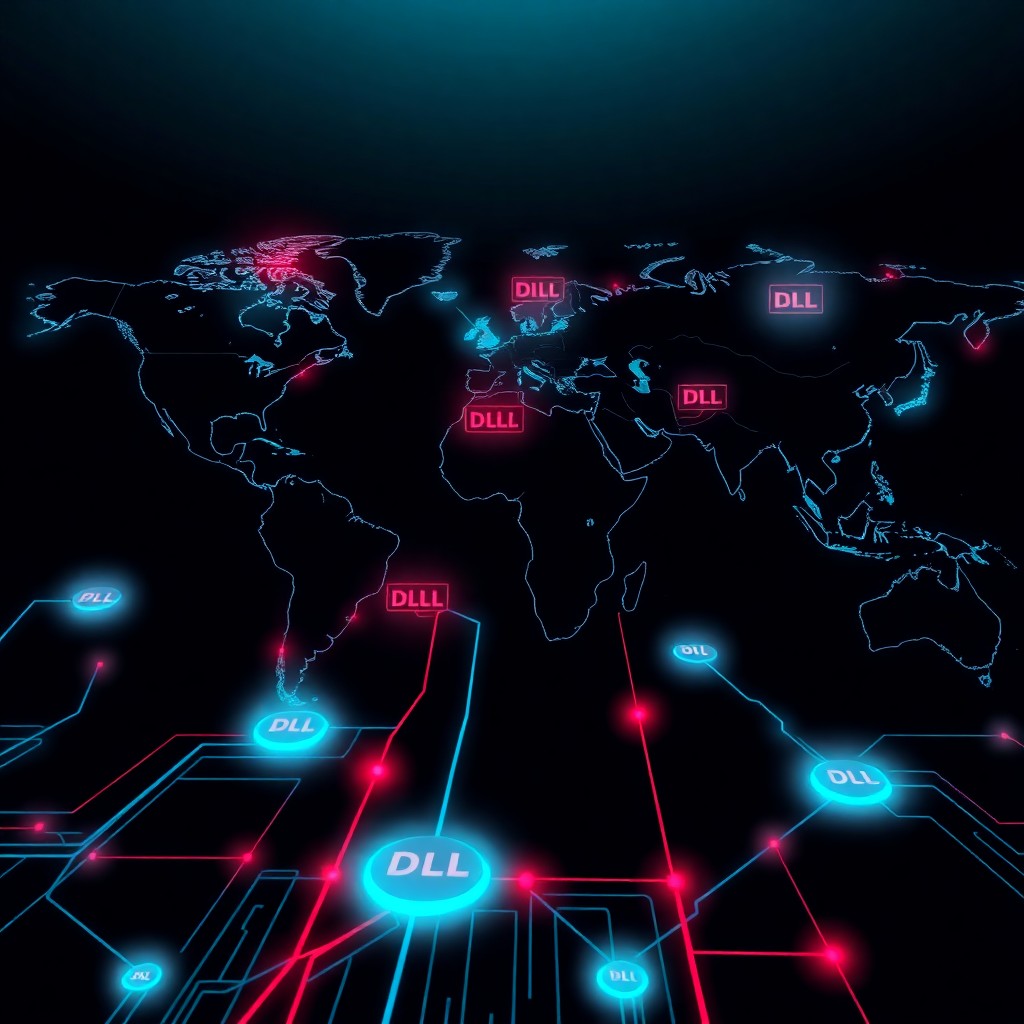
Iranian state-sponsored threat actor MuddyWater has launched a sophisticated espionage campaign targeting government and telecom sectors across nine countries using DLL side-loading techniques. The operation leverages legitimate applications to execute malicious payloads while evading detection, demonstrating the group’s evolving tactical capabilities and continued focus on intelligence gathering operations across the Middle East, Europe, and Asia.
Introduction
MuddyWater, also tracked as Earth Vetala, TEMP.Zagros, and Mango Sandstorm, has emerged once again with a refined cyber espionage campaign that underscores the persistent threat posed by Iranian Advanced Persistent Threat (APT) groups. This latest operation demonstrates a tactical shift toward more sophisticated initial access and execution methods, specifically exploiting the trust inherent in legitimate software applications.
The campaign, which security researchers have identified as active across multiple continents, targets critical infrastructure sectors including government entities, telecommunications providers, and energy organizations. By employing DLL side-loading—a technique that abuses the Windows operating system’s application loading mechanism—MuddyWater continues to adapt its tradecraft to circumvent modern security controls and maintain persistent access to high-value networks.
Background & Context
MuddyWater has operated as an Iranian state-sponsored threat group since at least 2017, with confirmed attribution to Iran’s Ministry of Intelligence and Security (MOIS). The group has historically focused on Middle Eastern targets but has progressively expanded its operational scope to include European and Asian targets aligned with Iranian geopolitical interests.
The nine countries identified in this current campaign span strategic regions including:
- Middle East (Turkey, Jordan, Saudi Arabia)
- North Africa (Egypt)
- Central Asia (Tajikistan, Uzbekistan)
- East Africa (Kenya)
- South Asia (Pakistan, India)
This geographic distribution aligns with Iran’s regional intelligence priorities, particularly concerning political developments, economic partnerships, and security threats to Iranian interests. The targeted sectors—government administration, telecommunications infrastructure, and diplomatic entities—represent high-value intelligence collection opportunities that support strategic decision-making by Iranian leadership.
MuddyWater’s historical toolset has included custom backdoors such as PowerStats, POWERSTATS variants, and various remote access trojans. The group has shown particular affinity for PowerShell-based implants and legitimate remote management tools repurposed for malicious activities.
Technical Breakdown
The current campaign centers on DLL side-loading, a sophisticated technique that exploits the DLL search order mechanism in Windows applications. When a legitimate application attempts to load a required DLL, Windows searches specific directories in a predetermined sequence. Attackers exploit this by placing a malicious DLL with the same name as a legitimate library in a location that Windows searches before finding the authentic file.
Attack Chain Overview:
- Initial Access: Spear-phishing emails containing malicious attachments or links to compromised infrastructure
- Execution: Legitimate signed applications deployed alongside malicious DLLs
- Persistence: Scheduled tasks and registry modifications ensure continued execution
- Command and Control: Encrypted communications to attacker-controlled infrastructure
- Exfiltration: Staged data theft through compromised systems
The specific DLL side-loading technique observed involves legitimate applications from trusted vendors, including security software and system utilities. When these applications execute, they automatically load the malicious DLL instead of the intended legitimate library. This provides several advantages:
Evasion Benefits:
- Legitimate application signatures bypass application whitelisting
- Process appears benign in process listings
- Security tools less likely to flag trusted vendor executables
- Digital signatures remain valid for the loader application
The malicious DLLs observed in this campaign function as initial stage loaders that decrypt and execute secondary payloads. These second-stage implants provide remote access capabilities, credential harvesting, and lateral movement functionality. Communication occurs over HTTPS to blend with legitimate network traffic, often using compromised legitimate websites as command-and-control infrastructure.
Sample Execution Flow:
legitimate_app.exe (signed, trusted)
    └─> malicious_library.dll (side-loaded)
        └─> decrypt embedded payload
            └─> establish C2 connection
                └─> download additional modules
Impact & Risk Assessment
Severity: HIGH
The implications of this campaign extend beyond immediate data breaches to encompass long-term strategic intelligence compromises. Organizations in affected sectors face multiple risk categories:
Immediate Risks:
- Unauthorized access to sensitive government communications
- Theft of classified or confidential documents
- Compromise of telecommunications infrastructure
- Exposure of diplomatic correspondence and strategic planning
Long-term Strategic Risks:
- Persistent undetected presence enabling continuous intelligence gathering
- Potential pre-positioning for destructive operations
- Compromise of supply chain relationships and trusted partnerships
- Loss of competitive advantage through economic espionage
The telecommunications sector represents a particularly critical target, as compromised telecom infrastructure can enable:
- Interception of communications metadata and content
- Access to subscriber information and call detail records
- Lateral movement opportunities to customer networks
- Intelligence on network architecture and security controls
Government entities face risks related to policy formulation, diplomatic negotiations, security operations, and inter-agency communications falling into adversary hands. This intelligence supports Iranian strategic planning, counterintelligence activities, and identification of vulnerabilities in opposing nations’ security postures.
Vendor Response
Security vendors have responded to this campaign with updated detection signatures and threat intelligence sharing. Microsoft Defender has released specific detection rules targeting the observed DLL side-loading techniques and associated behavioral patterns. Major endpoint detection and response (EDR) vendors have similarly updated their behavioral analytics engines.
Affected software vendors whose legitimate applications have been exploited for DLL side-loading have been notified through coordinated vulnerability disclosure processes. Several vendors have released guidance on verifying DLL integrity and implementing application hardening measures to prevent side-loading exploitation.
CISA (Cybersecurity and Infrastructure Security Agency) has added MuddyWater infrastructure indicators to its threat feeds and issued specific guidance for government entities regarding this campaign. International cybersecurity agencies in affected countries have published national alerts with localized threat intelligence.
No specific patches are required for the side-loading technique itself, as it exploits intended Windows functionality rather than software vulnerabilities. Mitigation relies on configuration changes, monitoring enhancements, and behavioral detection rather than traditional patching.
Mitigations & Workarounds
Organizations should implement multiple defensive layers to protect against DLL side-loading attacks:
Application Control:
- Implement strict application whitelisting policies
- Configure Windows Defender Application Control (WDAC) or AppLocker
- Restrict execution to approved directories only
- Block execution from user-writable directories
DLL Integrity Protection:
# Enable SafeDllSearchMode (if not default)
reg add "HKLM\SYSTEM\CurrentControlSet\Control\Session Manager" /v SafeDllSearchMode /t REG_DWORD /d 1 /f

# Configure DLL search order to prioritize system directories
reg add "HKLM\SYSTEM\CurrentControlSet\Control\Session Manager" /v CWDIllegalInDllSearch /t REG_DWORD /d 0xFFFFFFFF /f
Monitoring Requirements:
- Log all DLL load events with Sysmon Event ID 7
- Monitor for unsigned DLLs loaded by signed applications
- Track unusual parent-child process relationships
- Alert on applications loading DLLs from non-standard paths
Network Security:
- Implement SSL/TLS inspection for outbound HTTPS traffic
- Block communications to Iranian-associated infrastructure
- Deploy network segmentation to limit lateral movement
- Monitor for beaconing behavior characteristic of C2 communication
Email Security:
- Enhance anti-phishing controls with attachment sandboxing
- Block executable attachments and suspicious file types
- Implement DMARC, SPF, and DKIM validation
- Conduct regular phishing simulation exercises
Detection & Monitoring
Effective detection requires correlation across multiple telemetry sources:
Sysmon Configuration for DLL Monitoring:
    false


    \Users\
    \Temp\
    \ProgramData\
Key Detection Indicators:
- Legitimate applications loading DLLs from unexpected paths
- Unsigned DLLs in directories with signed executables
- Process creation trees showing unusual application behavior
- Network connections initiated by typically non-network applications
- PowerShell or cmd.exe spawned by unexpected parent processes
YARA Rule Concept for MuddyWater DLL Loaders:
rule MuddyWater_DLL_Loader {
  strings:
    $api1 = "VirtualAlloc" ascii
    $api2 = "CreateThread" ascii
    $decrypt = {48 31 ?? 48 FF ?? 75 ??}
    $c2_prep = "https://" ascii wide
  condition:
    uint16(0) == 0x5A4D and
    all of ($api*) and
    $decrypt and $c2_prep
}
Behavioral Analytics:
Monitor for combinations of:
- File writes to system directories by user applications
- Execution of recently modified trusted binaries
- Credential access attempts following application launches
- Scheduled task creation by unexpected processes
Best Practices
Organizations should adopt a defense-in-depth approach:
Organizational Security Posture:
- Threat Intelligence Integration: Subscribe to Iran-focused threat feeds and incorporate indicators into security tools
- Privileged Access Management: Implement least-privilege principles and just-in-time access
- Network Segmentation: Isolate critical systems and implement zero-trust architectures
- Security Awareness Training: Educate users on APT tactics and social engineering techniques
- Incident Response Preparedness: Maintain updated playbooks for nation-state intrusions
Technical Hardening:
- Disable unnecessary Windows features like Windows Script Host where not required
- Configure PowerShell Constrained Language Mode in restrictive environments
- Implement certificate pinning for critical applications
- Deploy endpoint detection and response (EDR) solutions with behavioral analytics
- Maintain comprehensive logging with adequate retention periods
Intelligence-Driven Defense:
- Conduct threat hunting exercises focused on MuddyWater TTPs
- Perform regular compromise assessments
- Validate security controls against MITRE ATT&CK techniques
- Establish information sharing relationships with sector peers
- Engage threat intelligence providers for Iranian APT coverage
Supply Chain Security:
- Verify software integrity before deployment
- Maintain software bill of materials (SBOM) for critical applications
- Establish vendor security requirements
- Monitor for compromise of trusted applications
Key Takeaways
- MuddyWater continues to demonstrate operational sophistication aligned with Iranian intelligence priorities
- DLL side-loading provides effective evasion against signature-based detection
- Nine countries across Middle East, Asia, and Africa face active targeting
- Government and telecommunications sectors represent primary intelligence collection targets
- Detection requires behavioral analytics rather than traditional signature-based approaches
- Mitigation depends on application control, monitoring, and configuration hardening
- Organizations in affected regions should prioritize threat hunting for Iranian APT activity
- Defense-in-depth strategies remain essential against advanced persistent threats
- Intelligence sharing within sectors enhances collective defense capabilities
References
- MITRE ATT&CK: MuddyWater Group Profile (G0069)
- CISA Alert: Iranian Government-Sponsored APT Activity
- Microsoft Threat Intelligence: Earth Vetala/MuddyWater Analysis
- MITRE ATT&CK Technique: DLL Side-Loading (T1574.002)
- NSA/CISA Guidance: Detecting and Preventing DLL Side-Loading
- Cybersecurity Advisory: Iranian Islamic Revolutionary Guard Corps-Affiliated Cyber Actors
Stay updated at https://cydhaal.com — Your Daily Dose of Cyber Intelligence.
📧 Subscribe to our newsletter at https://cydhaal.com/newsletter/