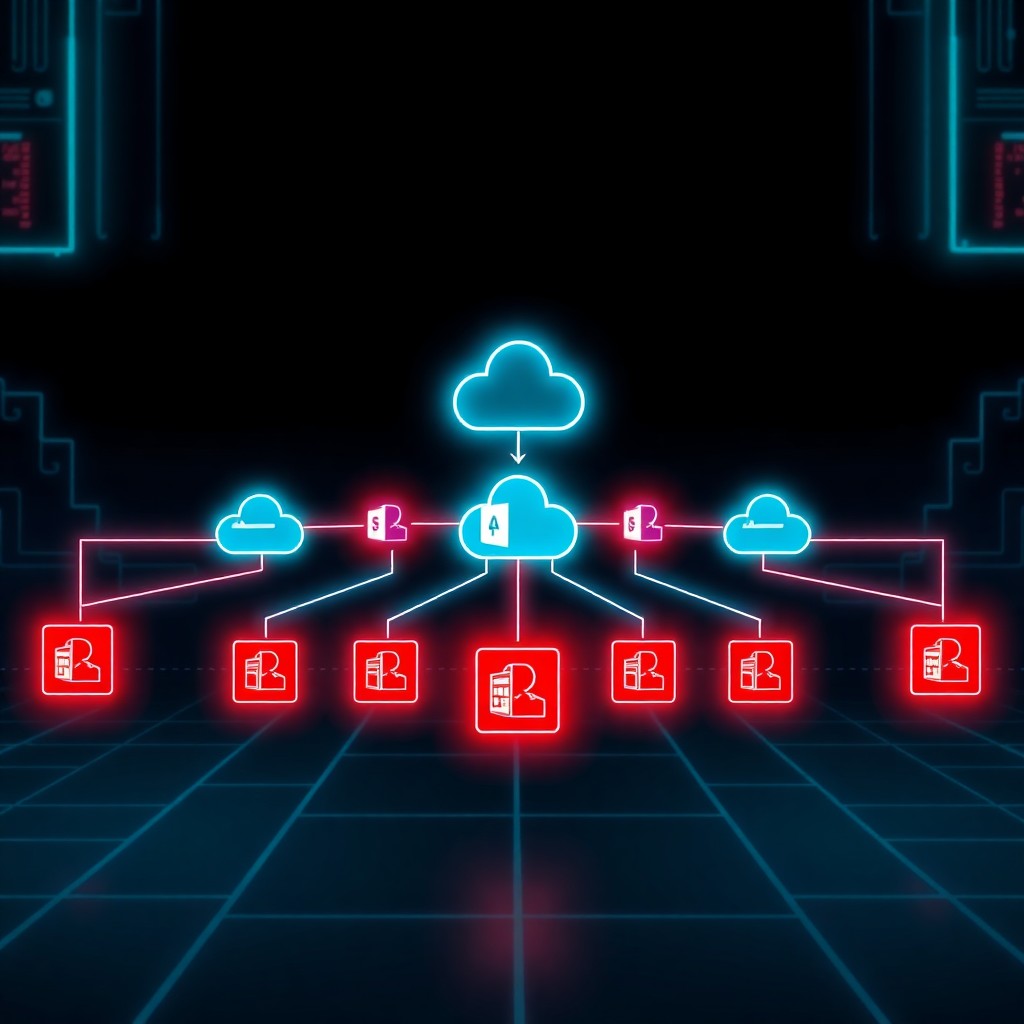










Microsoft’s Threat Intelligence team has uncovered an extensive infrastructure network supporting MacSync, a sophisticated information-stealing malware targeting macOS systems. The research reveals over 30 rotating domains used by threat actors to distribute the stealer, exfiltrate stolen data, and maintain operational resilience. MacSync specifically targets browser credentials, cryptocurrency wallets, and sensitive files from Mac users, representing a significant escalation in macOS-focused cybercrime operations.
Introduction
The cybersecurity landscape for macOS users has taken a concerning turn as Microsoft reveals the extensive command-and-control infrastructure behind MacSync, an information stealer specifically engineered for Apple’s operating system. While macOS malware has historically received less attention than Windows threats, this discovery underscores a growing trend: cybercriminals are increasingly investing resources into sophisticated Mac-targeting campaigns.
Microsoft’s investigation mapped out more than 30 domains that rotate dynamically to evade detection and maintain persistent access to compromised systems. This infrastructure demonstrates a level of operational maturity typically associated with well-funded cybercriminal operations, challenging the perception that Mac users face minimal malware risks.
Background & Context
Information stealers have become one of the most profitable malware categories in the cybercrime ecosystem. These tools harvest credentials, cookies, cryptocurrency wallets, and other sensitive data, which is then sold on underground markets or used for follow-on attacks. While Windows has long been the primary target, the increasing market share of macOS devices—particularly among high-value targets in creative, financial, and technology sectors—has made Mac users increasingly attractive to threat actors.
MacSync emerged in the threat landscape as part of this broader shift. Unlike opportunistic malware, MacSync appears purpose-built with features specifically designed to bypass macOS security mechanisms, including Gatekeeper and XProtect. The malware’s operators have demonstrated adaptability, continuously updating their distribution methods and infrastructure to evade detection.
The use of rotating domain infrastructure is a technique borrowed from advanced persistent threat (APT) groups and sophisticated ransomware operations. By constantly cycling through domains, operators can maintain command-and-control communications even as security vendors block known malicious domains.
Technical Breakdown
MacSync operates through a multi-stage infection chain designed to establish persistence and exfiltrate data while minimizing detection risk. The malware typically arrives through social engineering campaigns, including fake software updates, pirated applications, or trojanized legitimate software distributed through compromised websites.
Upon execution, MacSync performs initial reconnaissance of the infected system, gathering information about the macOS version, installed security software, and user privileges. The malware establishes persistence through LaunchAgents or LaunchDaemons, ensuring it survives system reboots.
The core stealing functionality targets multiple data sources:
Browser Data Extraction: MacSync harvests credentials, cookies, and autofill data from popular browsers including Safari, Chrome, Firefox, and Brave. The malware directly accesses browser storage databases and decrypts stored credentials using macOS Keychain access.
Cryptocurrency Wallet Targeting: The stealer specifically searches for wallet files from popular cryptocurrency applications including Electrum, Exodus, and browser-based wallets. Given the irreversible nature of cryptocurrency transactions, this data proves particularly valuable to threat actors.
File Harvesting: MacSync scans for documents with specific extensions (.txt, .doc, .pdf, .key, etc.) and exfiltrates files matching predefined patterns, likely seeking private keys, seed phrases, and financial documents.
The command-and-control infrastructure operates on a rotating domain scheme. Microsoft’s research identified patterns in the domain generation and registration:
Primary C2 communication pattern:
macsync-[random].com
mac-update-[random].net
apple-verify-[random].org
The domains are registered in batches, typically using privacy-protected WHOIS records and various registrars to avoid pattern detection. When one domain is blocklisted, the malware automatically fails over to backup domains hard-coded in the binary or retrieved through a domain generation algorithm (DGA).
Data exfiltration occurs over encrypted HTTPS connections, with stolen information packaged in compressed archives. The malware implements anti-analysis techniques including virtual machine detection and debugger checks to hinder security research.
Impact & Risk Assessment
The discovery of MacSync’s extensive infrastructure presents significant risks across multiple dimensions:
Individual User Impact: Victims face immediate consequences including account compromises, financial theft through stolen cryptocurrency wallets, and potential identity theft. Stolen browser cookies enable session hijacking, allowing attackers to access accounts without needing passwords.
Enterprise Risk: MacSync infections in corporate environments can expose enterprise credentials, VPN access tokens, and confidential documents. The malware’s ability to steal browser-stored credentials means corporate SaaS accounts, cloud infrastructure access, and internal systems may be compromised.
Financial Services Sector: With macOS holding significant market share among financial professionals, cryptocurrency investors, and fintech employees, MacSync poses particular risk to these high-value targets. Stolen credentials can facilitate unauthorized trading, fund transfers, and access to sensitive financial data.
Supply Chain Implications: Compromised developer credentials and code-signing certificates stolen from Mac-using developers could enable supply chain attacks, where malicious code is inserted into legitimate software projects.
The rotating domain infrastructure makes MacSync particularly resilient. Traditional domain blocklisting becomes a game of whack-a-mole, as threat actors continuously register new domains faster than defenders can block them. This operational resilience suggests a well-resourced operation with long-term objectives.
Vendor Response
Microsoft’s Threat Intelligence Center has added indicators of compromise (IOCs) related to MacSync infrastructure to Microsoft Defender for Endpoint, enabling detection across enterprise environments. The company published technical details to assist the broader security community in developing detection capabilities.
Apple has updated XProtect signatures to detect known MacSync variants and revoked code-signing certificates associated with the malware. However, the threat actors have demonstrated ability to quickly obtain new certificates or distribute unsigned binaries with social engineering tactics that convince users to bypass Gatekeeper protections.
Security vendors including Malwarebytes, Jamf, and Intego have updated their detection engines with MacSync signatures. Several vendors have also implemented heuristic detection for the behavioral patterns associated with the stealer.
Domain registrars and hosting providers have been notified of the malicious infrastructure, resulting in the takedown of numerous confirmed command-and-control domains. However, the distributed nature of the infrastructure across multiple registrars and hosting providers limits the effectiveness of mass takedown efforts.
Mitigations & Workarounds
Organizations and individuals can implement several defensive measures to protect against MacSync infections:
Application Installation Controls: Restrict application installations to the Mac App Store or verified developers. Configure Gatekeeper to maximum security settings:
sudo spctl --master-enable
sudo spctl --status
Browser Security Hardening: Disable password storage in browsers for sensitive accounts, instead utilizing dedicated password managers with master password protection. Enable browser-based phishing protection features.
Credential Management: Implement dedicated password managers rather than relying on browser storage. For cryptocurrency users, migrate to hardware wallets that store private keys offline and require physical confirmation for transactions.
Network-Level Blocking: Deploy DNS filtering to block known MacSync domains. Import Microsoft’s published IOC list into network security appliances and DNS filtering solutions.
User Education: Train users to recognize social engineering tactics, including fake software updates and pirated software distribution. Emphasize that legitimate software updates come through official App Store channels or verified vendor websites.
Detection & Monitoring
Security teams should implement multiple detection layers to identify potential MacSync infections:
Endpoint Detection: Monitor for suspicious LaunchAgents and LaunchDaemons creation:
# Check LaunchAgents
ls -la ~/Library/LaunchAgents/
ls -la /Library/LaunchAgents/

# Check LaunchDaemons
sudo ls -la /Library/LaunchDaemons/
Network Monitoring: Analyze DNS queries and HTTPS connections to newly registered domains or domains matching MacSync patterns. Implement SSL/TLS inspection where policy permits to identify data exfiltration attempts.
File Integrity Monitoring: Monitor browser profile directories and cryptocurrency wallet locations for unauthorized access:
# Key directories to monitor
~/Library/Application Support/Google/Chrome/
~/Library/Safari/
~/Library/Application Support/Exodus/
~/.electrum/
Process Monitoring: Alert on unusual processes accessing Keychain, browser databases, or performing bulk file operations in user directories.
Behavioral Analytics: Establish baselines for normal network behavior and flag anomalous outbound data transfers, particularly encrypted uploads to unfamiliar domains.
Best Practices
Long-term security posture improvements help defend against MacSync and similar threats:
Principle of Least Privilege: Operate with standard user accounts for daily activities. Administrative privileges should be reserved for specific tasks requiring elevation.
Regular Security Audits: Periodically review installed applications, browser extensions, LaunchAgents, and LaunchDaemons for unauthorized or suspicious entries.
Multi-Factor Authentication: Enable MFA on all critical accounts. Even if credentials are stolen, MFA provides an additional defensive layer against unauthorized access.
Backup Strategy: Maintain regular, offline backups of critical data. For cryptocurrency users, securely backup seed phrases in offline, physically secured locations.
Endpoint Security Solutions: Deploy comprehensive endpoint protection platforms that include behavioral detection, not just signature-based identification. Solutions should monitor file system access, network connections, and process execution.
Vulnerability Management: Maintain current macOS versions and application updates. Many malware distribution campaigns exploit known vulnerabilities in outdated software.
Network Segmentation: In enterprise environments, segment networks to limit lateral movement if a MacOS device becomes compromised.
Key Takeaways
- Microsoft has identified over 30 rotating domains supporting MacSync stealer infrastructure, demonstrating sophisticated operational resilience
- MacSync specifically targets macOS users for credential theft, cryptocurrency wallet compromise, and sensitive file exfiltration
- The rotating domain infrastructure enables threat actors to maintain command-and-control communications despite blocklisting efforts
- macOS users in financial services, cryptocurrency, and technology sectors face elevated risk due to the high-value data stored on their systems
- Effective defense requires multiple layers including application controls, network monitoring, endpoint detection, and user awareness
- The increasing sophistication of macOS-targeting malware challenges the perception that Mac users face minimal security risks
References
- Microsoft Threat Intelligence Center – MacSync Infrastructure Analysis
- Apple XProtect Update Documentation
- MITRE ATT&CK Framework – macOS Platform Techniques
- VirusTotal – MacSync IOC Repository
- Cryptocurrency Security Best Practices Guide
Stay updated at https://cydhaal.com — Your Daily Dose of Cyber Intelligence.
📧 Subscribe to our newsletter at https://cydhaal.com/newsletter/