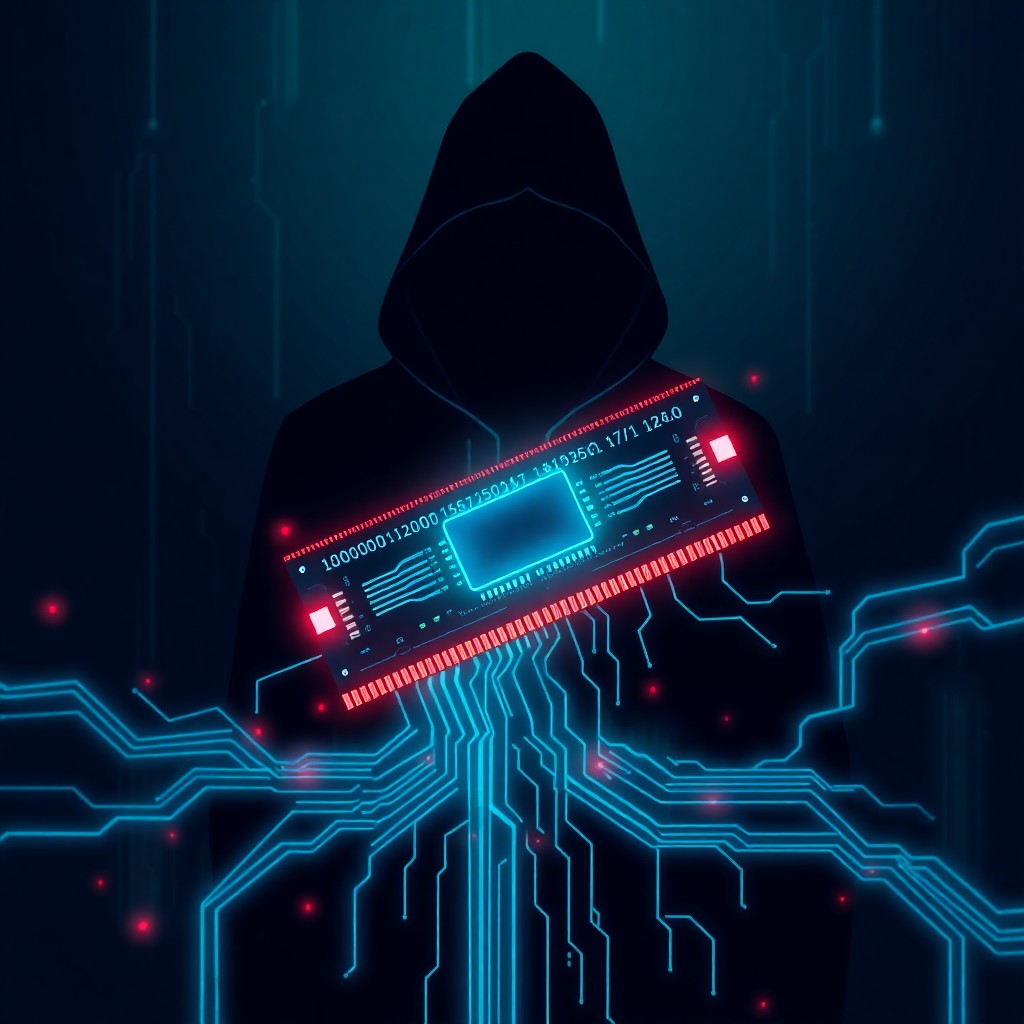
North Korean APT group Lazarus has deployed a sophisticated memory-only remote access trojan (RAT) dubbed RemotePE in targeted attacks against financial institutions and cryptocurrency firms. The malware operates entirely in memory without touching disk, evading traditional file-based detection systems. This campaign demonstrates Lazarus’s continued evolution in operational security and their persistent focus on financially motivated cyber operations to fund the North Korean regime.
Introduction
The Lazarus Group, one of the most prolific nation-state threat actors attributed to North Korea, has introduced a new weapon in their arsenal: RemotePE, a fileless RAT designed to maintain persistent access while avoiding detection. Security researchers have identified active campaigns targeting financial services and cryptocurrency organizations across multiple continents, with attackers demonstrating advanced capabilities in both initial compromise and post-exploitation activities.
The memory-resident nature of RemotePE represents a significant tactical shift, allowing Lazarus operators to maintain access to compromised networks while minimizing forensic artifacts. This technique complicates incident response and threat hunting efforts, requiring organizations to implement memory-focused detection capabilities alongside traditional security controls.
Background & Context
Lazarus Group has operated since at least 2009, conducting high-profile operations including the 2014 Sony Pictures breach, the 2016 Bangladesh Bank heist, and the 2017 WannaCry ransomware outbreak. More recently, the group has intensified focus on cryptocurrency platforms and decentralized finance (DeFi) protocols, stealing billions of dollars to circumvent international sanctions.
The group operates under North Korea’s Reconnaissance General Bureau (RGB), with sub-units including APT38 (financial operations), BlueNoroff (cryptocurrency targeting), and Andariel (intelligence gathering). Their operations directly support the regime’s weapons programs and help offset the economic impact of sanctions.
Lazarus demonstrates exceptional operational security, frequently rotating infrastructure, employing zero-day vulnerabilities, and developing custom malware frameworks. The introduction of RemotePE continues this pattern of innovation, incorporating techniques observed in advanced threat actors while maintaining their signature targeting profile.
Technical Breakdown
RemotePE leverages reflective loading techniques to execute portable executable (PE) files entirely within process memory, never writing malicious code to disk. The attack chain typically begins with spear-phishing emails containing malicious documents or links, exploiting either known vulnerabilities or social engineering to achieve initial execution.
Upon compromise, the initial loader decrypts and loads RemotePE directly into allocated memory space within legitimate processes. The malware employs process injection techniques including process hollowing and module stomping to hide within trusted Windows binaries such as explorer.exe, svchost.exe, or browser processes.
The RAT implements a modular architecture with core capabilities including:
# Core RemotePE Capabilities
- Remote command execution (cmd.exe, PowerShell)
- File system manipulation (upload/download/delete)
- Screenshot capture and keylogging
- Network reconnaissance and lateral movement
- Credential harvesting from memory
- Additional payload delivery and execution
Command and control (C2) communications use encrypted HTTPS connections to infrastructure mimicking legitimate services, often abusing compromised websites or cloud platforms. Traffic is encrypted using custom cryptographic implementations, with some variants employing domain fronting or DNS tunneling to evade network monitoring.
RemotePE includes anti-analysis features:
# Anti-Analysis Techniques
- Virtual machine detection (VMware, VirtualBox, Hyper-V checks)
- Sandbox evasion (time-delay execution, user interaction checks)
- Debugger detection (IsDebuggerPresent, timing checks)
- Memory encryption of strings and configuration data
- Dynamic API resolution to hide imported functions
The malware maintains persistence through registry modifications, scheduled tasks, or COM hijacking, though these create minimal forensic artifacts. In some cases, persistence is achieved through legitimate remote management tools deployed post-compromise.
Impact & Risk Assessment
Organizations in the financial services and cryptocurrency sectors face elevated risk from this campaign. Lazarus has demonstrated capability and intent to conduct theft operations resulting in losses exceeding hundreds of millions of dollars per incident. The memory-only nature of RemotePE significantly increases attacker dwell time, with compromises potentially remaining undetected for months.
Critical Risk Factors:
Financial Impact: Direct monetary theft remains the primary objective, with cryptocurrency platforms particularly vulnerable due to irreversible transactions and limited recovery options. Traditional financial institutions face risks to payment systems, SWIFT access, and customer account compromise.
Data Exfiltration: Beyond immediate theft, attackers harvest credentials, internal documentation, and intellectual property. This information enables future operations and provides intelligence on security controls and transaction processes.
Supply Chain Exposure: Compromised financial institutions may serve as pivot points to customer organizations or partner networks, expanding attack surfaces beyond initially targeted entities.
Regulatory Consequences: Breaches trigger mandatory disclosure requirements, regulatory investigations, and potential penalties under frameworks including GDPR, PCI-DSS, and regional financial regulations.
The sophistication of RemotePE places it beyond the detection capabilities of many standard enterprise security deployments, requiring specialized tooling and expertise to identify and remediate.
Vendor Response
Major security vendors have updated detection capabilities to identify RemotePE indicators and behavioral patterns. Microsoft, CrowdStrike, SentinelOne, and other EDR providers have released detection rules focusing on memory anomalies and behavioral indicators rather than file-based signatures.
CISA (Cybersecurity and Infrastructure Security Agency) has issued advisories specific to Lazarus activity, providing indicators of compromise (IOCs) and recommending enhanced monitoring for financial institutions. The FBI and Department of Treasury have attributed recent cryptocurrency thefts to North Korean actors and sanctioned associated cryptocurrency addresses.
Security researchers from Kaspersky, Securonix, and other threat intelligence firms have published detailed technical analyses of RemotePE, including YARA rules and memory forensics techniques for detection.
Mitigations & Workarounds
Organizations should implement defense-in-depth strategies addressing both initial access vectors and post-exploitation activities:
Email Security Hardening:
# Implement strict email filtering
- Block executable attachments (.exe, .scr, .bat, .ps1)
- Sandbox suspicious documents before delivery
- Implement DMARC, SPF, and DKIM validation
- Deploy link protection and URL rewriting
Memory Protection Controls:
- Enable Microsoft Defender Exploit Guard or equivalent AMSI integration
- Deploy EDR solutions with memory scanning capabilities
- Implement application whitelisting (AppLocker/WDAC)
- Enable PowerShell logging (Script Block, Module, and Transcription)
Network Segmentation:
# Isolate critical systems
- Separate cryptocurrency wallets/cold storage from network
- Implement zero-trust network architecture
- Deploy internal network monitoring and microsegmentation
- Restrict outbound connections from financial systems
Access Controls:
- Enforce multi-factor authentication (MFA) on all accounts
- Implement privileged access management (PAM) solutions
- Reduce administrative privileges following least-privilege principles
- Monitor and restrict remote access tool usage
Detection & Monitoring
Identifying memory-resident threats requires specialized detection approaches focusing on behavioral indicators and memory anomalies:
Memory Analysis Techniques:
# Memory forensics indicators
- Unsigned code in memory regions of signed processes
- Executable memory regions without corresponding disk files
- Anomalous API call patterns (VirtualAlloc, WriteProcessMemory)
- Suspicious inter-process memory operations
Behavioral Monitoring:
- Unusual network connections from office applications or system processes
- PowerShell execution with encoded commands or suspicious parent processes
- Registry modifications in uncommon persistence locations
- Credential access attempts (LSASS memory dumps, SAM access)
Log Correlation:
# Critical log sources
- Sysmon (Event IDs: 1, 3, 7, 8, 10)
- Windows Security logs (Event IDs: 4688, 4624, 4672)
- PowerShell operational logs (Event ID: 4104)
- EDR telemetry and memory scanning alerts
Deploy hunt queries targeting Lazarus TTPs:
-- Hunt for suspicious process injection
SELECT * FROM process_events
WHERE action = 'CreateRemoteThread'
AND target_process IN ('explorer.exe', 'svchost.exe')
AND source_process_signed = false
Best Practices
Security Operations:
- Conduct regular threat hunting exercises focusing on memory-resident threats
- Maintain updated threat intelligence feeds specific to Lazarus Group TTPs
- Implement 24/7 SOC monitoring with escalation procedures for APT indicators
- Perform tabletop exercises simulating Lazarus compromise scenarios
Cryptocurrency-Specific Controls:
- Implement multi-signature wallet requirements for large transactions
- Use hardware security modules (HSMs) for private key storage
- Establish transaction approval workflows with segregation of duties
- Maintain offline backup wallets in cold storage
Incident Response Readiness:
- Develop runbooks specific to memory-only malware incidents
- Establish relationships with specialized incident response firms
- Deploy memory forensics tools (Volatility, Rekall) in SOC environment
- Conduct purple team exercises testing detection and response capabilities
Security Awareness:
- Train employees on Lazarus social engineering tactics
- Implement phishing simulation programs with financial sector themes
- Establish clear reporting procedures for suspicious activities
- Brief executives on nation-state threat landscape
Key Takeaways
- Lazarus Group continues evolving tradecraft with RemotePE representing sophisticated memory-resident capabilities designed to evade traditional detection
- Financial institutions and cryptocurrency platforms remain high-priority targets for North Korean cyber operations driven by sanctions evasion needs
- Memory-only malware requires detection strategies focused on behavioral analysis, memory forensics, and EDR capabilities rather than signature-based approaches
- Organizations must implement defense-in-depth controls addressing initial access, persistence, lateral movement, and data exfiltration phases
- Threat hunting and proactive monitoring are essential given the extended dwell times possible with advanced fileless malware
- Cryptocurrency operations require specialized security controls including hardware wallets, multi-signature requirements, and transaction approval workflows
- Incident response preparedness specific to APT scenarios significantly reduces impact and recovery time during active compromises
References
- CISA: “North Korean State-Sponsored Cyber Actors” – Alert AA23-347A
- Microsoft Security: “Lazarus Group Campaigns and TTPs”
- Kaspersky: “RemotePE Technical Analysis and IOCs”
- FBI Flash Alert: “North Korean Cryptocurrency Targeting”
- MITRE ATT&CK: “Lazarus Group (G0032)” Threat Profile
- US-CERT: “Hidden Cobra – North Korean Malicious Cyber Activity”
- Securonix Threat Research: “Memory-Only RAT Analysis”
Stay updated at https://cydhaal.com — Your Daily Dose of Cyber Intelligence.
📧 Subscribe to our newsletter at https://cydhaal.com/newsletter/