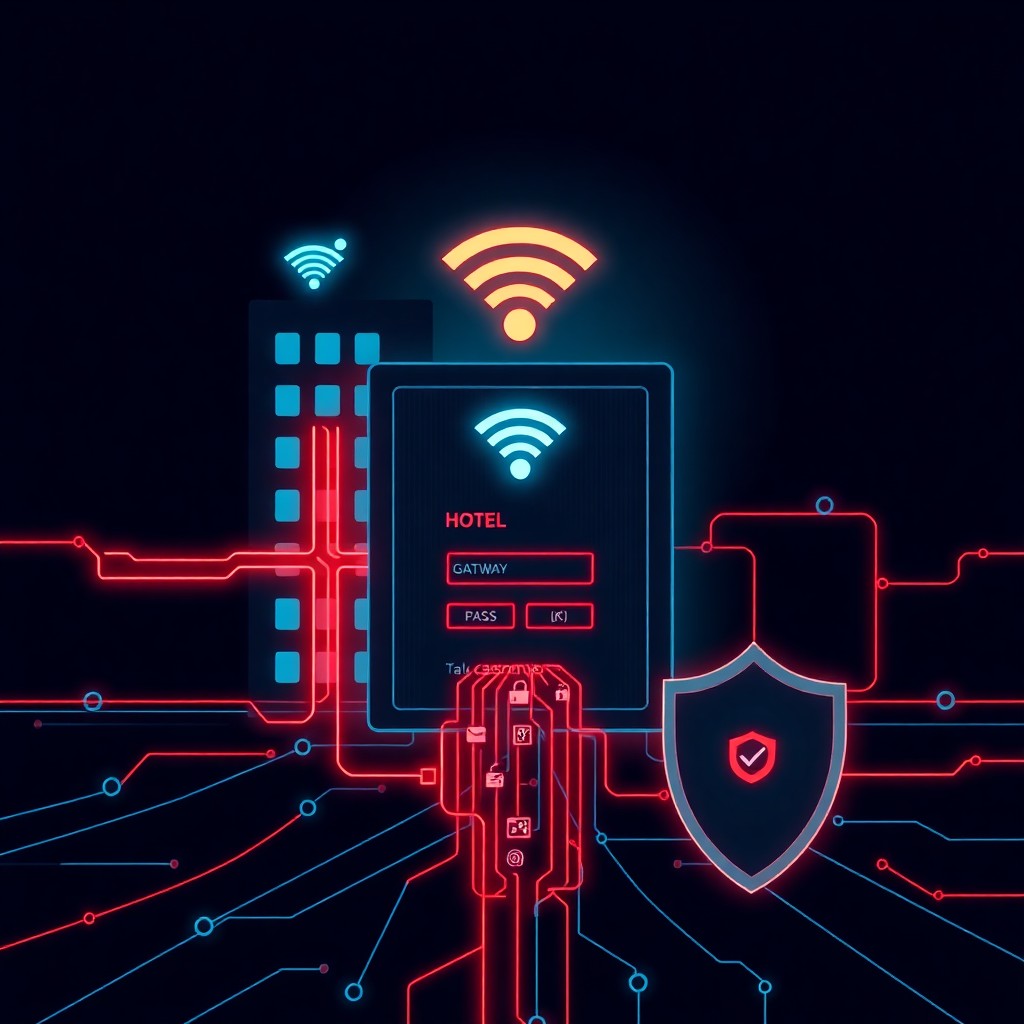
Threat actors are compromising hotel Wi-Fi gateway systems to intercept and steal Microsoft 365 credentials from business travelers. Attackers exploit vulnerabilities in captive portal systems to inject malicious login pages that mimic legitimate Microsoft authentication screens. Once credentials are harvested, attackers gain access to corporate email, cloud storage, and sensitive business communications. Organizations with traveling employees face significant risk from this evolving attack vector targeting hospitality infrastructure.
Introduction
Business travelers have become prime targets in a sophisticated credential harvesting campaign that exploits hotel Wi-Fi infrastructure. Security researchers have identified multiple incidents where attackers compromised hotel network gateways to intercept authentication attempts and steal Microsoft 365 credentials from unsuspecting guests.
Unlike traditional phishing attacks that rely on social engineering emails, this threat leverages compromised network infrastructure to present fake login pages at the network level. When travelers connect to hotel Wi-Fi and attempt to access their corporate Microsoft 365 accounts, they’re presented with convincing credential harvesting pages that sit between them and legitimate services.
The attack demonstrates how threat actors continue to innovate beyond email-based phishing, targeting the trusted infrastructure that professionals rely on during travel. With remote work and business travel increasing post-pandemic, the hospitality sector’s cybersecurity posture has become a critical concern for corporate security teams.
Background & Context
Hotel Wi-Fi networks typically operate using captive portal technology that requires users to authenticate or accept terms of service before accessing the internet. These gateways act as intermediaries between guest devices and the broader internet, creating an ideal position for man-in-the-middle attacks when compromised.
The hospitality industry has historically struggled with cybersecurity investment. Many hotels operate legacy networking equipment with outdated firmware, weak default credentials, and inadequate security monitoring. This creates an attractive attack surface for threat actors seeking to compromise multiple high-value targets through a single infrastructure breach.
Microsoft 365 has become the dominant productivity platform for enterprises, making it an obvious target. Business travelers frequently access email, SharePoint, Teams, and OneDrive while on the road, creating predictable patterns that attackers exploit. The combination of vulnerable hotel infrastructure and high-value corporate credentials creates perfect conditions for credential harvesting operations.
Previous attacks on hospitality networks have focused on payment card data and personal information. This shift toward targeting enterprise cloud credentials represents an evolution in attacker objectives, reflecting the value of persistent access to corporate environments.
Technical Breakdown
The attack chain begins with the compromise of hotel Wi-Fi gateway systems. Attackers gain access through several methods:
Initial Compromise Vectors:
- Exploitation of unpatched vulnerabilities in gateway firmware
- Use of default or weak administrative credentials
- Supply chain compromises of networking equipment
- Social engineering against hotel IT staff
Once inside the gateway infrastructure, attackers modify the captive portal system or implement DNS hijacking to intercept specific traffic patterns. The malicious configuration targets authentication requests to Microsoft domains.
Traffic Interception Mechanism:
# Example DNS hijacking configuration targeting Microsoft domains
login.microsoftonline.com → attacker-controlled-server.example.com
outlook.office365.com → malicious-proxy.example.com
account.microsoft.com → credential-harvester.example.com
When guests connect to the compromised Wi-Fi network and attempt to access Microsoft 365 services, their requests are redirected to attacker-controlled servers hosting convincing phishing pages. These pages replicate the authentic Microsoft login experience with high fidelity, including:
- SSL/TLS certificates using typosquatted domains or Let’s Encrypt certificates
- Accurate reproduction of Microsoft branding and interface elements
- Dynamic redirection based on user email domain
- Multi-factor authentication prompts to harvest 2FA codes
Credential Harvesting Flow:
1. User connects to hotel Wi-Fi
- User attempts to access Outlook/Teams/OneDrive
- DNS request intercepted by compromised gateway
- User redirected to malicious login page
- Credentials entered and captured
- User redirected to legitimate Microsoft service
- Credentials transmitted to attacker infrastructure
The attack includes session token theft, where attackers capture not just passwords but active authentication tokens. This allows immediate account access even when passwords are later changed, extending the window of compromise.
Some implementations include Evil Twin access point deployment, where attackers create rogue wireless networks mimicking legitimate hotel SSIDs, providing complete control over guest traffic without requiring gateway compromise.
Impact & Risk Assessment
The business impact of compromised Microsoft 365 credentials extends far beyond simple email access:
Immediate Consequences:
- Unauthorized access to corporate email and sensitive communications
- Exposure of confidential business documents in SharePoint/OneDrive
- Lateral movement into corporate networks via VPN or remote access
- Business email compromise (BEC) attacks targeting financial transactions
- Intellectual property theft and corporate espionage
Extended Risk Factors:
- Compromised accounts used for further phishing campaigns
- Access to multi-tenant cloud resources affecting partners
- Regulatory compliance violations (GDPR, HIPAA, SOX)
- Reputational damage from data breaches originating from stolen credentials
- Financial losses from fraudulent transactions or ransomware deployment
Executives and high-value targets staying at premium business hotels represent particularly attractive targets. A single compromised C-level account can provide access to strategic planning documents, M&A information, and executive communications.
The persistence of stolen session tokens means organizations may not detect the compromise for weeks or months. Attackers can maintain access, exfiltrating data gradually to avoid detection by data loss prevention systems.
Industries particularly at risk include:
- Finance and banking
- Legal services
- Healthcare organizations
- Technology companies
- Government contractors
Vendor Response
Microsoft has implemented several defensive measures within Microsoft 365 to combat credential theft:
Microsoft Security Enhancements:
- Conditional Access policies blocking sign-ins from suspicious locations
- Improved anomaly detection for unusual login patterns
- Enhanced multi-factor authentication requirements
- Token binding technology to prevent session hijacking
- Risk-based authentication requiring additional verification
Microsoft’s Identity Protection service now flags sign-ins from hotel networks as medium-risk by default, triggering additional authentication requirements for many organizations.
Hotel technology vendors have begun addressing the security of captive portal systems:
- Firmware updates patching known vulnerabilities
- Mandatory password changes for administrative interfaces
- Network segmentation recommendations
- Enhanced logging and monitoring capabilities
Several major hotel chains have engaged cybersecurity firms to audit their network infrastructure and implement security improvements. However, the fragmented nature of the hospitality industry means many smaller properties lack resources for comprehensive security upgrades.
Mitigations & Workarounds
Organizations should implement multiple defensive layers to protect traveling employees:
Technical Controls:
# Conditional Access policy example requirements
- Require MFA for all sign-ins
- Block legacy authentication protocols
- Require compliant device status
- Restrict sign-ins from untrusted networks
- Enable session controls for cloud apps
For IT Security Teams:
- Deploy phishing-resistant MFA (FIDO2, Windows Hello, certificate-based)
- Implement Zero Trust Network Access (ZTNA) solutions
- Enable Microsoft Defender for Cloud Apps session policies
- Configure impossible travel alerts
- Require VPN for all external network connections
For Traveling Employees:
- Use cellular data hotspots instead of hotel Wi-Fi for sensitive access
- Deploy always-on VPN configurations before connecting to untrusted networks
- Verify SSL certificate details before entering credentials
- Use password managers to detect fake login pages
- Enable Microsoft Authenticator number matching
Corporate Policy Recommendations:
- Prohibit accessing corporate resources over hotel Wi-Fi without VPN
- Issue mobile hotspot devices to frequent travelers
- Provide security awareness training specific to travel scenarios
- Implement privileged access workstations for executives
Detection & Monitoring
Security teams should implement monitoring to detect credential theft from compromised infrastructure:
Microsoft 365 Audit Logging:
# Search for suspicious sign-in patterns
Search-UnifiedAuditLog -StartDate (Get-Date).AddDays(-7)
  -EndDate (Get-Date)
  -Operations UserLoggedIn `
  -ResultSize 5000 | Where-Object {
    $_.AuditData -like "hotel" -or
    $_.AuditData -like "hospitality"
  }
Key Indicators of Compromise:
- Multiple failed authentication attempts followed by success
- Sign-ins from geographically impossible locations
- New device registrations from hotel networks
- Unusual file access patterns after travel
- Email forwarding rules created from unfamiliar IPs
- OAuth application grants from suspicious locations
SIEM Detection Rules:
- Alert on sign-ins outside normal business hours from hotel IP ranges
- Correlate travel schedules with authentication locations
- Flag rapid geographical transitions indicating token theft
- Monitor for user agent changes suggesting device inconsistencies
Implement real-time alerting for high-risk accounts accessing Microsoft 365 from hospitality network IP ranges. Correlate with corporate travel booking systems to distinguish legitimate from suspicious access.
Deploy endpoint detection tools that identify SSL certificate anomalies and warn users before entering credentials on suspicious pages.
Best Practices
Travel Security Program:
- Pre-travel security briefings for high-value targets
- Dedicated travel devices with minimal corporate access
- Temporary privileged access removal during travel periods
- Post-travel security reviews and credential rotation
- Incident response procedures specific to travel compromises
Network Security Hygiene:
- Never trust public Wi-Fi networks without VPN protection
- Disable automatic Wi-Fi connection features
- Verify network names with hotel staff before connecting
- Use browser privacy modes when accessing sensitive resources
- Clear cached credentials after travel
Identity Protection:
- Implement passwordless authentication where possible
- Use hardware security keys for critical accounts
- Enable sign-in risk policies with automatic remediation
- Regularly review and revoke suspicious sessions
- Maintain separate credentials for personal vs. corporate access
Vendor Management:
- Assess third-party security when booking corporate travel
- Prefer hotel chains with certified security programs
- Include cybersecurity requirements in corporate travel policies
- Share threat intelligence with hospitality partners
Key Takeaways
- Hotel Wi-Fi infrastructure represents a significant threat vector for credential theft targeting business travelers
- Attackers compromise captive portal systems to inject malicious Microsoft 365 login pages
- Traditional password-based authentication provides insufficient protection against infrastructure-level attacks
- Organizations must implement phishing-resistant MFA and Zero Trust principles
- Traveling employees should use cellular hotspots or VPN before accessing corporate resources
- Detection requires correlation of authentication logs with travel patterns and network intelligence
- The hospitality industry’s security posture directly impacts corporate cybersecurity risk
- Credential theft can lead to business email compromise, data breaches, and lateral movement into corporate networks
References
- Microsoft Identity Protection Documentation: https://learn.microsoft.com/en-us/azure/active-directory/identity-protection/
- NIST Special Publication 800-63B: Digital Identity Guidelines
- CISA Travel Security Guidelines for Government Personnel
- OWASP Captive Portal Security Best Practices
- Microsoft Conditional Access Policy Templates
- FIDO Alliance Authentication Specifications
Stay updated at https://cydhaal.com — Your Daily Dose of Cyber Intelligence.
📧 Subscribe to our newsletter at https://cydhaal.com/newsletter/