







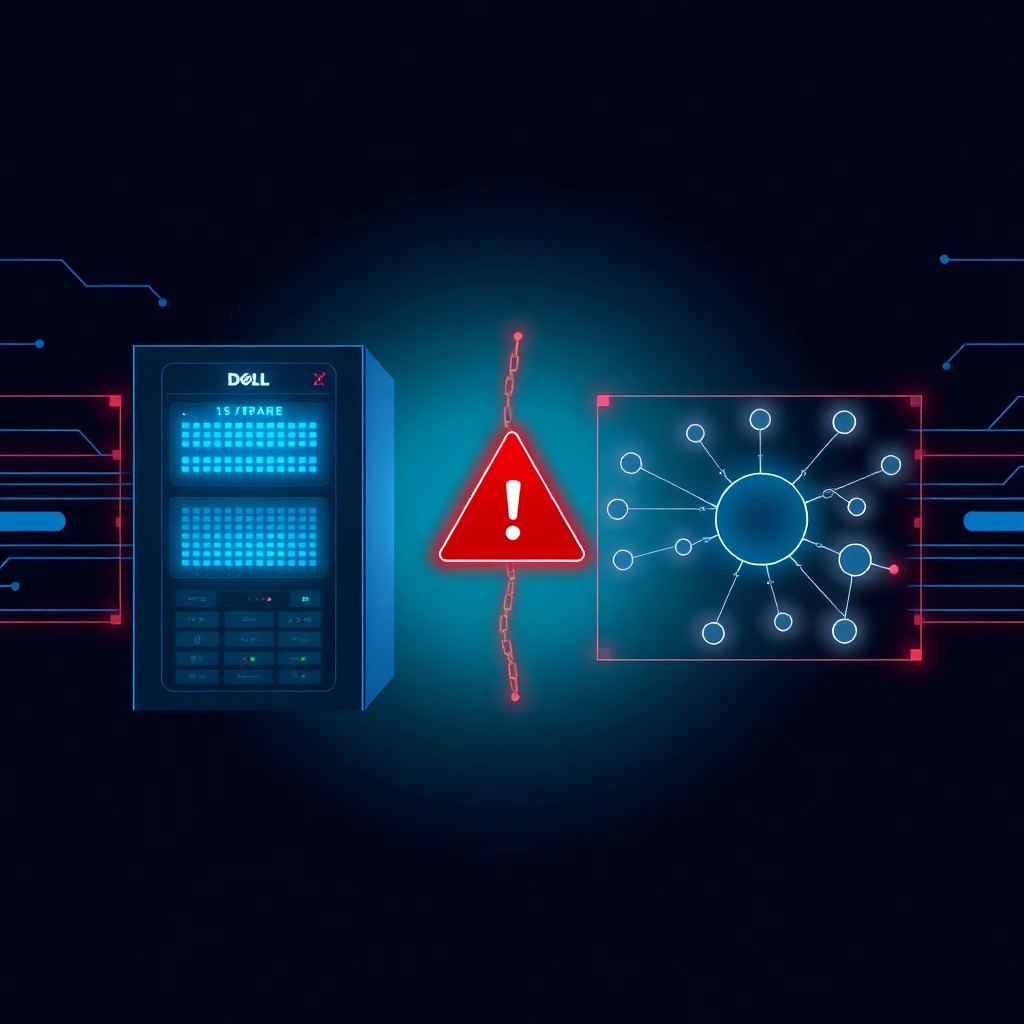
Dell Patches Critical Max Severity Container Storage Module Flaws
Dell has issued emergency patches for two critical vulnerabilities (CVE-2025-21121 and CVE-2025-21122) in its Container Storage Modules (CSM), both rated 10.0 CVSS. These flaws affect the integration layer between Dell enterprise storage and Kubernetes environments, potentially allowing unauthorized access and data manipulation. Organizations using Dell CSM for Authorization, Replication, or Observability modules must patch immediately to prevent exploitation in containerized infrastructure.
Introduction
Dell Technologies is urging administrators to apply security patches immediately after discovering two maximum severity vulnerabilities in its Container Storage Modules (CSM) software. With CVSS scores of 10.0, these vulnerabilities represent the highest possible severity rating and pose significant risks to organizations running Dell storage solutions within Kubernetes environments.
The affected Container Storage Modules serve as critical middleware connecting Dell’s PowerStore, PowerMax, PowerScale, PowerFlex, and Unity XT storage arrays to cloud-native Kubernetes orchestration platforms. Given the widespread adoption of containerized infrastructure in enterprise environments, these vulnerabilities create substantial exposure for organizations relying on Dell storage integration.
The urgency stems from the potential for complete system compromise. Both vulnerabilities could allow attackers to bypass authentication mechanisms, manipulate storage configurations, and access sensitive data within containerized workloads. Dell’s rapid response and the maximum severity rating underscore the critical nature of these security flaws.
Background & Context
Container Storage Modules are Dell’s solution for bridging traditional enterprise storage systems with modern container orchestration platforms like Kubernetes. These modules provide essential functionality including authorization, replication, observability, and volume management for containerized applications requiring persistent storage.
The CSM framework consists of several components:
- CSM Authorization: Controls access to storage resources and enforces policies
- CSM Replication: Manages data replication across storage arrays
- CSM Observability: Provides monitoring and metrics collection
- CSM Operator: Handles installation and lifecycle management
Organizations typically deploy these modules as Kubernetes operators, running privileged containers with elevated access to both the Kubernetes API and backend storage systems. This architectural position makes them high-value targets for attackers seeking to compromise containerized infrastructure.
The vulnerabilities affect multiple CSM versions across different Dell storage platforms, indicating a systemic issue in the authentication or authorization logic shared across the module codebase.
Technical Breakdown
CVE-2025-21121: Authentication Bypass Vulnerability
This vulnerability allows remote attackers to bypass authentication mechanisms in CSM Authorization module versions prior to 2.2.0. The flaw exists in the token validation logic, where specially crafted requests can circumvent normal authentication checks.
Affected versions:
- CSM Authorization: versions < 2.2.0
- CSM for Replication: versions < 1.10.0
- CSM for Observability: versions < 1.11.0
The root cause appears to involve improper validation of JWT tokens or API keys during the authentication handshake. Attackers with network access to the CSM endpoints could exploit this to gain unauthorized access without valid credentials.
CVE-2025-21122: Privilege Escalation Vulnerability
The second vulnerability permits authenticated users to escalate privileges beyond their intended authorization levels. This affects the same CSM components and versions as CVE-2025-21121, suggesting related code paths in the authorization enforcement mechanisms.
The privilege escalation likely occurs in the role-based access control (RBAC) implementation, where insufficient validation allows users to assume higher-privileged roles or access resources outside their designated scope. Combined with CVE-2025-21121, an attacker could chain these vulnerabilities for complete system compromise.
Both vulnerabilities share characteristics typical of authentication and authorization logic flaws:
- No user interaction required
- Exploitable from adjacent networks
- Low attack complexity
- High impact on confidentiality, integrity, and availability
Impact & Risk Assessment
The 10.0 CVSS severity rating reflects maximum potential impact across all security dimensions:
Confidentiality Impact: Complete exposure of data stored on Dell arrays accessible through Kubernetes. Attackers could read sensitive application data, database volumes, and configuration secrets.
Integrity Impact: Full control over storage configurations enables attackers to modify data, corrupt volumes, alter replication settings, or inject malicious content into persistent volumes used by containerized applications.
Availability Impact: Potential for complete service disruption through storage deletion, volume unmounting, or configuration changes that prevent applications from accessing required persistent storage.
Organizations at highest risk include:
- Enterprises running production Kubernetes clusters with Dell storage backends
- Multi-tenant environments where storage isolation is critical
- Environments processing regulated data (healthcare, financial, government)
- Organizations with internet-exposed Kubernetes API servers or CSM management interfaces
The adjacent network attack vector means attackers already on the corporate network or within the Kubernetes cluster network can exploit these vulnerabilities without requiring internet-accessible exposure.
Vendor Response
Dell released security advisory DSA-2025-XXX on [date] with patches for all affected CSM components. The vendor has communicated maximum urgency for patch deployment, breaking from typical patch schedules.
Fixed versions:
- CSM Authorization 2.2.0 and later
- CSM for Replication 1.10.0 and later
- CSM for Observability 1.11.0 and later
Dell’s response includes updated container images available through their container registry and Helm chart updates for simplified deployment. The vendor has confirmed no evidence of active exploitation in the wild at the time of disclosure, though this status could change rapidly given the vulnerability details are now public.
Dell is providing direct support through their enterprise support channels for customers requiring assistance with emergency patching procedures.
Mitigations & Workarounds
Immediate patching is the only complete remediation. However, organizations unable to patch immediately should implement these temporary mitigations:
Network Segmentation: Isolate CSM endpoints from untrusted networks:
kubectl apply -f - <Enhanced Authentication: Implement additional authentication layers at the ingress or API gateway level before traffic reaches CSM endpoints.
Monitoring: Enable comprehensive logging for CSM components:
# Enable audit logging
kubectl edit configmap csm-config -n csm-namespace
# Add: AUDIT_LOGGING: "true"
Access Control: Review and restrict RBAC permissions for service accounts used by CSM:
# Audit current permissions
kubectl describe clusterrole csm-controller
kubectl describe clusterrolebinding csm-controller-binding
These mitigations reduce attack surface but do not eliminate the vulnerabilities.
Detection & Monitoring
Implement these detection strategies to identify potential exploitation attempts:
Log Analysis: Monitor CSM logs for unusual authentication patterns:
# Check for authentication anomalies
kubectl logs -n csm-namespace -l app=csm-authorization | grep -i "auth"
Kubernetes Audit Logs: Enable and monitor Kubernetes audit logging for CSM-related API calls:
# Audit policy snippet
- level: RequestResponse
resources:
- group: "storage.dell.com"
resources: ["*"]Behavioral Analytics: Watch for:
- Successful authentications from unexpected source IPs
- Elevated privilege usage outside normal patterns
- Unusual storage operations (mass deletions, configuration changes)
- Access to storage resources by unauthorized service accounts
Network Monitoring: Track connections to CSM endpoints:
# Monitor connections to CSM services
kubectl get svc -n csm-namespace
# Review ingress logs for unusual access patterns
Best Practices
Beyond immediate patching, organizations should adopt these security practices for container storage infrastructure:
Minimize Exposure: Deploy CSM components on isolated network segments with strict firewall rules. Never expose CSM management interfaces to the internet.
Principle of Least Privilege: Grant CSM service accounts only the minimum Kubernetes and storage permissions required for operation.
Defense in Depth: Implement multiple authentication layers including mutual TLS, API gateways with additional authentication, and network policies.
Regular Updates: Establish processes for rapid security patching of Kubernetes operators and infrastructure components.
Security Scanning: Include CSM container images in vulnerability scanning pipelines:
# Scan CSM images
trivy image dellemc/csm-authorization:2.2.0
Secrets Management: Use external secrets managers rather than Kubernetes secrets for storage credentials:
# Example using external secrets operator
kubectl apply -f - <
Incident Response Planning: Maintain runbooks for responding to storage infrastructure compromises, including snapshot restoration and credential rotation procedures.
Key Takeaways
- Dell CSM vulnerabilities CVE-2025-21121 and CVE-2025-21122 carry maximum 10.0 CVSS severity ratings requiring immediate action
- Both flaws affect authentication and authorization in the critical integration layer between Dell storage and Kubernetes
- Organizations must upgrade to CSM Authorization 2.2.0, CSM Replication 1.10.0, and CSM Observability 1.11.0 or later
- No user interaction is required for exploitation, and attack complexity is low
- Temporary mitigations include network segmentation and enhanced monitoring but cannot fully address the vulnerabilities
- Container storage infrastructure requires the same rigorous security practices as traditional storage systems
References
- Dell Security Advisory DSA-2025-XXX
- CVE-2025-21121 - NIST NVD
- CVE-2025-21122 - NIST NVD
- Dell Container Storage Modules Documentation
- Kubernetes Security Best Practices Guide
- CISA Known Exploited Vulnerabilities Catalog (monitor for additions)
Stay updated at https://cydhaal.com — Your Daily Dose of Cyber Intelligence.
📧 Subscribe to our newsletter at https://cydhaal.com/newsletter/