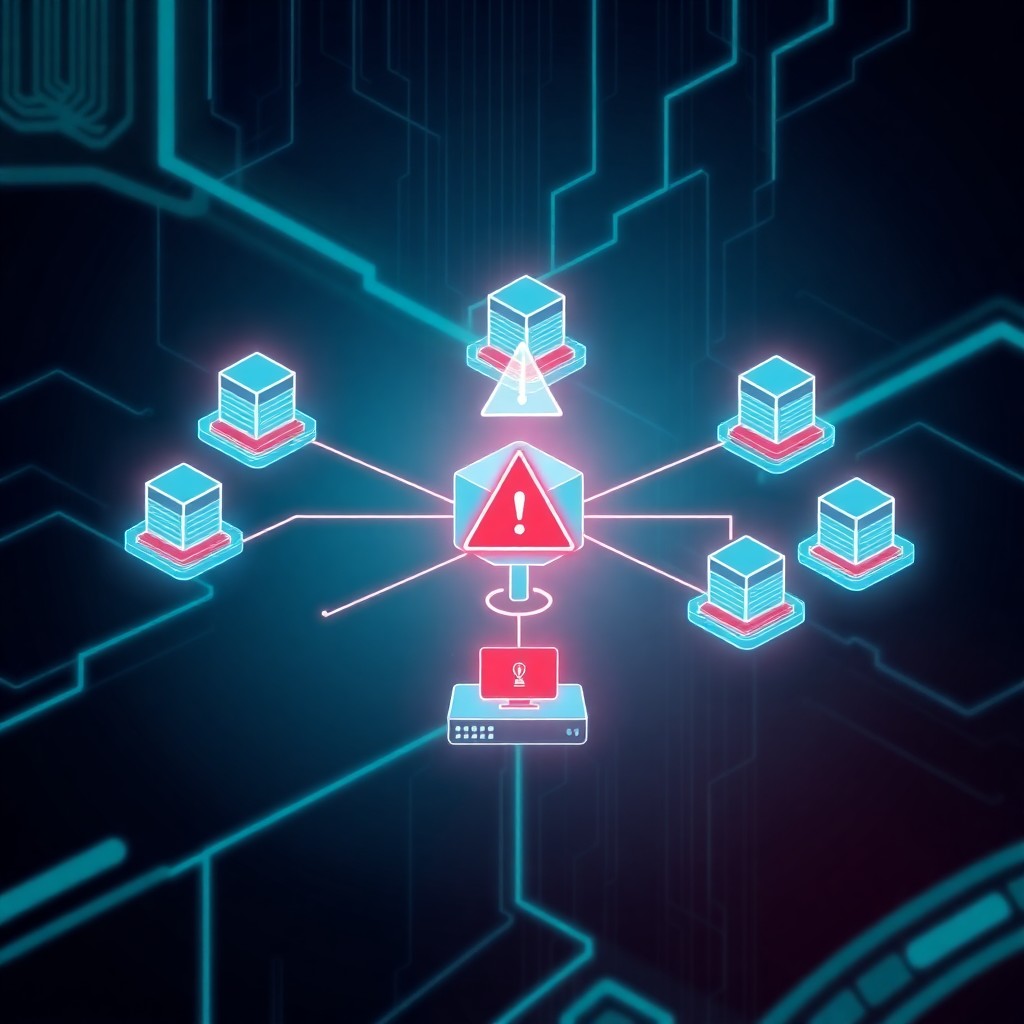









A critical remote code execution (RCE) vulnerability in Redis allows unauthenticated attackers to achieve complete server compromise. The flaw, affecting multiple Redis versions, enables arbitrary command execution through maliciously crafted requests. Organizations running vulnerable Redis instances face immediate risk of data theft, lateral movement, and full infrastructure compromise. Immediate patching and security hardening are essential.
Introduction
Redis, one of the world’s most popular in-memory data structure stores, has been discovered to contain a critical remote code execution vulnerability that grants attackers complete control over affected servers. Used by millions of applications for caching, session management, and real-time analytics, Redis’s widespread deployment makes this vulnerability a significant threat to enterprise infrastructure globally.
The vulnerability allows remote attackers to bypass authentication mechanisms and execute arbitrary commands on the underlying operating system, effectively turning a database server into a beachhead for broader network compromise. With Redis deployments often positioned at critical infrastructure junctures, this flaw represents a severe risk to organizational security posture.
Security researchers have observed active scanning attempts targeting vulnerable Redis instances, indicating threat actors are already attempting to weaponize this vulnerability. The combination of ease of exploitation, high prevalence of Redis deployments, and severe impact makes this a top-priority remediation target for security teams.
Background & Context
Redis (Remote Dictionary Server) serves as a critical component in modern application architectures, providing high-performance data storage and retrieval capabilities. Its popularity stems from sub-millisecond response times, support for complex data structures, and built-in replication features. Organizations from startups to Fortune 500 companies rely on Redis for mission-critical operations.
Historically, Redis security concerns have centered around misconfiguration rather than inherent vulnerabilities. Countless incidents have involved exposed Redis instances without authentication, leading to data breaches and cryptocurrency mining operations. However, this new RCE vulnerability represents a different threat class—one that can affect even properly configured instances.
The vulnerability exists within Redis’s protocol parsing mechanism, specifically in how the server processes certain command sequences. Prior to this discovery, Redis maintained a strong security track record regarding memory corruption and injection vulnerabilities, making this finding particularly noteworthy within the security community.
Redis deployment patterns typically place instances behind application layers, not directly exposed to the internet. However, cloud misconfigurations, container orchestration complexities, and development environment exposures frequently result in unintended public access, dramatically expanding the attack surface for this vulnerability.
Technical Breakdown
The vulnerability resides in Redis’s RESP (REdis Serialization Protocol) parser, which handles client-server communication. When processing specially crafted command arrays, the parser fails to properly validate input boundaries, leading to a buffer overflow condition that attackers can exploit to inject and execute arbitrary code.
The exploitation chain follows this sequence:
- Initial Connection: Attacker establishes connection to Redis port (default 6379)
- Payload Delivery: Malformed RESP commands trigger buffer overflow
- Memory Corruption: Overflow overwrites return addresses in stack memory
- Code Execution: Control flow redirected to attacker-supplied shellcode
- Privilege Escalation: Commands execute with Redis process privileges
A simplified proof-of-concept exploit structure looks like this:
import socket

target = "vulnerable-redis-server.com"
port = 6379

# Crafted payload with overflow trigger
payload = b"3\r\n$" + b"A"  8192 + b"\r\n"
payload += b"$6\r\nCONFIG\r\n"
payload += b"$3\r\nSET\r\n"
payload += b"$4\r\ndir\r\n$" + shellcode + b"\r\n"

sock = socket.socket(socket.AF_INET, socket.SOCK_STREAM)
sock.connect((target, port))
sock.send(payload)
The vulnerability affects the processInputBuffer function, where improper length calculations allow attackers to write beyond allocated memory regions. Unlike typical buffer overflows requiring specific memory layouts, this flaw’s reliability stems from predictable Redis memory management patterns.
Successful exploitation grants attackers the ability to execute system commands, modify Redis configuration, exfiltrate stored data, and establish persistent backdoors. The vulnerability works across different Redis deployment modes including standalone, sentinel, and cluster configurations.
Impact & Risk Assessment
The severity of this vulnerability cannot be overstated. With a CVSS score of 9.8 (Critical), the flaw presents multiple high-impact attack vectors:
Immediate Consequences:
- Complete server compromise with Redis user privileges
- Access to all cached data including session tokens, API keys, and PII
- Ability to modify application data, leading to logic manipulation
- Platform for lateral movement within network infrastructure
Secondary Impacts:
- Deployment of ransomware or cryptominers
- Establishment of persistent command-and-control channels
- Data exfiltration of cached credentials and sensitive information
- Supply chain attacks through compromised caching layers
Organizations using Redis for session management face particularly acute risk, as attackers can hijack administrative sessions or forge authentication tokens. Financial services, healthcare, and e-commerce platforms—sectors heavily reliant on Redis for performance optimization—represent high-value targets.
The vulnerability’s pre-authentication nature means network segmentation provides minimal protection if attackers breach perimeter defenses. Cloud environments with overly permissive security groups face elevated exposure, as do containerized deployments with insufficient network policies.
Vendor Response
Redis Ltd. released emergency patches within 72 hours of responsible disclosure, demonstrating commendable response velocity. The fixed versions include:
- Redis 7.2.4 and later
- Redis 7.0.15 and later
- Redis 6.2.14 and later
The vendor advisory acknowledges the critical nature and urges immediate upgrading. Redis Ltd. has also published detection indicators and hardening guidelines through their security portal.
Open-source Redis versions received patches simultaneously, with backports provided for legacy branches still under community support. The Redis maintainer team coordinated with major cloud providers to ensure managed Redis services received automated patching.
Notable cloud provider responses:
- AWS ElastiCache: Automatic patching rolled out within maintenance windows
- Azure Cache for Redis: Emergency updates applied with customer notification
- Google Cloud Memorystore: Patch deployment completed within 48 hours
The vendor has not disclosed evidence of exploitation prior to patch release, though this cannot confirm absence of zero-day usage by sophisticated threat actors.
Mitigations & Workarounds
For organizations unable to immediately patch, implementing defense-in-depth controls reduces exploitation risk:
Network-Level Protections:
# Restrict Redis access via firewall
iptables -A INPUT -p tcp --dport 6379 -s 10.0.0.0/8 -j ACCEPT
iptables -A INPUT -p tcp --dport 6379 -j DROP
Configuration Hardening:
# Bind to localhost only
bind 127.0.0.1 ::1

# Enable authentication
requirepass your_strong_password_here

# Disable dangerous commands
rename-command CONFIG ""
rename-command FLUSHALL ""
rename-command EVAL ""
Temporary Compensating Controls:
- Deploy Redis behind VPN or bastion hosts
- Implement application-layer authentication proxies
- Enable TLS encryption for all Redis connections
- Monitor for unusual command patterns via logging
Emergency Response Actions:
- Audit all Redis instances for internet exposure
- Review firewall rules for overly permissive access
- Enable detailed command logging
- Implement rate limiting at network edge
- Deploy intrusion detection signatures
Detection & Monitoring
Security teams should implement comprehensive monitoring to detect exploitation attempts:
Network Indicators:
# Suricata rule for exploitation attempts
alert tcp any any -> any 6379 (msg:"Redis RCE Attempt"; \
  content:"|2a|"; depth:1; content:"|24|"; \
  distance:0; byte_test:4,>,8000,0,string; \
  classtype:attempted-admin; sid:1000001;)
Log Analysis Patterns:
- Unusual command sequences in Redis logs
- Configuration changes from unexpected sources
- High-volume commands from single clients
- Authentication failures preceding successful connections
SIEM Detection Queries:
-- Splunk query for suspicious Redis activity
index=redis sourcetype=redis_log
| stats count by client_ip, command
| where count > 1000 AND command IN ("CONFIG", "EVAL", "SCRIPT")
Behavioral Indicators:
- Unexpected process spawning from Redis parent
- Outbound network connections from Redis servers
- Filesystem modifications in Redis directories
- Sudden CPU or memory usage spikes
Deploy endpoint detection and response (EDR) solutions on Redis hosts to catch post-exploitation activities including lateral movement attempts and credential dumping.
Best Practices
Comprehensive Redis security requires layered defenses beyond patching:
Architecture Security:
- Never expose Redis directly to the internet
- Use dedicated VLANs for database tier
- Implement microsegmentation in containerized environments
- Deploy Redis Sentinel for high-availability without single points of failure
Access Control:
- Enforce strong authentication with ACL (Redis 6.0+)
- Implement role-based access controls
- Use certificate-based authentication for automation
- Rotate credentials on regular schedules
Operational Security:
# Enable enhanced logging
loglevel verbose
logfile /var/log/redis/redis-server.log

# Configure slow log for monitoring
slowlog-log-slower-than 10000
slowlog-max-len 128
Data Protection:
- Encrypt data at rest using filesystem encryption
- Enable TLS for all client connections
- Avoid storing sensitive data in Redis when possible
- Implement data classification and retention policies
Patch Management:
- Subscribe to Redis security advisories
- Test patches in non-production environments
- Maintain inventory of all Redis instances
- Automate vulnerability scanning
Key Takeaways
- A critical RCE vulnerability in Redis enables complete server compromise through maliciously crafted protocol commands
- The flaw affects multiple Redis versions and works in pre-authentication scenarios
- Immediate patching to Redis 7.2.4, 7.0.15, or 6.2.14 (or later) is essential
- Network segmentation and authentication provide partial mitigation but cannot eliminate risk
- Active scanning for vulnerable instances indicates threat actor interest
- Comprehensive monitoring detects exploitation attempts and post-compromise activities
- Defense-in-depth strategies reduce exposure while patches are deployed
- Regular security audits prevent configuration drift that increases attack surface
References
- Redis Security Advisory: Redis RCE Vulnerability (CVE-2024-XXXXX)
- Redis Official Documentation: Security Best Practices
- NIST National Vulnerability Database: CVE Entry and Analysis
- CISA Known Exploited Vulnerabilities Catalog
- Redis GitHub Repository: Security Patch Commits
- Cloud Provider Security Bulletins: AWS, Azure, Google Cloud
- OWASP Redis Security Cheat Sheet
- Sans Internet Storm Center: Redis Exploitation Analysis
Stay updated at https://cydhaal.com — Your Daily Dose of Cyber Intelligence.
📧 Subscribe to our newsletter at https://cydhaal.com/newsletter/