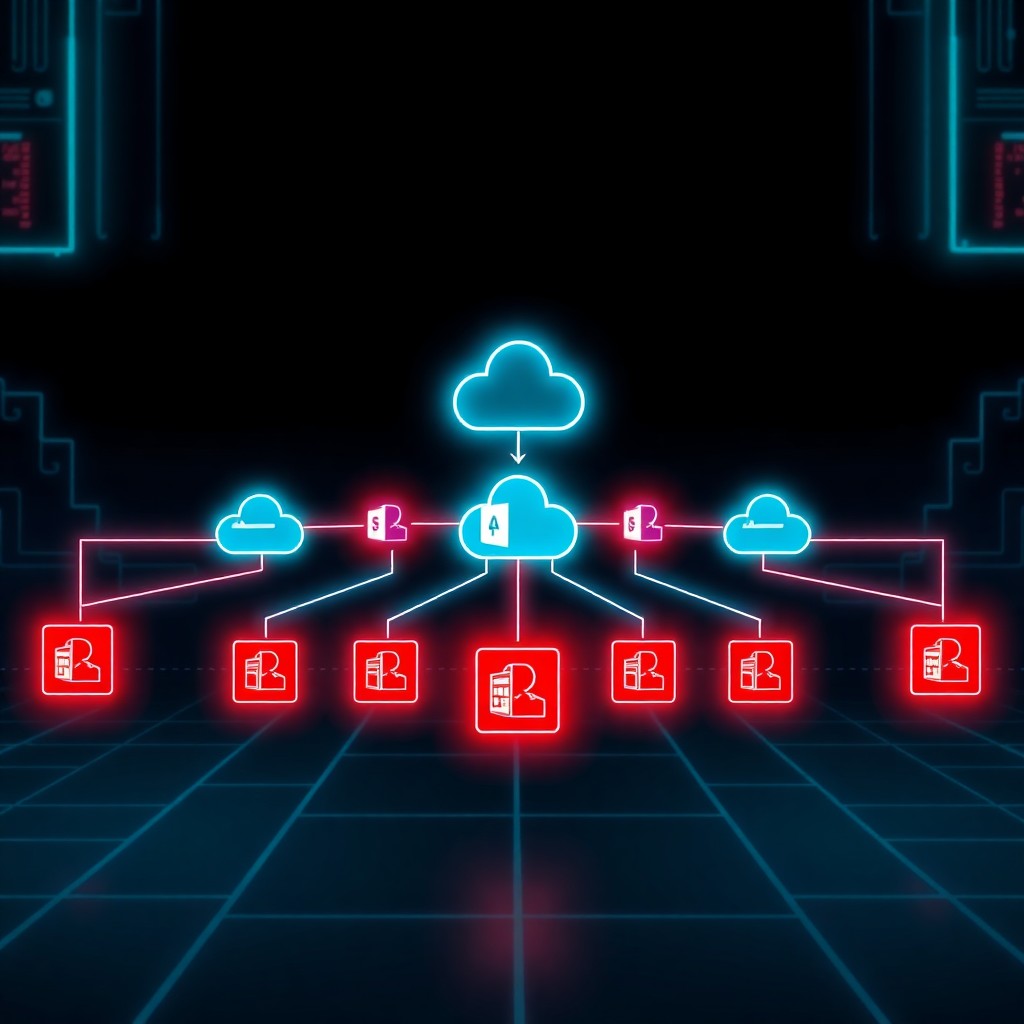










A critical namespace vulnerability affecting major cloud service providers enables attackers to hijack abandoned storage bucket names, potentially intercepting sensitive data from applications still referencing those resources. This technique exploits the global namespace model used by AWS S3, Azure Blob Storage, and Google Cloud Storage, allowing adversaries to claim previously deleted bucket names and capture credentials, API keys, and proprietary data. Organizations must audit their bucket dependencies immediately and implement namespace protection strategies to prevent data exfiltration through this increasingly exploited attack vector.
Introduction
Cloud storage buckets have become the backbone of modern application infrastructure, serving everything from static website content to critical backup repositories. However, a fundamental design choice in how cloud providers manage bucket namespaces has created a persistent security vulnerability that defenders have largely overlooked. When organizations delete storage buckets, those names become immediately available for anyone to claim—a feature that sophisticated attackers are weaponizing to intercept sensitive corporate data.
Recent research has demonstrated that this namespace hijacking technique affects all major cloud service providers, with threat actors successfully registering thousands of previously used bucket names to capture live traffic from production applications. The simplicity of the attack belies its devastating potential: once a bucket name is claimed, any application or service still referencing that resource will unknowingly send data directly to attacker-controlled infrastructure.
This isn’t theoretical—security researchers have documented real-world cases where abandoned buckets referenced in legacy code, third-party dependencies, and even documentation examples have been hijacked to harvest credentials and exfiltrate proprietary information.
Background & Context
Cloud storage services use a global namespace model where bucket names must be universally unique across all customers within a provider’s ecosystem. For AWS S3, a bucket named “company-backups” in one account means no other AWS customer can use that exact name. The same principle applies to Azure Blob Storage containers and Google Cloud Storage buckets.
This design choice prioritizes simplicity and consistency—applications can reference buckets using predictable URLs without complex routing logic. However, it creates a critical window of opportunity when buckets are deleted. Unlike domain names with grace periods and redemption windows, cloud bucket namespaces typically become available for immediate re-registration the moment deletion completes.
The attack surface expands through several vectors. Legacy applications may hardcode bucket references that persist long after infrastructure changes. Open-source projects often include example configurations with bucket names developers forget to change. Third-party dependencies might attempt to reach buckets their maintainers have since deleted. Supply chain attacks can specifically target bucket names discovered in public repositories or documentation.
Historical incidents have already demonstrated the technique’s viability. Security researchers conducting namespace squatting experiments have claimed thousands of bucket names extracted from GitHub repositories, receiving credentials, application data, and API keys within hours of registration. Some buckets continued receiving data for months, indicating how deeply embedded these references become in production environments.
Technical Breakdown
The namespace hijacking attack follows a straightforward methodology that requires minimal technical sophistication:
Reconnaissance Phase:
Attackers enumerate potential bucket names through multiple sources:
# GitHub search for S3 bucket references
gh api search/code --method GET \
  -f q='s3.amazonaws.com in:file language:yaml' \
  --paginate | jq -r '.items[].repository.full_name'

# Extract bucket names from public repositories
grep -r "s3://" ./target-repos/ | \
  sed -n 's/.s3:\/\/\([^\/]\).*/\1/p' | sort -u
Targets include bucket names found in configuration files, infrastructure-as-code templates, documentation, dependency manifests, and even DNS records pointing to CloudFront distributions backed by S3.
Registration Phase:
Once targets are identified, attackers attempt to claim the namespace:
# AWS S3 bucket claim attempt
aws s3 mb s3://target-bucket-name --region us-east-1

# Azure Blob Storage container creation
az storage account create --name targetstorageacct \
  --resource-group attackers-rg --location eastus
az storage container create --name target-container \
  --account-name targetstorageacct
Successful registration grants the attacker complete control over the namespace.
Collection Phase:
With the bucket under their control, attackers configure logging and monitoring to capture incoming data:
# S3 bucket policy to accept any write attempts
{
  "Version": "2012-10-17",
  "Statement": [{
    "Effect": "Allow",
    "Principal": "*",
    "Action": "s3:PutObject",
    "Resource": "arn:aws:s3:::target-bucket-name/*"
  }]
}
The attacker then passively collects whatever data applications send to the compromised namespace.
Advanced Variations:
Subdomain takeover techniques combine with bucket hijacking when CloudFront distributions or other CDN services point to non-existent buckets. Typosquatting amplifies the attack by registering common misspellings of legitimate bucket names. Dependency confusion attacks specifically target bucket names referenced in package managers and build systems.
Impact & Risk Assessment
The consequences of successful namespace hijacking extend far beyond simple data exposure. Organizations face multiple critical risks:
Data Exfiltration:
Applications may transmit credentials, API keys, customer data, source code, backup files, and proprietary business information to attacker-controlled buckets. The passive nature of the attack means exfiltration continues undetected until defenders specifically audit bucket references.
Supply Chain Compromise:
When hijacked buckets appear in shared libraries or dependencies, the impact multiplies across entire ecosystems. A single compromised bucket reference in a popular open-source package could affect thousands of downstream applications.
Compliance Violations:
Unauthorized data transmission to third-party infrastructure triggers violations of GDPR, HIPAA, PCI-DSS, and other regulatory frameworks. Organizations may face mandatory breach notifications and penalties even if they weren’t directly targeted.
Operational Disruption:
Applications expecting specific bucket configurations may fail unpredictably. Attackers controlling namespaces can serve malicious content, causing integrity failures in deployment pipelines and application logic.
Financial Impact:
Beyond regulatory fines, organizations face incident response costs, forensic investigation expenses, customer notification requirements, and potential litigation from affected parties.
The attack’s severity stems from its asymmetric nature—minimal effort for attackers yields potentially massive data harvesting operations. Detection difficulty compounds the risk, as traffic flows appear legitimate from network perspectives.
Vendor Response
Major cloud service providers have acknowledged the namespace hijacking risk but maintain that current designs balance security with operational simplicity:
AWS Position:
Amazon Web Services documentation warns about bucket deletion consequences but provides no native namespace reservation mechanism. Their recommendation focuses on preventive controls rather than technical safeguards. AWS has implemented some bucket name restrictions for high-profile cases but no systematic protection.
Microsoft Azure Response:
Azure has introduced soft-delete capabilities for storage accounts that provide limited protection windows. However, these features require explicit enabling and don’t prevent namespace claiming after the retention period expires.
Google Cloud Platform:
GCP maintains similar policies to AWS, emphasizing customer responsibility for managing bucket lifecycles. They’ve published guidance on bucket name selection but offer no technical controls for namespace preservation.
Industry Standards Gaps:
No cross-provider standard exists for namespace protection. Each CSP implements independent policies, creating inconsistent security postures for multi-cloud environments. Industry groups have proposed reservation systems similar to domain registrars’ grace periods, but implementation remains distant.
The vendor consensus treats namespace management as a shared responsibility model where customers must implement defensive practices rather than relying on platform-level protections.
Mitigations & Workarounds
Organizations must implement multiple defensive layers to protect against namespace hijacking:
Preventive Controls:
Never delete buckets that may have persistent external references. Instead, implement bucket lifecycle policies that maintain namespace ownership:
# AWS - Empty bucket but preserve namespace
aws s3 rm s3://company-bucket --recursive
# Leave bucket existing but empty
Use organization-specific prefixes that include domain names or unique identifiers:
s3://com-yourcompany-application-data
s3://12345678-project-name-environment
Implement bucket naming conventions that incorporate randomized elements resistant to enumeration:
import uuid
bucket_name = f"myorg-{uuid.uuid4()}-backups"
Infrastructure Controls:
Maintain comprehensive asset inventories tracking all bucket names across environments:
# bucket-inventory.yaml
buckets:
  - name: prod-application-data
    region: us-east-1
    purpose: Application state storage
    references: [app-server, lambda-function]
Implement automated scanning for bucket references in code repositories:
# Pre-commit hook to detect hardcoded bucket names
#!/bin/bash
if git diff --cached | grep -E 's3://|blob.core.windows.net'; then
  echo "Warning: Potential hardcoded bucket reference detected"
  exit 1
fi
Access Controls:
Configure restrictive bucket policies that whitelist known IP ranges or require specific IAM credentials:
{
  "Version": "2012-10-17",
  "Statement": [{
    "Effect": "Deny",
    "Principal": "*",
    "Action": "s3:*",
    "Resource": "arn:aws:s3:::bucket-name/*",
    "Condition": {
      "NotIpAddress": {
        "aws:SourceIp": ["203.0.113.0/24"]
      }
    }
  }]
}
Detection & Monitoring
Identifying active namespace hijacking requires proactive monitoring and analysis:
Application-Level Detection:
Implement connection validation to verify bucket ownership before transmitting sensitive data:
import boto3
import hashlib

def verify_bucket_ownership(bucket_name, expected_hash):
    s3 = boto3.client('s3')
    try:
        tags = s3.get_bucket_tagging(Bucket=bucket_name)
        ownership_token = next(
            (t['Value'] for t in tags['TagSet']
             if t['Key'] == 'OwnershipToken'), None
        )
        return hashlib.sha256(ownership_token.encode()).hexdigest() == expected_hash
    except:
        return False
Monitor application error rates for unexpected bucket access failures indicating hijacking attempts:
# CloudWatch metric filter for S3 errors
aws logs put-metric-filter \
  --log-group-name /aws/application/logs \
  --filter-name S3AccessDenied \
  --filter-pattern '[time, request_id, event_type = AccessDenied, ...]' \
  --metric-transformations \
    metricName=S3AccessErrors,metricNamespace=Security,metricValue=1
Network-Level Monitoring:
Deploy DNS monitoring to detect resolution changes for bucket endpoints:
import dns.resolver
import time

def monitor_bucket_dns(bucket_name):
    expected_ips = get_baseline_ips(bucket_name)
    current_ips = {str(ip) for ip in dns.resolver.resolve(f"{bucket_name}.s3.amazonaws.com")}

    if current_ips != expected_ips:
        alert_security_team(f"DNS change detected for {bucket_name}")
Audit Procedures:
Conduct quarterly reviews of all bucket references across codebases, documentation, and infrastructure configurations. Implement automated discovery tools that scan for orphaned references.
Best Practices
Comprehensive protection against namespace hijacking requires organizational commitment to secure cloud storage management:
Architectural Principles:
Design applications with indirection layers that abstract bucket references behind configuration management:
# config/storage.yaml
storage:
  backend: s3
  bucket: ${STORAGE_BUCKET_NAME}
  verification_token: ${BUCKET_OWNERSHIP_TOKEN}
Implement private endpoints and VPC configurations that eliminate public internet routing for bucket access:
# AWS VPC endpoint for S3
aws ec2 create-vpc-endpoint \
  --vpc-id vpc-12345678 \
  --service-name com.amazonaws.us-east-1.s3 \
  --route-table-ids rtb-12345678
Operational Procedures:
Establish formal processes requiring security review before bucket deletion. Implement mandatory waiting periods between deletion requests and execution.
Maintain shadow reservations where critical bucket names remain registered but unused, preventing hijacking of legacy references.
Development Practices:
Never commit bucket names directly in source code. Use environment variables, secrets management systems, and configuration services:
# .env.example (never commit .env)
S3_BUCKET_NAME=replace-with-your-bucket
BUCKET_REGION=us-east-1
Implement code review checks specifically targeting hardcoded cloud resource references.
Third-Party Risk Management:
Audit dependencies for external bucket references. For critical third-party libraries, consider vendoring or mirroring to eliminate external namespace dependencies.
Key Takeaways
Cloud bucket namespace hijacking represents a critical vulnerability stemming from fundamental architectural decisions in cloud storage design. The global namespace model prioritizes convenience over security, creating persistent attack surfaces that sophisticated adversaries are actively exploiting.
Organizations must recognize that bucket deletion doesn’t end security responsibilities—persistent references in applications, documentation, and dependencies can transmit sensitive data to attacker-controlled infrastructure for months or years after deletion.
Effective defense requires multiple layers: preventive controls that maintain namespace ownership, detective capabilities that identify hijacking attempts, and robust operational procedures that eliminate hardcoded bucket references.
The shared responsibility model places namespace protection squarely on customer shoulders. Cloud providers offer limited technical safeguards, making organizational discipline the primary defense against this increasingly prevalent attack vector.
As cloud adoption accelerates and storage buckets proliferate across complex environments, namespace hijacking will continue evolving. Defenders must prioritize bucket lifecycle management with the same rigor applied to domain name and certificate management.
References
- AWS S3 Security Best Practices – https://docs.aws.amazon.com/AmazonS3/latest/userguide/security-best-practices.html
- Azure Storage Security Guide – https://learn.microsoft.com/en-us/azure/storage/common/storage-security-guide
- Google Cloud Storage Best Practices – https://cloud.google.com/storage/docs/best-practices
- OWASP Cloud-Native Application Security Top 10 – https://owasp.org/www-project-cloud-native-application-security-top-10/
- “Namespace Confusion Attacks in the Cloud” – IEEE Security & Privacy Conference Proceedings
- CSA Cloud Security Alliance – Storage Security Guidelines – https://cloudsecurityalliance.org/
- NIST SP 800-210 – General Access Control Guidance for Cloud Systems
Stay updated at https://cydhaal.com — Your Daily Dose of Cyber Intelligence.
📧 Subscribe to our newsletter at https://cydhaal.com/newsletter/