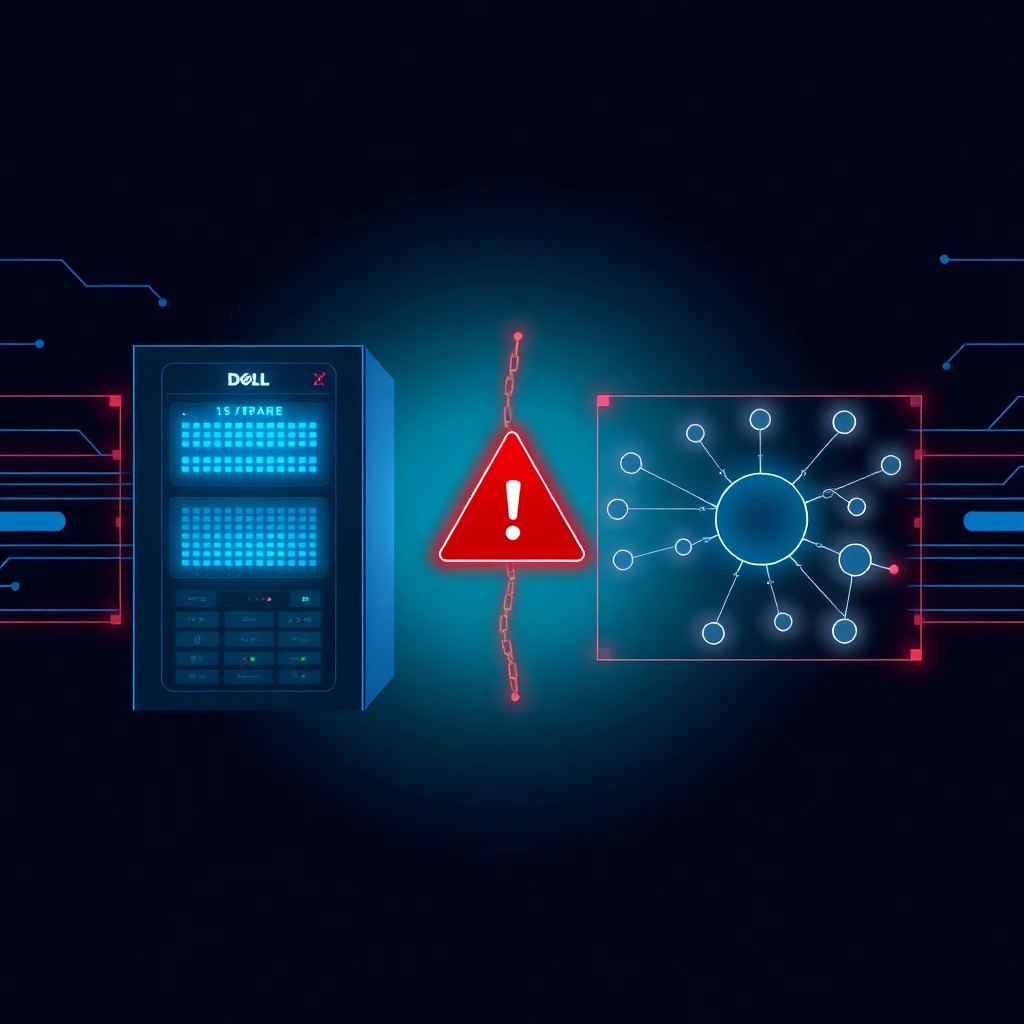










Cisco has confirmed active exploitation of CVE-2026-20230, a critical Server-Side Request Forgery (SSRF) vulnerability in Cisco Unified Communications Manager (Unified CM). The flaw allows unauthenticated attackers to perform arbitrary HTTP requests through vulnerable systems, potentially leading to data exfiltration, internal network reconnaissance, and lateral movement. Organizations running affected Unified CM versions must patch immediately as threat actors are actively weaponizing this vulnerability in targeted campaigns.
Introduction
Cisco Unified Communications Manager has become the latest target for threat actors exploiting a critical SSRF vulnerability tracked as CVE-2026-20230. With a CVSS score of 9.1, this authentication bypass flaw enables attackers to abuse the vulnerable system as a proxy for malicious HTTP requests, effectively turning trusted enterprise communication infrastructure into an attack vector.
The vulnerability stems from insufficient validation of user-supplied input in the web-based management interface. Attackers can craft malicious HTTP requests that force the Unified CM server to interact with arbitrary internal or external systems, bypassing network segmentation and security controls.
Active exploitation in the wild escalates this from a theoretical risk to an immediate operational emergency. Organizations relying on Cisco Unified CM for voice, video, and messaging services face potential compromise of their communications infrastructure and connected internal resources.
Background & Context
Cisco Unified Communications Manager serves as the call processing component for enterprise voice and video communications, managing thousands of endpoints including IP phones, video conferencing systems, and collaboration tools. Its central position in corporate networks makes it a high-value target for adversaries seeking persistent access or lateral movement capabilities.
SSRF vulnerabilities have become increasingly attractive to attackers because they exploit the trust relationships between systems. By abusing a legitimate server’s credentials and network position, attackers can access resources that would otherwise be unreachable from external networks—including cloud metadata services, internal APIs, and backend databases.
CVE-2026-20230 was initially disclosed in Cisco’s security advisory published in early 2026, with patches released simultaneously. However, the vulnerability appears to have been reverse-engineered from the patch, leading to rapid weaponization. The time between patch release and active exploitation—the so-called “patch gap”—has compressed significantly, giving defenders minimal time to respond.
The affected component is the Unified CM web interface, which handles administrative functions and integrates with various backend services. The SSRF condition exists in URL parameter handling where the application fails to properly validate and sanitize destination addresses before making outbound requests.
Technical Breakdown
The vulnerability exists in the Unified CM web interface’s handling of redirect parameters and URL fetching functionality. Specifically, the flaw manifests in endpoints that accept URL parameters for content retrieval or validation purposes.
An attacker can exploit CVE-2026-20230 by sending specially crafted HTTP requests to vulnerable endpoints:
POST /ccmadmin/serviceability/RequestHandler.do HTTP/1.1
Host: vulnerable-ucm.target.com
Content-Type: application/x-www-form-urlencoded

url=http://169.254.169.254/latest/meta-data/iam/security-credentials/
&action=fetch
The vulnerable server processes this request without adequate validation, making an HTTP request to the specified URL. This enables several attack scenarios:
Internal Network Reconnaissance: Attackers can probe internal IP ranges to identify active services, APIs, and administrative interfaces that are invisible from external networks:
url=http://192.168.1.1:8080/admin
url=http://10.0.0.5:3306/
url=http://internal-api.corp.local/v1/users
Cloud Metadata Service Access: In cloud-hosted deployments, attackers can access instance metadata containing sensitive credentials:
url=http://169.254.169.254/latest/meta-data/
url=http://metadata.google.internal/computeMetadata/v1/
Data Exfiltration: By directing requests to attacker-controlled servers, sensitive information can be extracted through DNS queries, HTTP parameters, or request headers that may contain session tokens or authentication credentials.
The SSRF condition bypasses typical network security controls because requests originate from the trusted Unified CM server itself, appearing legitimate to firewalls, intrusion detection systems, and zero-trust architecture components.
Impact & Risk Assessment
The risk profile for CVE-2026-20230 is severe due to multiple compounding factors:
Confidentiality Impact: Attackers can access sensitive internal resources including configuration data, credentials stored in cloud metadata, and internal API responses. Unified CM systems often have privileged network access for integration with Active Directory, LDAP, and database servers.
Availability Risk: While the SSRF itself doesn’t directly impact service availability, attackers can leverage accessed credentials to disrupt communications infrastructure, delete configurations, or pivot to more destructive attacks.
Lateral Movement: Unified CM servers typically reside in management VLANs with elevated network privileges. Compromising these systems provides attackers with a foothold for broader network infiltration.
Compliance Implications: For organizations subject to regulations like HIPAA, PCI DSS, or SOX, unauthorized access to communications infrastructure can trigger breach notification requirements and audit findings.
The active exploitation component dramatically increases risk. Organizations with internet-facing Unified CM administrative interfaces face imminent compromise. Even with network segmentation, insider threats or compromised workstations could leverage this vulnerability for privilege escalation.
Critical infrastructure, healthcare, financial services, and government sectors using Unified CM should treat this as a priority-one incident requiring immediate remediation.
Vendor Response
Cisco released security patches addressing CVE-2026-20230 across affected Unified CM versions in their January 2026 security bundle. The vendor assigned a CVSS score of 9.1 (Critical) and explicitly warned of the potential for exploitation in their advisory.
Patched Versions:
- Unified CM 14.0(1)SU3 and later
- Unified CM 12.5(1)SU7 and later
- Unified CM 11.5(1)SU11 and later
Cisco’s advisory includes detailed upgrade paths and specifically notes that workarounds are insufficient for long-term protection. The vendor has also updated their IOS XE and security appliance signatures to detect exploitation attempts.
Following confirmation of active exploitation, Cisco issued an updated advisory emphasizing the urgency of patching and recommending immediate implementation of access controls if patching cannot be completed within 48 hours.
The vendor has not disclosed the scale of exploitation or attributed attacks to specific threat actors, though security researchers have observed scanning activity targeting Unified CM installations across multiple sectors.
Mitigations & Workarounds
Organizations unable to immediately patch should implement these temporary mitigations:
Network-Level Controls:
# Block outbound HTTP/HTTPS from Unified CM to suspicious ranges
iptables -A OUTPUT -s  -d 169.254.169.254 -j DROP
iptables -A OUTPUT -s  -d 10.0.0.0/8 -j DROP
Access Restrictions: Remove administrative interface exposure from the internet. Implement VPN or jump host requirements for all management access:
# Example ACL for Cisco ASA
access-list BLOCK_EXTERNAL deny ip any host  eq 443
access-list BLOCK_EXTERNAL deny ip any host  eq 80
Web Application Firewall Rules: Deploy WAF rules to detect SSRF patterns in URL parameters:
# ModSecurity rule example
SecRule ARGS "@rx (?:169\.254\.169\.254|metadata\.google|127\.0\.0\.1)" \
"id:1001,phase:2,deny,status:403,msg:'Potential SSRF attempt'"Monitoring: Enable detailed logging for all HTTP requests originating from Unified CM servers and alert on suspicious destination patterns.
These workarounds reduce but do not eliminate risk. Patch deployment remains the only complete mitigation.
Detection & Monitoring
Security teams should implement comprehensive detection strategies:
Network Traffic Analysis: Monitor for unusual outbound connections from Unified CM servers:
# Zeek/Bro script to detect SSRF indicators
event http_request(c: connection, method: string, original_URI: string) {
    if (c$id$orig_h in UCM_SERVERS &&
        /169\.254\.169\.254/ in original_URI) {
        NOTICE([$note=SSRF_Attempt, $conn=c]);
    }
}
Log Correlation: Review Unified CM access logs for suspicious URL parameters:
# Search for SSRF patterns in logs
grep -E "url=http|redirect=|fetch=" /var/log/active/ccm/log/ccmadmin*
SIEM Rules: Create alerts for metadata service access attempts, internal IP scanning, or connections to known malicious infrastructure from Unified CM systems.
Endpoint Detection: Deploy EDR solutions on Unified CM servers to detect post-exploitation activities including credential dumping, persistence mechanisms, or lateral movement tools.
Indicators of compromise include unexpected outbound connections, authentication attempts to internal services during off-hours, and modifications to Unified CM configurations or user databases.
Best Practices
Immediate Actions:
- Inventory all Unified CM deployments and versions
- Prioritize patching for internet-facing systems
- Implement network segmentation isolating Unified CM management interfaces
- Review recent access logs for exploitation indicators
Long-Term Security Posture:
- Maintain regular patching schedules with defined SLAs for critical vulnerabilities
- Implement network segmentation with least-privilege access controls
- Deploy defense-in-depth strategies including WAF, IPS, and network monitoring
- Conduct regular vulnerability assessments of communications infrastructure
- Establish incident response procedures for communications system compromises
Architecture Recommendations:
- Never expose Unified CM administrative interfaces directly to the internet
- Use jump hosts or bastion servers with MFA for management access
- Implement egress filtering to prevent SSRF exploitation
- Deploy network segmentation separating voice VLANs from data networks
- Enable comprehensive logging with secure off-system storage
Key Takeaways
- CVE-2026-20230 is a critical SSRF vulnerability in Cisco Unified CM actively exploited by threat actors
- The flaw enables unauthenticated attackers to abuse vulnerable systems as proxies for internal network access
- Patches are available and must be deployed immediately, particularly for internet-accessible systems
- Network-level mitigations provide temporary risk reduction but cannot replace patching
- Organizations should audit logs for indicators of compromise dating back to the initial disclosure
- The vulnerability highlights the importance of securing communications infrastructure with the same rigor as other critical systems
References
- Cisco Security Advisory: cisco-sa-ucm-ssrf-CVE-2026-20230
- NIST NVD Entry: CVE-2026-20230
- CISA Known Exploited Vulnerabilities Catalog
- Cisco Unified Communications Manager Security Hardening Guide
- OWASP Server-Side Request Forgery Prevention Cheat Sheet
Stay updated at https://cydhaal.com — Your Daily Dose of Cyber Intelligence.
📧 Subscribe to our newsletter at https://cydhaal.com/newsletter/