









CISA’s updated Trusted Internet Connections (TIC) 3.0 guidance now explicitly incorporates Secure Access Service Edge (SASE) architectures as a pathway to modernize federal network security. This guidance enables agencies to transition from legacy perimeter-based security to cloud-native zero trust models, consolidating network and security functions while maintaining compliance with federal mandates. Organizations implementing SASE under TIC 3.0 can achieve enhanced visibility, reduce attack surfaces, and accelerate zero trust adoption across distributed environments.
Introduction
The Cybersecurity and Infrastructure Security Agency (CISA) has evolved its Trusted Internet Connections program to address the realities of modern cloud-first, remote-work federal operations. The latest TIC 3.0 guidance represents a fundamental shift from the rigid, centralized internet gateway model that defined TIC for nearly two decades. By formally recognizing SASE architectures, CISA acknowledges that security must move to where users and data actually reside—across cloud services, branch offices, and remote endpoints—rather than forcing all traffic through centralized chokepoints.
This modernization effort arrives as federal agencies struggle with the Executive Order 14028 mandate to implement zero trust architectures while maintaining TIC compliance. SASE provides the technological bridge between these requirements, offering a cloud-delivered platform that unifies network security functions with zero trust principles. Understanding how to properly implement SASE within the TIC 3.0 framework is now critical for federal IT security teams and their supporting contractors.
Background & Context
The original TIC initiative launched in 2007 to consolidate federal internet access points, reducing the government’s attack surface from thousands of connections to a manageable number of monitored gateways. While effective for its era, this model created significant friction as agencies adopted cloud services, mobile workforces, and SaaS applications. Traffic hairpinning—routing cloud-bound traffic through on-premises TIC access points—introduced latency, degraded user experience, and ironically increased security risks by obscuring visibility into actual data flows.
TIC 3.0, released in 2019 and continuously updated, introduced use cases that accommodate diverse network architectures including cloud-hosted security services, branch office internet breakouts, and remote user access. The framework shifted from prescriptive technical specifications to capability-based requirements, defining security outcomes rather than specific implementations.
SASE emerged as an industry architecture model combining SD-WAN, cloud access security brokers (CASB), secure web gateways (SWG), zero trust network access (ZTNA), and firewall-as-a-service (FWaaS) into a unified cloud platform. Gartner coined the term in 2019, but the convergence reflects a broader industry recognition that network and security must merge to support distributed operations.
CISA’s explicit guidance on using SASE within TIC 3.0 provides federal agencies with a compliant pathway to adopt this architecture, addressing previous ambiguity about whether cloud-native security models could satisfy TIC requirements.
Technical Breakdown
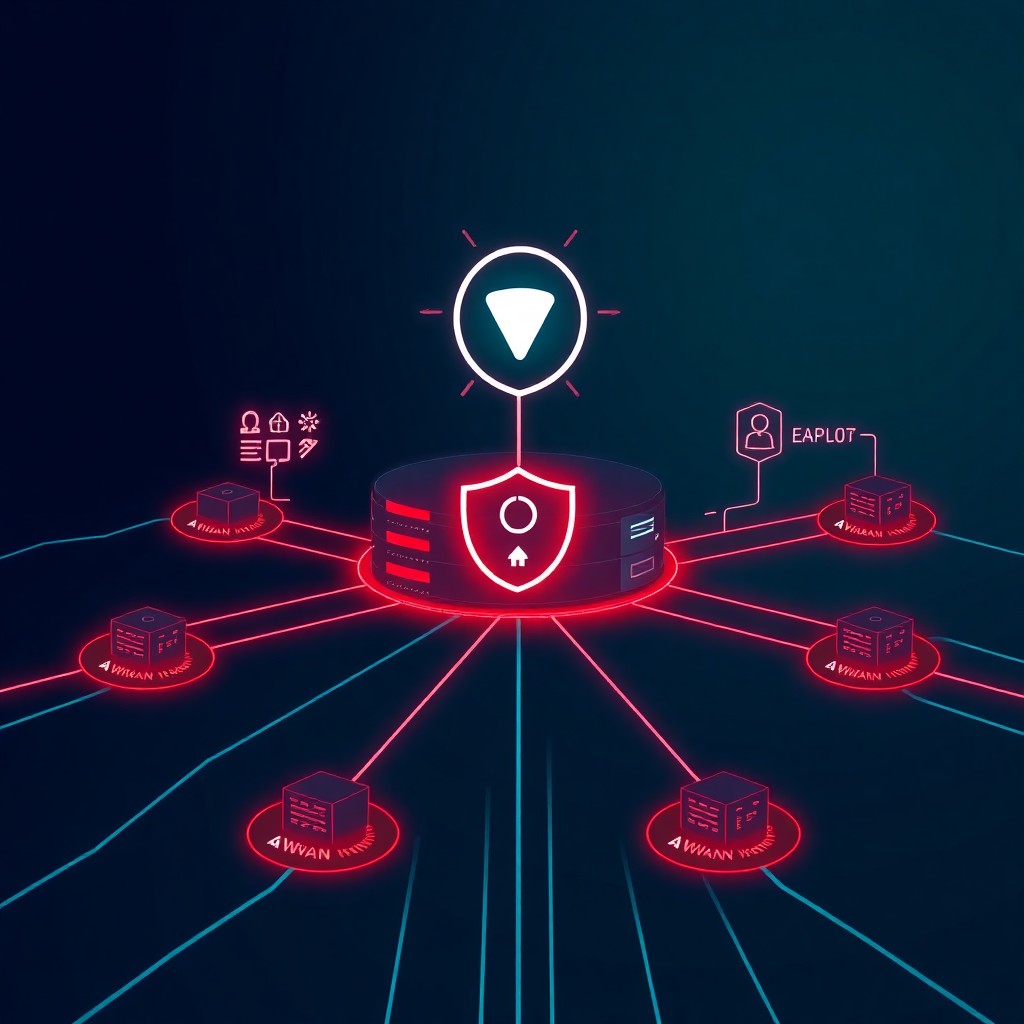
SASE implementation under TIC 3.0 leverages the “Branch Office” and “Remote User” use cases, with SASE platforms functioning as the Policy Enforcement Point (PEP) that mediates all user and application connections. The architecture delivers TIC security capabilities through cloud points-of-presence (PoPs) rather than physical agency-managed infrastructure.
Core SASE Components Mapping to TIC Capabilities
Identity and Access Management Integration: SASE platforms integrate with agency identity providers (IdP) using SAML, OIDC, or RADIUS, enforcing authentication before allowing any network or application access. This satisfies TIC’s identity management capability requirements while enabling zero trust’s “never trust, always verify” principle.
Inline Security Inspection: Traffic flowing through SASE PoPs undergoes inspection by integrated security services:
Traffic Flow Example:
User Device → SASE Client/Agent → Nearest SASE PoP
  ↓
Identity Verification (MFA + Device Posture)
  ↓
Policy Evaluation (User + Device + App Context)
  ↓
Security Stack (CASB, SWG, FWaaS, IPS, DLP)
  ↓
Destination (SaaS/IaaS/Agency Resource)
TIC Telemetry Generation: SASE platforms produce comprehensive logs capturing connection metadata, security decisions, threat detections, and data flows. These logs feed agency CISA-required security information and event management (SIEM) systems, satisfying TIC’s visibility and logging requirements.
Policy Architecture
SASE policies operate on contextual attributes rather than network location:
{
  "policy_example": {
    "user": "john.doe@agency.gov",
    "device_posture": "compliant",
    "location": "untrusted_network",
    "application": "agency_financial_system",
    "action": "allow",
    "security_controls": [
      "enforce_mfa",
      "inspect_ssl",
      "apply_dlp_policy",
      "block_file_upload"
    ]
  }
}
This granular control enables least-privilege access aligned with zero trust maturity model requirements while maintaining TIC’s security baseline.
Cloud-to-Cloud Connections
SASE platforms establish secure connections between SaaS applications and agency cloud environments without traffic traversing traditional TIC gateways. API-based CASB controls provide inline and out-of-band security for sanctioned cloud services, extending TIC protections to cloud-native workflows.
Impact & Risk Assessment
Positive Security Outcomes
Reduced Attack Surface: Eliminating the need for VPN concentrators and reducing exposed agency infrastructure decreases available attack vectors. Users never obtain network-level access to agency resources—only application-level access based on verified identity and context.
Improved Visibility: SASE platforms provide unified visibility across all users, devices, applications, and data flows regardless of location. This consolidated view surpasses traditional TIC implementations where remote user VPN traffic and direct cloud access often created blind spots.
Enhanced User Experience: Direct-to-cloud connectivity through optimized SASE PoPs reduces latency by 40-60% compared to hairpinned architectures, improving productivity while maintaining security.
Implementation Risks
Migration Complexity: Transitioning from established TIC infrastructure to SASE requires careful sequencing. Agencies must maintain security continuity while reconfiguring network routing, policies, and monitoring.
Vendor Dependence: SASE consolidates critical security functions into single platforms, creating significant vendor lock-in. Platform outages directly impact agency operations, necessitating robust SLA requirements and contingency planning.
Configuration Errors: SASE platforms offer extensive policy flexibility, which introduces configuration risk. Overly permissive policies or gaps in coverage can create security exposures that violate TIC requirements.
Compliance Validation: Agencies must demonstrate their SASE implementation satisfies all applicable TIC capabilities through documentation and testing—a process not yet standardized across CISA.
Vendor Response
Major SASE vendors including Palo Alto Networks (Prisma SASE), Zscaler, Cisco (Secure Access), Cloudflare, and Netskope have developed specific capabilities and compliance documentation to support TIC 3.0 implementations. These vendors offer:
- FedRAMP Authorized Solutions: High and Moderate impact FedRAMP authorizations providing baseline security validation
- TIC 3.0 Capability Mapping: Documentation explicitly mapping platform features to TIC security capabilities
- Government-Specific PoPs: US-based cloud infrastructure with cleared personnel for sensitive agency deployments
- Log Integration: Pre-built connectors for federal SIEM platforms including Splunk, Elastic, and agency-specific systems
CISA maintains the TIC catalog of approved vendors and solutions, though the agency emphasizes that catalog listing doesn’t constitute endorsement—agencies remain responsible for validating that implementations meet their specific security requirements.
Mitigations & Workarounds
Addressing Common Implementation Challenges
Multi-Vendor SASE: Agencies uncomfortable with single-vendor dependence can implement best-of-breed SASE using separate vendors for SD-WAN, CASB, and security services. This requires additional integration effort but reduces concentration risk.
Hybrid TIC Approaches: Maintain traditional TIC infrastructure for legacy applications requiring network-level access while routing modern cloud and SaaS traffic through SASE. This phased approach reduces migration risk.
Geographic Redundancy Requirements:
# Verify SASE PoP distribution meets agency availability requirements
curl -X GET https://vendor-api/v1/pops \
  -H "Authorization: Bearer $TOKEN" | \
  jq '.pops[] | select(.region=="us-gov") | {location, capacity, latency}'
Ensure SASE providers maintain multiple PoPs in separate geographic regions with automated failover capabilities.
Policy Testing Environments: Establish non-production SASE tenants mirroring production configurations for policy testing before deployment, preventing misconfigurations that could disrupt operations or create security gaps.
Detection & Monitoring
Log Collection and Analysis
SASE platforms must forward logs to agency SIEM systems in near-real-time, typically using syslog, HTTPS APIs, or cloud-native integrations:
# Example SASE log parsing for security monitoring
import json

def parse_sase_log(log_entry):
    """Extract security-relevant fields from SASE logs"""
    parsed = json.loads(log_entry)
    return {
        'timestamp': parsed['timestamp'],
        'user': parsed['identity']['user'],
        'source_ip': parsed['network']['source_ip'],
        'destination': parsed['application']['fqdn'],
        'action': parsed['policy']['action'],
        'threats': parsed['security']['threats_detected'],
        'dlp_violations': parsed['security']['dlp_matches']
    }
Key Monitoring Indicators
Authentication Anomalies: Failed authentication attempts, unusual login locations, or access from non-compliant devices may indicate credential compromise.
Policy Violations: Repeated blocks or alerts for specific users accessing unauthorized resources warrant investigation.
Threat Detections: Malware, phishing, or command-and-control traffic detected by SASE inline security requires immediate response.
Performance Degradation: Latency increases or connection failures may indicate DDoS attacks, SASE platform issues, or misconfigurations affecting availability.
CISA CDM Integration
SASE telemetry should integrate with Continuous Diagnostics and Mitigation (CDM) program feeds, providing visibility into device posture, vulnerabilities, and compliance status that informs dynamic SASE access policies.
Best Practices
Policy Development
Start with Least Privilege: Begin with deny-all policies, explicitly allowing only required access. Gradually expand based on validated business requirements rather than starting permissive and restricting.
Implement Contextual Policies: Leverage all available signals—user identity, device health, location, time, application sensitivity—to make access decisions rather than relying solely on credentials.
Document Policy Intent: Maintain clear documentation explaining the business purpose and security rationale for each policy to facilitate audits and updates.
Architecture Decisions
Geographic Considerations: Select SASE providers with PoP distribution matching agency user locations to minimize latency while ensuring PoPs meet data sovereignty requirements for sensitive workloads.
API Security: Extend SASE protections to API-based integrations between cloud services using CASB API controls, not just interactive user access.
Breakout Strategy: Define clear criteria for which applications route through SASE (typically all SaaS, internet, and sanctioned IaaS) versus traditional TIC (legacy on-premises applications).
Operational Readiness
Tabletop Exercises: Conduct scenario-based exercises simulating SASE platform outages, security incidents, and policy misconfigurations to validate response procedures.
Change Management: Implement rigorous change control for SASE policy modifications with peer review, testing, and approval workflows given the platform’s criticality.
Vendor SLA Monitoring: Actively monitor SASE vendor performance against contractual SLAs, escalating issues and maintaining alternative connectivity options for critical operations.
Key Takeaways
- CISA’s TIC 3.0 guidance formally recognizes SASE as a compliant architecture for federal zero trust implementations, removing previous ambiguity about cloud-native security models
- SASE consolidates network and security functions into cloud-delivered platforms that enforce identity-centric, context-aware access controls aligned with zero trust principles
- Successful implementation requires careful mapping of SASE capabilities to TIC security requirements, comprehensive logging integration, and rigorous policy management
- Organizations should approach SASE migration methodically, maintaining security continuity while modernizing infrastructure and reducing dependence on legacy perimeter-based models
- The convergence of TIC 3.0, zero trust mandates, and SASE technology provides federal agencies with a clear pathway to modernize security architectures for cloud-first operations
References
- CISA TIC 3.0 Core Guidance Documents – https://www.cisa.gov/trusted-internet-connections
- CISA Zero Trust Maturity Model – https://www.cisa.gov/zero-trust-maturity-model
- Executive Order 14028: Improving the Nation’s Cybersecurity – https://www.federalregister.gov/d/2021-10460
- NIST SP 800-207: Zero Trust Architecture – https://csrc.nist.gov/publications/detail/sp/800-207/final
- OMB M-22-09: Federal Zero Trust Architecture Strategy – https://www.whitehouse.gov/omb/management/ofcio/m-22-09-federal-zero-trust-architecture-strategy/
- FedRAMP SASE Marketplace – https://marketplace.fedramp.gov/
Stay updated at https://cydhaal.com — Your Daily Dose of Cyber Intelligence.
📧 Subscribe to our newsletter at https://cydhaal.com/newsletter/