









The Djinn infostealer campaign is actively exploiting CVE-2024-48558, a critical path traversal vulnerability in SimpleHelp remote support software, to deploy sophisticated credential-harvesting malware. This operation specifically targets cloud service credentials, AI platform tokens, and enterprise authentication systems. Organizations using SimpleHelp versions prior to 5.5.7 face immediate risk of complete credential compromise across their cloud infrastructure.
Introduction
A newly identified infostealer dubbed “Djinn” has emerged as a significant threat to enterprise cloud security, leveraging a recently disclosed vulnerability in SimpleHelp remote administration software. Unlike traditional infostealers focused on financial data, Djinn demonstrates an unprecedented focus on harvesting credentials for cloud platforms, artificial intelligence services, and development environments.
The malware exploits CVE-2024-48558, a path traversal flaw in SimpleHelp that allows unauthenticated attackers to read arbitrary files from affected servers. This vulnerability provides the perfect entry vector for Djinn operators, who subsequently deploy their payload to systematically extract sensitive authentication materials from compromised systems.
Security researchers have observed active exploitation targeting technology companies, managed service providers, and organizations with significant cloud infrastructure investments. The campaign’s sophistication and targeting patterns suggest a financially motivated threat actor with substantial technical capabilities.
Background & Context
SimpleHelp is a widely deployed remote support solution used by MSPs and IT departments worldwide to manage client systems remotely. The software’s privileged access to endpoints makes it an attractive target for threat actors seeking to establish persistent access to corporate networks.
CVE-2024-48558 was disclosed in October 2024 as a path traversal vulnerability affecting SimpleHelp versions prior to 5.5.7. The flaw allows remote attackers to traverse directory structures and access sensitive files without authentication, including configuration files, session tokens, and stored credentials.
The Djinn infostealer represents an evolution in credential theft malware. Rather than casting a wide net for banking credentials and cryptocurrency wallets, Djinn specifically hunts for:
- AWS, Azure, and Google Cloud Platform credentials
- OpenAI, Anthropic, and other AI service API keys
- GitHub, GitLab, and version control tokens
- Docker and Kubernetes configuration files
- CI/CD pipeline credentials
- SSH keys and certificate stores
This targeted approach reflects the shifting value proposition in cybercrime economies, where cloud access credentials can provide sustained access to valuable resources and data.
Technical Breakdown
The attack chain begins with reconnaissance to identify vulnerable SimpleHelp instances exposed to the internet. Attackers scan for the software’s default ports (80, 443, 8080) and specific HTTP headers that identify SimpleHelp installations.
Initial Exploitation:
Once identified, attackers exploit CVE-2024-48558 using crafted HTTP requests that bypass directory restrictions:
GET /../../../../../../etc/passwd HTTP/1.1
Host: vulnerable-simplehelp.example.com
User-Agent: Mozilla/5.0
The vulnerability allows traversal beyond the web root, enabling access to system files and SimpleHelp’s configuration directory.
Payload Deployment:
After confirming exploitation, attackers deploy the Djinn payload through multiple methods:
- Injecting malicious scripts into SimpleHelp’s web interface
- Modifying legitimate SimpleHelp executables
- Creating scheduled tasks that survive reboots
The malware itself is written in .NET with substantial obfuscation, including:
- String encryption using AES-256
- Control flow flattening
- Anti-debugging techniques
- Virtual machine detection
Credential Harvesting:
Djinn systematically searches for credentials in predictable locations:
# Targeted directories
~/.aws/credentials
~/.azure/
~/.config/gcloud/
~/.kube/config
~/.ssh/
~/.docker/config.json
~/AppData/Local/Google/Chrome/User Data/
The malware parses various file formats including JSON, YAML, XML, and browser SQLite databases. It includes specialized extractors for:
- Chrome, Edge, Firefox, and Brave browser credential stores
- Windows Credential Manager
- KeePass databases (if unlocked)
- Environment variables containing tokens
- Memory dumps of running processes
Exfiltration:
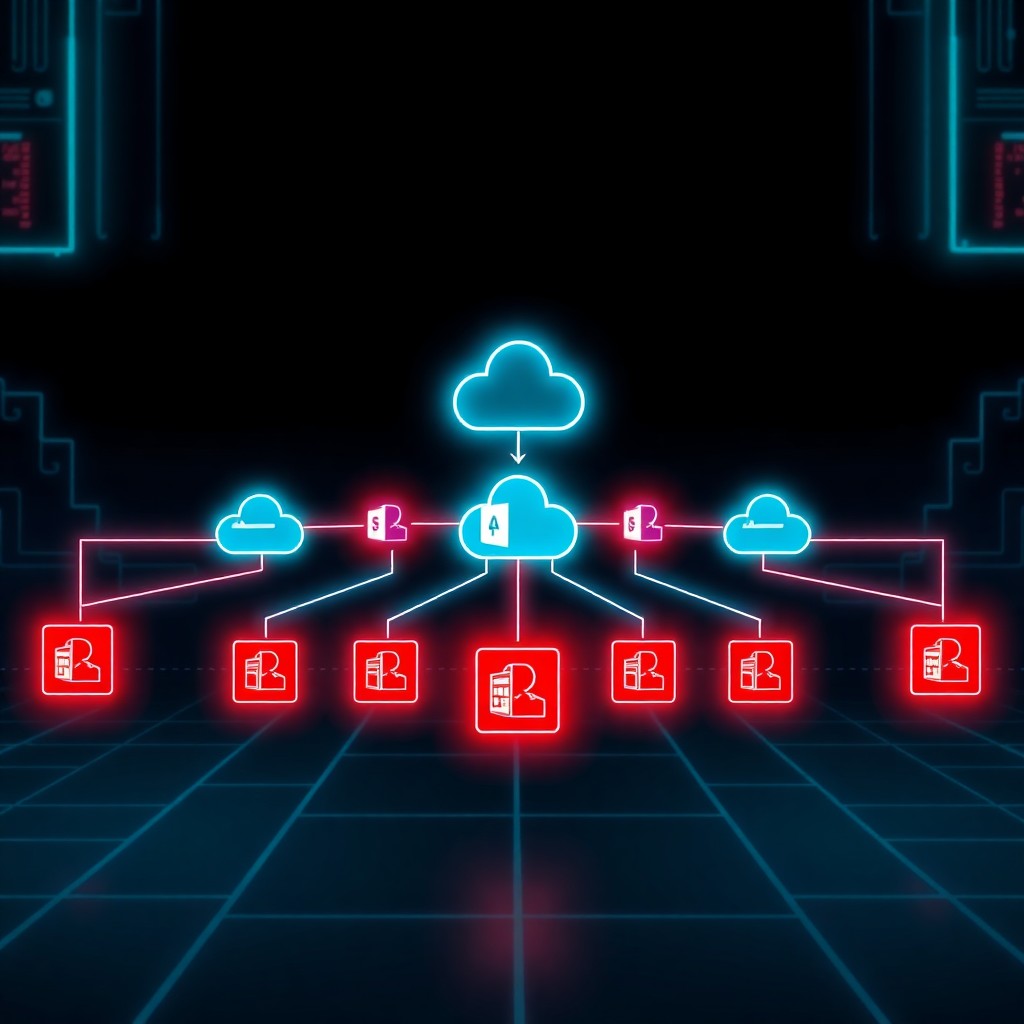
Stolen credentials are encrypted using RSA-4096 before exfiltration. The malware employs multiple Command & Control (C2) channels:
- HTTPS to legitimate cloud services (Dropbox, OneDrive) using compromised accounts
- DNS tunneling through seemingly legitimate domain queries
- Steganography embedding data in images uploaded to image hosting services
This multi-channel approach ensures data exfiltration even in monitored environments.
Impact & Risk Assessment
The impact of Djinn infections extends far beyond initial system compromise. Organizations face several critical risks:
Immediate Threats:
- Complete compromise of cloud infrastructure and associated data
- Unauthorized access to AI models and training data
- Lateral movement through development environments
- Theft of intellectual property stored in repositories
- Cryptocurrency mining on cloud resources
Financial Impact:
Compromised cloud credentials enable attackers to:
- Spin up expensive compute resources for cryptomining or botnet operations
- Steal training data and proprietary AI models worth millions
- Access production databases and customer information
- Ransom access back to legitimate owners
Organizations have reported unexpected cloud bills exceeding $100,000 within hours of credential compromise.
Long-term Consequences:
- Persistent backdoor access through compromised SSH keys
- Supply chain risks through compromised CI/CD pipelines
- Regulatory penalties for data breaches
- Reputational damage and customer trust erosion
- Legal liability from downstream compromises
The targeted nature of Djinn makes it particularly dangerous for managed service providers, who may inadvertently facilitate lateral movement to client environments.
Vendor Response
Simple Help Software released version 5.5.7 on October 15, 2024, which fully addresses CVE-2024-48558. The vendor implemented comprehensive input validation and path sanitization to prevent directory traversal attacks.
The security advisory included:
- Detailed vulnerability description
- Proof-of-concept prevention examples
- Migration guidance for affected versions
- Indicators of compromise for incident response
Simple Help Software has urged all customers to upgrade immediately and has made the patch available through their standard update channels. The vendor confirmed no exploit code was available prior to their disclosure, though active exploitation began within 72 hours of the CVE publication.
For customers unable to immediately update, the vendor provided temporary mitigation guidance including network segmentation and access restrictions.
Mitigations & Workarounds
Immediate Actions:
- Update SimpleHelp immediately to version 5.5.7 or later:
# Verify current version
simplehelp --version

# Download and apply latest update
wget https://simple-help.com/downloads/simplehelp-latest.tar.gz
tar -xzf simplehelp-latest.tar.gz
./install.sh
- Isolate potentially compromised systems from network until forensic analysis completes
- Rotate all credentials that may have been accessible from affected systems
Network-Level Protections:
Implement firewall rules restricting SimpleHelp access:
# Example iptables rules
iptables -A INPUT -p tcp --dport 8080 -s 10.0.0.0/8 -j ACCEPT
iptables -A INPUT -p tcp --dport 8080 -j DROP
Deploy web application firewall rules detecting path traversal attempts:
SecRule REQUEST_URI "@contains ../" "id:1001,deny,status:403"
SecRule REQUEST_URI "@contains ..\\" "id:1002,deny,status:403"
Credential Protection:
- Enable MFA on all cloud service accounts
- Implement credential rotation policies (maximum 90-day lifetime)
- Use hardware security keys for privileged access
- Deploy secret management solutions (HashiCorp Vault, AWS Secrets Manager)
- Restrict credential storage to encrypted vaults
Detection & Monitoring
Indicators of Compromise:
Monitor for these Djinn-specific artifacts:
File hashes (SHA256):
a3f8d9c2e1b4f7a6c8e2d4f9b3a7c1e5d8f2b6a9c3e7d1f4b8a2c6e9d3f7a1b5
e7d3f9a1c5b8e2d6f3a9c1e7d4f8b2a6c9e3d7f1a5b8c2e6d9f3a7c1e5d8f2b6
Network indicators:
- Outbound connections to known Djinn C2 domains
- Unusual DNS queries with high entropy
- Large data transfers to cloud storage services
- SSH connections to unfamiliar IP addresses
Log Analysis:
Search SimpleHelp logs for exploitation attempts:
grep -i "\.\./" /var/log/simplehelp/access.log
grep -E "etc/passwd|etc/shadow|\.aws|\.ssh" /var/log/simplehelp/access.log
Cloud audit logs should be reviewed for:
# Suspicious API calls
- iam:CreateAccessKey from unfamiliar IPs
- iam:CreateUser with administrative permissions
- ec2:RunInstances in unusual regions
- lambda:CreateFunction with external code sources
Behavioral Detection:
Deploy EDR rules detecting:
- Credential file access by unexpected processes
- Browser database queries outside browser processes
- Mass file enumeration in user directories
- Encryption operations on collected files
- Outbound connections immediately following file access
Best Practices
Secure Remote Access:
- Implement least-privilege access for remote administration tools
- Require VPN access before reaching remote support software
- Enable session recording for compliance and forensics
- Implement just-in-time access provisioning
- Regular security assessments of remote access tools
Credential Hygiene:
- Never store credentials in plain text configuration files
- Use environment variables or secret management systems
- Implement credential scanning in CI/CD pipelines
- Enable cloud provider guard rails (AWS GuardDuty, Azure Sentinel)
- Regular credential audits and automated rotation
Endpoint Protection:
- Deploy EDR on all systems with remote access tools
- Enable application whitelisting where feasible
- Implement DNS filtering to block C2 domains
- Regular vulnerability scanning and patch management
- Network segmentation between management and production systems
Incident Response Readiness:
- Maintain offline backups of critical credentials
- Document credential rotation procedures
- Establish communication channels for security incidents
- Regular tabletop exercises for credential compromise scenarios
- Maintain relationships with cloud providers for emergency support
Key Takeaways
- CVE-2024-48558 in SimpleHelp is being actively exploited by the Djinn infostealer campaign
- The malware specifically targets cloud, AI, and development credentials rather than traditional financial data
- Organizations using SimpleHelp must immediately update to version 5.5.7 or implement network-level mitigations
- Comprehensive credential rotation is essential for any organization potentially affected
- The shift toward cloud credential theft represents an evolution in infostealer tactics and targets
- Multi-layered security including MFA, secret management, and behavioral monitoring provides the best defense
- MSPs face particular risk due to their access to multiple client environments
The Djinn campaign demonstrates that remote administration tools remain high-value targets for sophisticated threat actors. Organizations must treat these systems with the same security rigor as domain controllers and other critical infrastructure components.
Stay updated at https://cydhaal.com — Your Daily Dose of Cyber Intelligence.
📧 Subscribe to our newsletter at https://cydhaal.com/newsletter/