







The U.S. Department of Justice has seized over 400 domains allegedly used to illegally stream FIFA World Cup content, marking one of the largest anti-piracy enforcement actions in recent years. This coordinated operation targeted websites providing unauthorized access to premium sports content, highlighting the intersection of intellectual property enforcement and cybersecurity infrastructure control. The seizures demonstrate how law enforcement agencies are increasingly treating digital piracy operations as serious cyber threats, utilizing domain seizure tactics typically reserved for more traditional cybercrime.
Introduction
In a sweeping enforcement action, federal authorities have dismantled a significant portion of the illegal streaming ecosystem that flourished around FIFA World Cup broadcasts. The operation, which resulted in the seizure of approximately 400 domains, represents a coordinated effort between the Department of Justice, Homeland Security Investigations, and international partners to combat digital piracy at scale.
While streaming piracy may seem like a victimless crime to casual observers, these operations often share infrastructure, tactics, and sometimes even operators with more malicious cyber activities. The domains seized weren’t simply hosting video content—they represented a sophisticated network of redirects, clone sites, and distributed infrastructure designed to evade detection and takedown attempts.
This action raises important questions about domain security, the mechanisms law enforcement uses to seize internet properties, and what legitimate website operators can learn from how these takedowns are executed.
Background & Context
Illegal streaming operations have evolved significantly over the past decade. What began as simple file-sharing has transformed into sophisticated content delivery networks that rival legitimate streaming platforms in user experience and reliability. These operations typically monetize through aggressive advertising, which frequently exposes viewers to malicious content, phishing attempts, and malware distribution.
The FIFA World Cup represents one of the most valuable sporting properties globally, with broadcasting rights worth billions of dollars. This creates enormous financial incentive for piracy operations, which can generate substantial revenue through advertising without paying licensing fees.
Previous enforcement actions against streaming sites have shown a pattern: when authorities take down major domains, operators quickly spin up replacement sites, often within hours. This has led to a cat-and-mouse game where law enforcement must target not just individual domains but entire networks of interconnected properties.
The legal framework for these seizures stems from civil asset forfeiture laws and the Lanham Act, which allows for the seizure of domain names used to commit trademark infringement. Courts can issue warrants enabling the registry operators to redirect seized domains to government-controlled servers.
Technical Breakdown
Domain seizures follow a specific technical and legal process. First, investigators must establish probable cause that the domains are facilitating copyright or trademark violations. They then obtain seizure warrants from federal courts, which compel domain registrars and registry operators to transfer control of the domains to government servers.
When a domain is seized, the technical implementation typically involves:
DNS Record Modification:
Original: pirate-stream.com → 192.168.1.100 (pirate server)
After seizure: pirate-stream.com → 54.85.132.205 (ICE server)
The seized domains now display a standardized notice informing visitors that the domain has been seized by federal authorities. This is accomplished by pointing the domain’s DNS records to servers controlled by Homeland Security Investigations (HSI).
The infrastructure behind these 400 domains likely shared several characteristics:
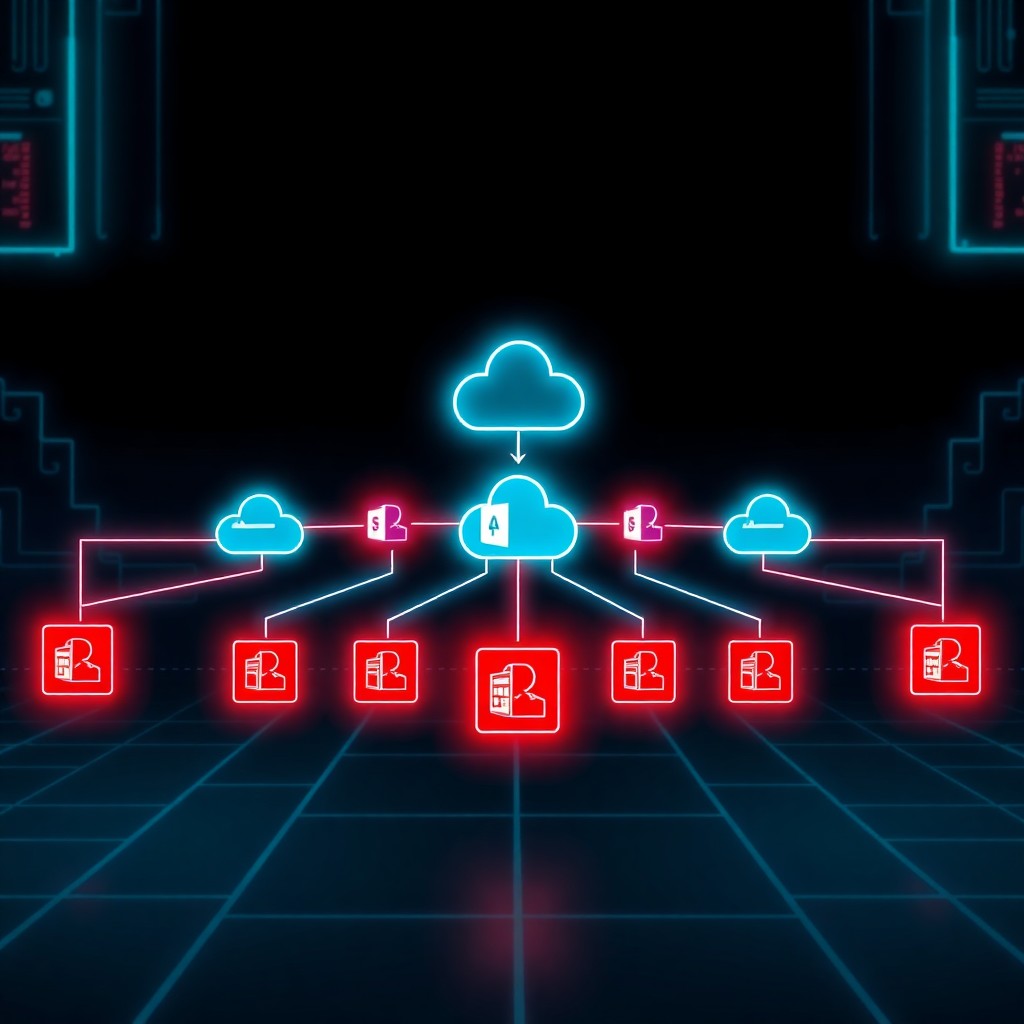
Distributed Architecture: Multiple domains pointing to the same content servers, providing redundancy and making complete takedown difficult.
DNS Fast-Flux: Rapidly changing IP addresses to evade blocking and takedown attempts.
CDN Abuse: Leveraging legitimate content delivery networks to distribute streams, making the traffic appear more legitimate.
Domain Generation Algorithms: Potentially automated systems for registering new domains to replace seized ones.
Investigators likely used network analysis to map the relationships between domains, identifying common registration patterns, shared IP addresses, and linked payment infrastructure. This kind of analysis would reveal:
Infrastructure Clustering:
├── Shared Name Servers
├── Common Registrant Information (often falsified)
├── Overlapping IP Address Ranges
├── Similar Website Templates/Code
└── Connected Advertising Networks
Impact & Risk Assessment
The immediate impact of this seizure operation is the disruption of illegal streaming services that were actively being promoted for FIFA World Cup viewing. However, the broader implications extend into several areas of concern:
User Security Risks: Visitors to illegal streaming sites face significant security risks. Research consistently shows that piracy sites expose users to malware at rates 28 times higher than legitimate sites. These domains often host:
- Drive-by download attacks
- Malicious advertising networks
- Credential harvesting schemes
- Cryptocurrency mining scripts
- Phishing pages disguised as streaming portals
Financial Fraud: Users who created accounts or provided payment information to these services may have exposed sensitive financial data to criminal operators.
Precedent for Domain Control: While this action targets piracy, the mechanisms used—domain seizure without immediate recourse—demonstrate government capabilities to remove internet properties from public access. This raises policy questions about due process and the potential for overreach.
Business Impact: Legitimate broadcasting partners who paid billions for FIFA rights see direct financial harm from piracy operations that undercut their exclusive content.
The risk profile for website operators includes understanding that domain ownership isn’t absolute—it’s subject to legal process and can be revoked when domains are used for illegal purposes.
Vendor Response
The Department of Justice released a statement emphasizing that this operation protects both intellectual property rights holders and internet users who might be victimized by malicious content on piracy sites.
FIFA and its official broadcasting partners have consistently supported anti-piracy enforcement efforts, providing evidence and cooperation to authorities. Major sports leagues have increasingly invested in anti-piracy technology, including:
- Watermarking technology to trace leaked streams to their source
- Automated detection systems that identify unauthorized broadcasts
- Legal teams dedicated to pursuing takedown actions
Domain registrars and registry operators are generally cooperative with law enforcement when presented with valid seizure warrants, though some have advocated for clearer standards and due process protections in the seizure process.
Technology companies that provide infrastructure services—CDNs, hosting providers, and payment processors—face ongoing challenges in balancing service provision with preventing abuse of their platforms.
Mitigations & Workarounds
For legitimate website operators, this enforcement action highlights the importance of maintaining clear compliance with intellectual property laws and implementing protective measures:
Domain Security Best Practices:
- Enable registry lock at your domain registrar to prevent unauthorized transfers
- Use reputable registrars with strong security policies
- Maintain accurate WHOIS information to ensure legal notices reach you
- Implement DNSSEC to prevent DNS hijacking
# Check if DNSSEC is enabled for your domain
dig +dnssec yourdomain.com

# Enable registry lock (process varies by registrar)
# Contact your registrar to enable clientTransferProhibited status
Content Protection Measures:
- Implement robust DRM when distributing premium content
- Monitor for unauthorized redistribution of your content
- Maintain clear terms of service
- Document your content licensing and rights
Legal Compliance:
- Ensure you have proper licensing for all content you distribute
- Respond promptly to DMCA notices
- Maintain legal counsel familiar with digital copyright issues
- Keep documentation of content ownership and licensing agreements
For organizations concerned about domain seizure risks, consider maintaining presence across multiple top-level domains (TLDs) under different jurisdictions, though this should never be used to circumvent legitimate legal obligations.
Detection & Monitoring
Organizations seeking to protect their content or monitor for impersonation can implement several detection strategies:
Domain Monitoring:
# Monitor for similar domains registered
# Use services like DNSTwist to find potential phishing domains
dnstwist --registered cydhaal.com

# Set up Google Alerts for your brand + streaming keywords
# Monitor trademark filings
Content Fingerprinting:
Implement digital watermarking and fingerprinting technology to track where your content appears online. Services like YouTube’s Content ID demonstrate the effectiveness of automated content matching.
Traffic Analysis:
Monitor for unusual spikes in traffic or access patterns that might indicate content redistribution:
# Analyze access logs for suspicious patterns
awk '{print $1}' access.log | sort | uniq -c | sort -rn | head -20

# Look for automated scraping behavior
grep -E "bot|crawler|scraper" access.log
Threat Intelligence:
Subscribe to anti-piracy intelligence services that track illegal streaming operations and can provide early warning when your content appears on unauthorized platforms.
Best Practices
Based on this enforcement action and the broader landscape of digital content protection, organizations should adopt these best practices:
1. Layered Content Protection
Don’t rely on a single protection mechanism. Combine technical controls (DRM, encryption), legal protections (copyright registration), and monitoring (automated detection) for comprehensive coverage.
2. Rapid Response Capability
Establish processes for quickly responding to piracy incidents:
- Designated team for handling infringement reports
- Pre-established relationships with legal counsel
- Template DMCA notices ready to deploy
- Escalation paths to law enforcement for serious violations
3. User Education
Many users don’t understand the risks of piracy sites. Educate your audience about:
- Security risks of illegal streaming
- How piracy undermines content creation
- Legitimate, affordable access options
4. Technology Investment
Modern anti-piracy technology has become increasingly sophisticated. Consider investing in:
- Automated content recognition systems
- Watermarking and forensic tracking
- Bot detection and prevention
- Geo-restriction and access controls when appropriate
5. Collaborative Approach
Work with industry partners, law enforcement, and technology providers. The most effective anti-piracy efforts involve coordination across multiple stakeholders.
Key Takeaways
- The DOJ’s seizure of 400 FIFA streaming domains represents a significant enforcement action leveraging domain control mechanisms to combat digital piracy
- Illegal streaming sites pose security risks to users beyond just copyright violations, including malware distribution and phishing
- Domain seizure is a powerful law enforcement tool that can rapidly disrupt illegal operations by controlling internet infrastructure
- Website operators should implement strong domain security measures to protect against unauthorized seizure or transfer
- Content protection requires a multi-layered approach combining technical, legal, and monitoring capabilities
- The enforcement action demonstrates the government’s willingness to pursue large-scale operations against digital piracy infrastructure
- Users accessing illegal streaming sites expose themselves to significant cybersecurity risks beyond legal liability
References
- U.S. Department of Justice Official Announcements
- Homeland Security Investigations (HSI) Public Statements
- ICANN Domain Seizure Policies and Procedures
- Digital Citizens Alliance Reports on Piracy Site Security Risks
- FIFA Anti-Piracy Technology and Enforcement Documentation
- Federal Civil Asset Forfeiture Guidelines
- Lanham Act Provisions on Trademark Enforcement
- Internet Corporation for Assigned Names and Numbers (ICANN) Registration Data Access Protocol
Stay updated at https://cydhaal.com — Your Daily Dose of Cyber Intelligence.
📧 Subscribe to our newsletter at https://cydhaal.com/newsletter/