







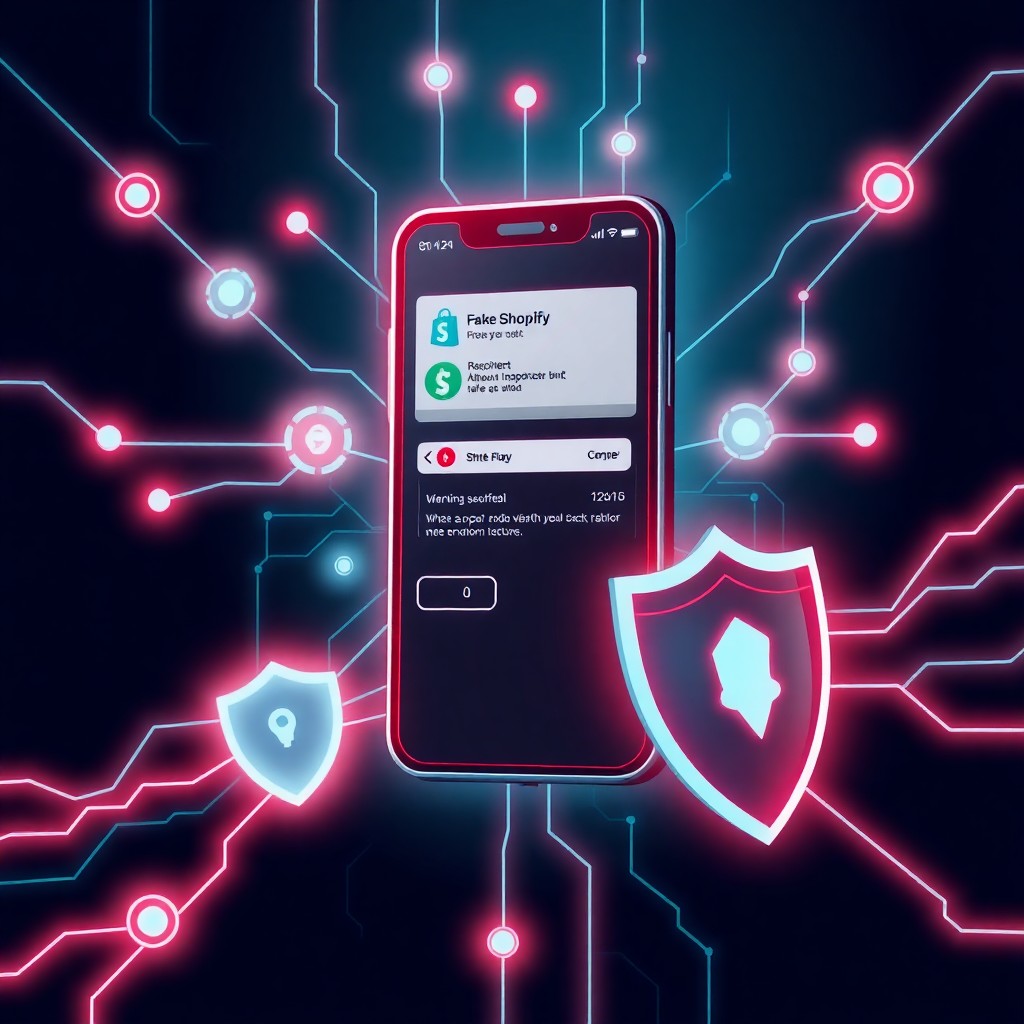
Threat actors are abusing Shopify’s legitimate Shop app—a popular order-tracking platform—to deliver callback phishing attacks that bypass traditional email security controls. By exploiting the app’s notification system, attackers send authentic-looking messages from Shopify’s infrastructure, tricking victims into calling fraudulent support numbers. This campaign leverages trusted domain reputation to evade detection, targeting users with fake order confirmations and delivery alerts that prompt urgent callbacks to attacker-controlled phone lines.
Introduction
A new phishing campaign has emerged that weaponizes trust in a way that’s particularly insidious: by hijacking legitimate business infrastructure. Cybercriminals are exploiting Shopify’s Shop app—used by millions to track orders and manage deliveries—to push callback phishing (vishing) attacks. Unlike traditional phishing that relies on malicious links or attachments, this technique manipulates victims into initiating contact with fraudsters through phone calls.
The campaign demonstrates how attackers are evolving beyond email-based threats, exploiting notification systems from trusted platforms. By abusing Shopify’s legitimate infrastructure, these messages arrive with all the hallmarks of authenticity: verified domains, proper SPF/DKIM authentication, and familiar branding. This approach bypasses email security filters that rely on domain reputation scoring, making detection exceptionally difficult.
Background & Context
Shopify’s Shop app serves as a centralized hub for tracking orders from multiple merchants, with over 118 million users worldwide. The platform sends automated notifications about order confirmations, shipping updates, and delivery status—communications that users have been conditioned to trust implicitly.
Callback phishing represents an evolution in social engineering tactics. Instead of requesting victims click malicious links, attackers provide phone numbers and create urgency that compels targets to make contact. Once on the phone, fraudsters employ various pretexts—from fake fraud alerts to bogus subscription renewals—to extract sensitive information, payment details, or remote access credentials.
This particular campaign exploits a fundamental asymmetry: while Shopify’s security team monitors for malicious storefronts, the sheer volume of legitimate transactions makes identifying fraudulent order notifications extremely challenging. Attackers create throwaway Shopify stores, generate fake orders, and leverage the Shop app’s notification infrastructure to reach victims at scale.
Technical Breakdown
The attack chain follows a methodical process that exploits legitimate platform functionality:
Initial Setup:
Attackers establish Shopify merchant accounts using stolen or synthetic identities. These accounts often remain active long enough to generate multiple fraudulent campaigns before detection. The low barrier to entry for creating Shopify stores—combined with trial periods—enables attackers to operate with minimal investment.
Order Manipulation:
Threat actors create fake products and generate fraudulent orders using victim email addresses harvested from data breaches or purchased from underground markets. The Shop app automatically sends notifications to these addresses, regardless of whether recipients have accounts or previous Shopify activity.
Message Crafting:
The notifications appear identical to legitimate Shopify communications, including:
- Authentic sender addresses (noreply@shopifyemail.com)
- Valid DMARC, SPF, and DKIM signatures
- Professional branding and formatting
- Order numbers and tracking information
Social Engineering Hook:
Messages typically claim high-value purchases ($500-$3,000) for electronics, jewelry, or subscriptions the victim never authorized. They include prominent phone numbers labeled as “Customer Support” or “Cancel Order Hotline,” creating immediate urgency.
Callback Mechanism:
When victims call the provided numbers, they reach sophisticated call centers—often operated from overseas—where fraudsters impersonate support representatives. These operators employ scripts designed to extract:
- Credit card numbers and CVV codes
- Banking credentials
- Social Security numbers
- Remote desktop access via tools like AnyDesk or TeamViewer
Email Header Analysis:
Legitimate Shopify infrastructure makes detection difficult:
From: Shop
Authentication-Results: spf=pass smtp.mailfrom=shopifyemail.com;
  dkim=pass header.d=shopifyemail.com;
  dmarc=pass (policy=reject) header.from=shopifyemail.com
This authentication passes all standard email security checks, as the messages genuinely originate from Shopify’s systems.
Impact & Risk Assessment
Primary Targets:
- Individual consumers with established online shopping habits
- Elderly users less familiar with sophisticated scams
- Business professionals managing corporate purchasing
- Anyone whose email appears in credential dumps or breach databases
Financial Impact:
Victims report losses ranging from hundreds to tens of thousands of dollars. Unlike traditional phishing where fraudulent charges might be reversed, callback phishing often involves victims willingly providing information or authorizing transfers, complicating recovery efforts.
Trust Erosion:
This campaign undermines confidence in legitimate e-commerce notifications. As users become suspicious of all order confirmations, they may ignore genuine delivery issues or security alerts, creating additional vulnerabilities.
Scale Potential:
The automation capabilities of Shopify’s platform enable attackers to generate thousands of fraudulent notifications daily. Multiple concurrent campaigns have been observed using variations in product types, price points, and urgency tactics to maximize victim pool diversity.
Downstream Risks:
Information collected through callback interactions enables secondary attacks including account takeovers, identity theft, and targeted ransomware campaigns. Victims who install remote access tools face persistent compromise requiring complete system remediation.
Vendor Response
Shopify has acknowledged the abuse of its Shop app infrastructure and implemented several countermeasures:
Account Verification Enhancement:
The company strengthened merchant verification requirements, including identity validation and payment method authentication. However, these measures must balance security with user experience for legitimate new merchants.
Automated Detection Systems:
Shopify deployed machine learning models to identify suspicious order patterns, including:
- Bulk orders to disparate email addresses
- Stores with minimal inventory generating high transaction volumes
- Rapid order creation followed by immediate notification delivery
Notification Controls:
The Shop app now includes enhanced user controls for managing which merchants can send notifications. Users can restrict messages to previously approved stores or disable notifications from merchants where they haven’t completed actual purchases.
Abuse Reporting:
Shopify established dedicated channels for reporting fraudulent notifications and expedited takedown procedures for confirmed malicious stores. Response times have improved, though the window for campaign effectiveness remains sufficient for attackers.
Law Enforcement Collaboration:
The company works with cybercrime units to trace payment methods and infrastructure used by fraudulent merchants, though attribution remains challenging given the use of stolen credentials and cryptocurrency.
Mitigations & Workarounds
For Individual Users:
Implement verification protocols before responding to order notifications:
- Cross-Reference Independently:
Never use contact information from unexpected notifications. Instead, visit the merchant’s official website directly and locate support contacts through verified channels.
- Review Purchase History:
Check credit card statements and bank records before calling about unfamiliar charges. Most fraudulent notifications reference orders that don’t appear in financial records.
- Enable Multi-Factor Authentication:
Protect Shopify accounts and payment methods with MFA to prevent unauthorized order placement even if credentials are compromised.
- Configure Shop App Settings:
Navigate to Settings > Notifications and restrict alerts to known merchants:
Shop App > Settings > Notification Preferences
   - Disable "Order updates from new shops"
   - Enable "Only shops I've purchased from"
For Organizations:
Deploy email security policies that flag external notifications claiming internal purchases:
Create mail flow rule:
IF sender_domain = shopifyemail.com
AND recipient NOT IN shopify_approved_users
THEN apply_warning_banner OR quarantine
For Security Teams:
Implement SIEM rules detecting callback phishing indicators:
Alert on emails containing:
- Phone numbers in subject or body
- Urgency keywords: "cancel," "fraud alert," "unauthorized"
- High-value amounts ($XXX.XX pattern)
- From trusted domains with suspicious order references
Detection & Monitoring
Email Analysis Indicators:
Monitor for notification anomalies suggesting fraudulent orders:
- Orders from merchants you’ve never contacted
- Products inconsistent with typical purchasing patterns
- Delivery addresses that don’t match your location
- Time-sensitive cancellation windows creating artificial urgency
Network-Level Detection:
Security operations centers should baseline normal Shopify notification volumes:
# Pseudocode for anomaly detection
baseline_daily_shopify_notifications = calculate_30day_average()
current_volume = count_shopify_emails_today()

if current_volume > (baseline * 3):
    alert("Potential Shopify notification abuse campaign")
User Behavior Analytics:
Track unusual patterns in organizational email:
- Sudden spikes in Shopify notifications across multiple users
- Notifications to employees without purchasing authority
- Messages arriving outside business hours with urgent callbacks
Threat Intelligence Integration:
Maintain watchlists of phone numbers associated with callback phishing:
- Cross-reference numbers in emails against known scam databases
- Share indicators with industry ISACs
- Monitor dark web forums for Shopify abuse discussions
Best Practices
Establish Verification Protocols:
Treat unexpected order confirmations with the same skepticism as lottery wins or inheritance notices. Legitimate merchants provide multiple verification paths; fraudsters rely on single points of contact.
Educate on Vishing Tactics:
Train users to recognize callback phishing red flags:
- Requests for remote access to “verify” account security
- Pressure to act immediately to avoid consequences
- Requests for payment via gift cards, wire transfer, or cryptocurrency
Implement Defense in Depth:
No single control prevents callback phishing. Layer technical controls with user awareness:
- Email filtering (reduce delivery volume)
- Banner warnings (alert to external senders)
- User training (improve recognition)
- Incident response (minimize damage)
Maintain Incident Response Readiness:
Develop specific playbooks for callback phishing incidents:
Response Checklist:
[ ] Isolate compromised accounts
[ ] Review financial transactions (24-48 hour window)
[ ] Scan systems for remote access tools
[ ] Reset credentials for exposed accounts
[ ] File reports with financial institutions
[ ] Document phone numbers and personas used
Leverage Platform-Specific Controls:
Enable all available security features in the Shop app and associated accounts. Shopify provides granular notification controls—use them to minimize attack surface.
Key Takeaways
- Trust Exploitation: Attackers increasingly abuse legitimate infrastructure rather than deploying malicious domains, making traditional reputation-based defenses insufficient.
- Authentication Isn’t Authorization: Valid email authentication (SPF/DKIM/DMARC) confirms message origin but not legitimacy—messages can be authentic from a platform while representing fraudulent activity.
- Callback Phishing Evolution: Vishing campaigns remove technical indicators that security tools detect, shifting the defense burden to human judgment under stressful urgency.
- Platform Responsibility: Service providers must balance open access with abuse prevention, implementing detection systems that identify malicious use patterns without hindering legitimate commerce.
- Verification Before Action: The single most effective defense remains independent verification—never use contact information provided in unexpected notifications.
References
- Shopify Trust Center – Security Best Practices: https://www.shopify.com/trust
- FBI IC3 Callback Phishing Alert: https://www.ic3.gov/
- Anti-Phishing Working Group (APWG) Vishing Reports: https://apwg.org/
- Shopify Partner Community – Security Discussions: https://community.shopify.com/
- CISA Phishing Guidance: https://www.cisa.gov/phishing
Stay updated at https://cydhaal.com — Your Daily Dose of Cyber Intelligence.
📧 Subscribe to our newsletter at https://cydhaal.com/newsletter/