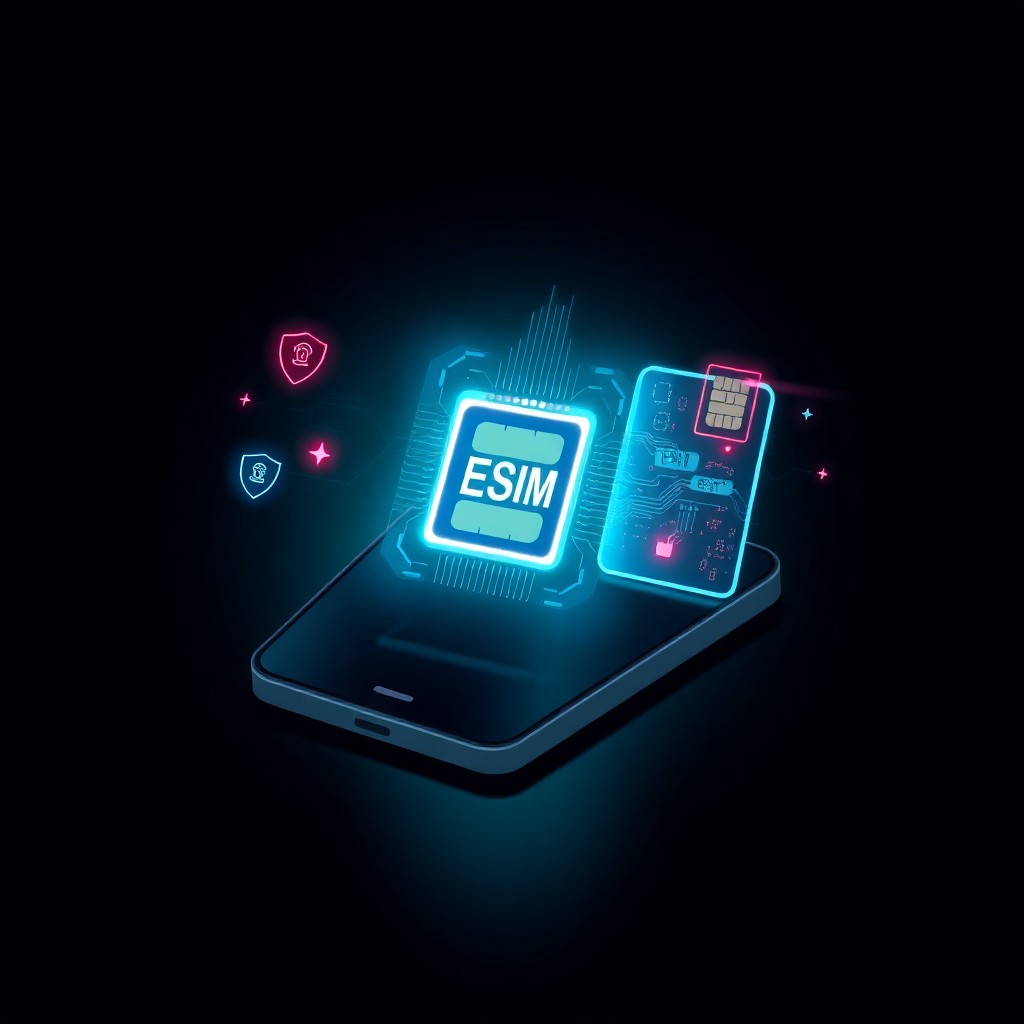
eSIM technology is rapidly displacing traditional physical SIM cards, offering convenience and flexibility but introducing new attack surfaces. While eSIMs eliminate physical theft vulnerabilities, they create opportunities for remote exploitation, SIM swap attacks, and unauthorized profile provisioning. Organizations and individuals must understand the security trade-offs as this technology becomes the mobile industry standard, with proper authentication mechanisms and monitoring strategies essential to prevent account takeovers and maintain device integrity.
Introduction
The telecommunications industry is undergoing a fundamental shift as embedded SIMs (eSIMs) replace traditional removable SIM cards in smartphones, tablets, and IoT devices. Apple’s decision to eliminate physical SIM card slots from iPhone 14 models sold in the United States marked a watershed moment, signaling the industry’s direction. Major carriers globally have accelerated eSIM adoption, with millions of devices now relying exclusively on virtual SIM profiles.
This transition promises operational benefits: instant carrier switching, support for multiple numbers on one device, and elimination of physical card logistics. However, from a security perspective, eSIMs fundamentally alter the threat landscape. The attack surface shifts from physical device access to remote provisioning systems, authentication mechanisms, and carrier infrastructure. Understanding these security implications is critical as eSIM adoption approaches the point of no return.
Background & Context
Traditional SIM cards have existed since 1991, providing secure authentication between mobile devices and carrier networks. The physical card contains cryptographic keys and subscriber information, requiring physical access for theft or manipulation. This tangible nature provided inherent security—stealing a SIM meant physically accessing the device.
eSIMs, standardized by the GSMA in 2016, embed the SIM functionality directly into device hardware. Rather than swapping physical cards, users download carrier profiles over-the-air through a process called Remote SIM Provisioning (RSP). An eUICC (embedded Universal Integrated Circuit Card) chip stores multiple carrier profiles, switchable through software.
The technology gained traction initially in IoT devices and wearables, where physical SIM slots were impractical. Consumer smartphone adoption accelerated from 2018 onward, with most flagship devices now supporting eSIM alongside traditional slots. Current industry projections indicate eSIMs will account for over 50% of smartphone connections by 2025, with some manufacturers eliminating physical SIM slots entirely in certain markets.
Technical Breakdown
eSIM architecture relies on several interconnected components that create new potential exploitation points:
Provisioning Infrastructure: The SM-DP+ (Subscription Manager Data Preparation) server handles profile creation and encryption. The SM-DS (Subscription Manager Discovery Service) allows devices to discover which SM-DP+ server to contact. Compromising these servers could enable mass unauthorized profile distribution.
Activation Flow: eSIM activation typically follows this sequence:
1. User requests eSIM from carrier
- Carrier generates activation QR code or app-based token
- Device contacts SM-DS with eUICC ID (EID)
- SM-DS returns SM-DP+ server address
- Device authenticates to SM-DP+ using activation code
- Encrypted profile downloads to eUICC
- Profile installation and activation
Each step presents potential attack vectors. The activation code serves as the primary authentication mechanism—typically a QR code or alphanumeric string. Unlike physical SIM collection requiring ID verification, eSIM activation codes can be intercepted, phished, or socially engineered.
Authentication Weaknesses: Most carriers implement minimal verification for eSIM transfers. An attacker with access to a victim’s carrier account portal—through credential stuffing, phishing, or insider access—can generate eSIM activation codes. Some carriers send activation codes via SMS, creating a circular vulnerability where SMS-based two-factor authentication protects the very system that can be compromised via eSIM transfer.
Profile Management: The Local Profile Assistant (LPA) in device operating systems manages installed profiles. Vulnerabilities in LPA implementations could allow unauthorized profile manipulation, deletion, or activation without user consent.
Impact & Risk Assessment
The eSIM security landscape presents several critical risk scenarios:
Enhanced SIM Swap Attacks: Traditional SIM swaps required attackers to convince carrier staff to transfer service to a physical SIM card, often requiring in-person interaction. eSIM transfers can occur entirely remotely through compromised online accounts, reducing friction for attackers. The FBI issued warnings in 2023 about increased eSIM-based account takeovers targeting cryptocurrency holders and high-value accounts.
Supply Chain Vulnerabilities: The eSIM provisioning infrastructure involves multiple entities—device manufacturers, eUICC vendors, SM-DP+ operators, and carriers. Compromise at any point could enable mass surveillance, profile injection, or service disruption. Nation-state actors could potentially introduce backdoors during manufacturing or provisioning processes.
Data Persistence: Unlike physical SIMs that can be removed, eSIMs remain in devices throughout their lifecycle. Selling or disposing of eSIM-capable devices without proper profile deletion could expose subscriber credentials and usage history. Some implementations store deleted profile remnants in eUICC memory.
IoT Scale Concerns: Billions of IoT devices using eSIM technology create an enormous attack surface. Many IoT implementations lack robust security controls, and compromised eSIM profiles could facilitate botnet recruitment, data exfiltration, or service disruption at scale.
Regulatory and Jurisdictional Issues: eSIMs enable instant international carrier switching, complicating lawful intercept capabilities and creating jurisdictional challenges for law enforcement and regulatory bodies.
Vendor Response
Major stakeholders have implemented various security measures addressing eSIM vulnerabilities:
GSMA Specifications: The standards body continuously updates RSP specifications, with version 3.2 introducing enhanced authentication requirements and improved profile protection mechanisms. The Consumer eSIM Specification mandates encrypted profile delivery and secure element storage.
Carrier Implementations: Leading carriers have strengthened verification processes for eSIM activations. Verizon, T-Mobile, and AT&T now implement additional authentication steps for eSIM transfers, including in-app verification, email confirmation, and temporary PINs. However, implementation consistency varies significantly across global carriers.
Device Manufacturers: Apple’s implementation requires device passcode verification before eSIM transfer to another device. Samsung’s Knox platform provides hardware-backed eSIM security. Google’s Pixel devices integrate eSIM management with Titan M security chip verification.
Authentication Enhancements: Some carriers now offer alternative verification methods beyond SMS, including authenticator apps, biometric verification, and video identification for high-risk eSIM operations.
Mitigations & Workarounds
Organizations and individuals can implement several protective measures:
Account Hardening:
- Enable strongest available authentication on carrier accounts
- Use unique, complex passwords for carrier portals
- Avoid SMS-based 2FA for protecting mobile accounts
- Register PINs or passwords required for SIM/eSIM changes
Carrier-Level Protections:
Request carrier implement:
- Port-out freeze or number lock
- eSIM transfer restrictions
- Multi-factor verification for profile generation
- Alert notifications for eSIM activation attempts
Device Security:
- Enable device encryption and strong unlock credentials
- Update to latest OS versions with eSIM security patches
- Use biometric authentication where available
- Disable automatic profile switching in LPA settings
Monitoring:
- Review carrier account activity logs regularly
- Monitor for unexpected device registrations
- Check active eSIM profiles periodically
- Enable all available security notifications from carriers
Detection & Monitoring
Identifying eSIM compromise requires vigilant monitoring:
Warning Signs:
- Sudden loss of cellular service without explanation
- Authentication codes received without requests
- Notifications of eSIM activations or transfers
- Unexpected profile installations in device settings
- Carrier account login attempts from unknown locations
Technical Indicators:
Check active profiles on iOS:
Settings > Cellular > SIM Applications
Review all installed profiles and activation dates
Check on Android:
Settings > Network & Internet > SIMs
Verify each profile's origin and activation time
Logging and Alerting:
- Configure carrier account alerts for security events
- Monitor email for eSIM activation confirmations
- Review connected devices in carrier portal weekly
- Enable real-time push notifications for account changes
Incident Response:
If compromise suspected:
- Contact carrier immediately to suspend all SIM/eSIM services
- Delete unauthorized eSIM profiles from device
- Reset carrier account credentials
- Review connected accounts for unauthorized access
- File fraud report with carrier and authorities
- Implement additional verification requirements
Best Practices
Organizations and individuals should adopt these security practices:
For Individuals:
- Research carrier’s eSIM security features before adoption
- Maintain physical SIM backup where possible during transition
- Document all legitimate eSIM activations with dates and devices
- Separate critical accounts from SMS-based authentication
- Use hardware security keys for sensitive account protection
For Organizations:
- Develop eSIM management policies for corporate devices
- Implement MDM solutions with eSIM provisioning controls
- Require additional verification for eSIM operations on corporate accounts
- Conduct employee training on eSIM-related social engineering
- Establish incident response procedures for eSIM compromise
- Negotiate enhanced security terms with carrier partners
For Carriers and Service Providers:
- Implement default-deny eSIM transfers requiring explicit authorization
- Provide customers granular control over eSIM permissions
- Support non-SMS authentication methods
- Maintain detailed audit logs of all eSIM operations
- Establish 24/7 fraud response teams for eSIM incidents
Key Takeaways
- eSIM adoption is irreversible: The industry has committed to this technology; understanding security implications is mandatory, not optional
- Convenience trades physical for digital risks: While eSIMs eliminate physical theft concerns, they introduce remote exploitation vulnerabilities
- Authentication is the critical weakness: Current verification methods for eSIM transfers remain inadequate at many carriers
- Proactive security measures are essential: Default carrier security is insufficient; users must actively implement additional protections
- The threat landscape will evolve: As eSIM adoption increases, adversaries will develop more sophisticated exploitation techniques
- Organizations need specialized policies: Corporate eSIM deployments require security frameworks addressing unique risks
- Supply chain security matters: The multi-party eSIM ecosystem creates dependencies requiring trust across multiple vendors
The shift to eSIM technology is fundamentally changing mobile security architecture. While the technology offers genuine benefits, the security community must address emerging vulnerabilities before they’re exploited at scale. Users and organizations that understand these risks and implement appropriate protections will navigate this transition successfully, while those who ignore the changing threat landscape may find themselves victims of increasingly sophisticated attacks targeting eSIM infrastructure.
References
- GSMA – Remote SIM Provisioning Architecture Specification (SGP.21/SGP.22)
- FBI Public Service Announcement – Mobile Phone Account Takeover Schemes (2023)
- NIST Special Publication 800-187 – Guide to LTE Security
- Apple Platform Security Guide – Secure Element and eSIM Architecture
- European Union Agency for Cybersecurity (ENISA) – Good Practices for Security of IoT – Secure eSIM Provisioning
- 3GPP Technical Specification 33.501 – Security Architecture for 5G Systems
- Carrier Security Guidelines – Verizon, T-Mobile, AT&T eSIM Security Documentation
Stay updated at https://cydhaal.com — Your Daily Dose of Cyber Intelligence.
📧 Subscribe to our newsletter at https://cydhaal.com/newsletter/