Ghostwriter APT Returns: Ukrainian Education Platform Weaponized Against Government Entities
The Ghostwriter APT group has resurfaced with a sophisticated social engineering campaign targeting Ukrainian government institutions. Attackers are leveraging compromised credentials and spoofed communications mimicking the legitimate “Vseosvita” learning platform to distribute malicious payloads. This operation represents a continuation of Ghostwriter’s information warfare tactics, with infrastructure links pointing to Belarus-nexus threat actors. Organizations in Ukraine’s public sector face elevated risk from credential harvesting, malware deployment, and potential network compromise.
Introduction
Ghostwriter, the persistent advanced persistent threat (APT) actor linked to Belarusian intelligence operations, has launched a renewed campaign against Ukrainian targets using an unexpected vector: the country’s popular educational platform. Security researchers have identified a wave of spear-phishing attacks impersonating Vseosvita, a widely-used online learning system trusted by educators and government officials alike.
This latest operation demonstrates Ghostwriter’s evolving tradecraft and intimate knowledge of Ukrainian digital infrastructure. By weaponizing trust in educational institutions during a period of national crisis, the threat actors have crafted a particularly insidious social engineering scheme designed to bypass traditional security awareness training. The campaign’s timing and target selection suggest strategic intelligence objectives aligned with broader information operations against Ukraine.
The attacks highlight a concerning trend: nation-state actors increasingly exploit civilian and educational platforms to establish initial access to high-value government networks, exploiting the blurred lines between personal and professional digital ecosystems.
Background & Context
Ghostwriter has operated since at least 2017, conducting persistent campaigns against NATO members, particularly Poland, Lithuania, and Latvia, before significantly expanding operations against Ukraine following Russia’s 2022 invasion. The group specializes in combined cyber-influence operations, blending credential harvesting, website defacement, and disinformation campaigns.
Attribution assessment links Ghostwriter to Belarus’s security apparatus with high confidence, based on infrastructure analysis, targeting patterns, and operational timing aligned with Belarusian state interests. Some intelligence agencies designate this activity cluster as UNC1151, while others track it under separate designators reflecting overlapping but distinct operational threads.
Vseosvita (“All Education” in Ukrainian) serves as a critical digital infrastructure component for Ukraine’s education sector, hosting training materials, certification programs, and professional development resources. Government employees regularly access the platform for mandatory training, making it an ideal impersonation target. The platform’s legitimate communications reach thousands of civil servants, creating a pre-established trust relationship attackers can exploit.
Previous Ghostwriter campaigns have successfully compromised government email accounts, deployed information-stealing malware, and established persistent access to target networks. The group demonstrates patience in reconnaissance and operational security, often maintaining access for months before activating payloads or conducting information operations.
Technical Breakdown
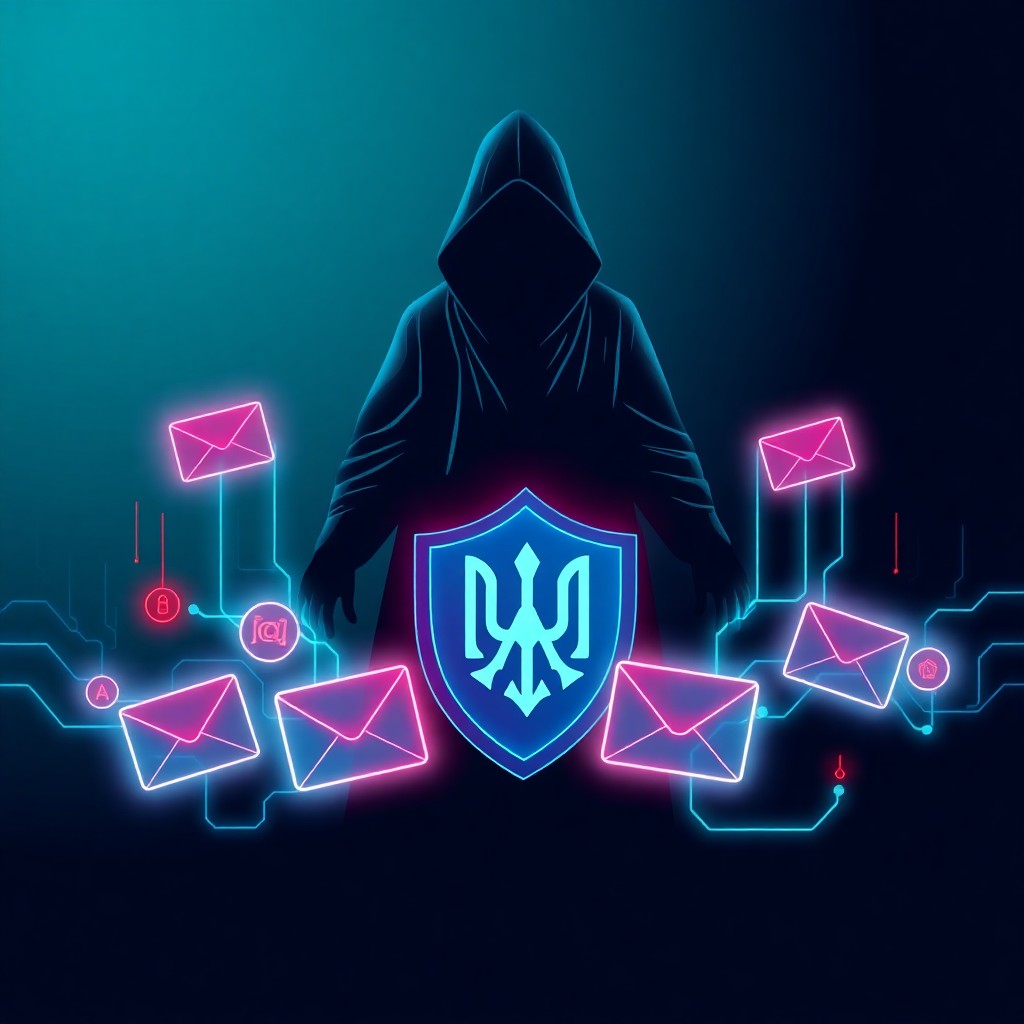
The current campaign employs a multi-stage attack chain initiated through spear-phishing emails crafted to appear as official Vseosvita communications. Messages reference mandatory training updates, certification deadlines, or platform security notifications—pretexts designed to create urgency and bypass recipient skepticism.
Initial phishing emails contain links to credential harvesting pages hosted on attacker-controlled infrastructure mimicking Vseosvita’s authentication portal. These pages employ convincing visual cloning, including legitimate branding, SSL certificates from free providers to display the padlock icon, and domain names using homograph attacks or subdomain manipulation to appear authentic at casual glance.
Compromised credentials enable several parallel attack paths. In some instances, attackers leverage stolen authentication tokens to access legitimate Vseosvita accounts, using the platform’s messaging features to distribute secondary payloads to connected users—effectively turning the trusted platform into an unwitting distribution mechanism. This “island hopping” technique exploits organizational trust relationships.
Separately, researchers have identified malware delivery through weaponized documents attached to follow-up emails sent from compromised accounts. These documents exploit known vulnerabilities in document processing applications or employ macro-enabled files executing Visual Basic scripts. The malware variants observed include reconnaissance tools, credential dumpers, and modular backdoors enabling remote access.
Command-and-control infrastructure demonstrates operational security sophistication. Attackers utilize compromised legitimate websites as first-stage C2 servers, employing domain fronting and encrypted channels to evade network monitoring. Infrastructure analysis reveals hosting patterns consistent with previous Ghostwriter operations, including specific VPS providers and IP address ranges.
Network traffic analysis shows the malware establishing encrypted channels over HTTPS to blend with legitimate traffic patterns. Beaconing intervals are randomized to avoid detection through behavioral analysis, and the implants include basic anti-forensics capabilities such as log cleaning and process injection to evade endpoint detection tools.
Impact & Risk Assessment
The campaign poses severe risks to Ukrainian government continuity and operational security. Successful compromise provides attackers with multiple strategic advantages:
Intelligence Collection: Access to government email accounts and internal communications systems enables broad intelligence gathering on policy decisions, military coordination, and international relationships. Persistent access allows long-term collection aligned with strategic intelligence requirements.
Lateral Movement: Initial compromises of individual government employees serve as footholds for broader network penetration. Attackers can pivot to high-value systems, access classified networks through cross-domain connections, and establish persistent access across multiple agencies.
Information Operations: Compromised official accounts provide platforms for disinformation distribution, appearing to originate from trusted government sources. This capability supports broader influence operations aimed at undermining public confidence in Ukrainian institutions.
Operational Disruption: Beyond intelligence collection, attackers possess capabilities to disrupt critical government functions through ransomware deployment, data destruction, or system manipulation. While not yet observed in this campaign, the infrastructure enables such escalation.
The education sector vector creates particularly challenging mitigation scenarios. Many government employees access Vseosvita from both professional and personal devices, creating cross-contamination risks. The platform’s legitimate use necessitates ongoing access, preventing simple blocking approaches.
Vendor Response
Ukrainian cybersecurity agencies have issued public advisories regarding the Ghostwriter campaign, providing indicators of compromise and threat intelligence to government entities. The Computer Emergency Response Team of Ukraine (CERT-UA) has coordinated response efforts, distributing technical details to affected organizations and critical infrastructure operators.
Vseosvita platform administrators have implemented additional authentication security measures, including enhanced monitoring for suspicious account activity, forced password resets for accounts showing compromise indicators, and deployment of multi-factor authentication capabilities for high-risk user segments.
International cybersecurity vendors tracking Ghostwriter activity have updated detection signatures and shared intelligence through established information-sharing frameworks. NATO Cooperative Cyber Defence Centre of Excellence has incorporated campaign details into threat intelligence products distributed to member states and partner nations.
Microsoft, Google, and other email service providers have updated filtering rules targeting the specific phishing infrastructure and communication patterns identified in this campaign. These updates improve detection rates for similar attacks targeting their respective platforms.
Mitigations & Workarounds
Organizations should implement layered defenses addressing multiple attack chain stages:
Email Security Hardening:
- Deploy advanced phishing detection utilizing machine learning analysis of sender reputation, content patterns, and link destinations
- Implement DMARC, SPF, and DKIM authentication protocols strictly enforcing sender validation
- Configure external email warnings flagging messages originating outside organizational domains
Authentication Strengthening:
- Mandate multi-factor authentication for all government account access, prioritizing hardware tokens or authenticator applications over SMS-based methods
- Implement conditional access policies restricting authentication from suspicious geographic locations or unusual device profiles
- Deploy password managers organization-wide to prevent credential reuse across platforms
Network Segmentation:
- Isolate critical government networks from general-purpose internet access systems
- Implement zero-trust architecture principles requiring continuous authentication and authorization validation
- Deploy next-generation firewalls with deep packet inspection capabilities detecting C2 communication patterns
Endpoint Hardening:
# Registry key for Office applications:
HKEY_CURRENT_USER\Software\Microsoft\Office\16.0\Word\Security\VBAWarnings
# Set DWORD value to 4 (disable all macros)
Detection & Monitoring
Security operations teams should prioritize detection capabilities targeting specific campaign indicators:
Email Monitoring:
- Alert on emails containing Vseosvita-themed subject lines combined with external sender addresses
- Flag authentication requests originating from unusual geographic locations
- Monitor for sudden increases in outbound emails from individual accounts indicating compromise
Network Traffic Analysis:
# Monitor for beaconing patterns using Zeek/Bro
# Example signature for periodic HTTPS connections:
@load base/protocols/ssl
event ssl_established(c: connection) {
    if (c$ssl?$subject && /suspicious-pattern/ in c$ssl$subject) {
        NOTICE([$note=Suspicious_SSL, $conn=c]);
    }
}
Authentication Anomalies:
- Baseline normal authentication patterns for users, alerting on deviations in access timing, location, or device profiles
- Monitor for multiple failed authentication attempts followed by successful login suggesting credential stuffing
- Track privilege escalation attempts and lateral movement indicators
Endpoint Behavioral Detection:
- Monitor for unusual process execution chains involving office applications spawning scripting interpreters
- Alert on credential dumping tool execution through memory access pattern recognition
- Detect persistence mechanism establishment through registry modification or scheduled task creation
Best Practices
Government organizations facing APT threats should adopt comprehensive security postures:
Security Awareness Training: Conduct regular, scenario-based training specifically addressing APT tactics. Move beyond generic phishing awareness to threat-specific education including examples from actual Ghostwriter campaigns. Test effectiveness through simulated attacks with immediate feedback mechanisms.
Incident Response Preparation: Maintain updated playbooks addressing nation-state compromise scenarios. Conduct tabletop exercises simulating Ghostwriter attacks, ensuring teams understand escalation procedures, evidence preservation requirements, and coordination with national cybersecurity authorities.
Threat Intelligence Integration: Consume threat intelligence from national CERTs, international partners, and commercial providers. Operationalize intelligence by translating indicators into detection rules, blocking policies, and hunting hypotheses rather than passive consumption.
Supply Chain Security: Assess third-party services and platforms used by government employees for inherent security capabilities and compromise risk. Evaluate whether platforms implement appropriate security controls for government use cases or require additional protective measures.
Privileged Access Management: Implement strict controls over administrative credentials, utilizing privileged access workstations for sensitive operations, time-limited elevation for administrative tasks, and comprehensive logging of privileged activities.
Key Takeaways
- Ghostwriter APT continues targeting Ukrainian government entities with sophisticated social engineering exploiting trusted educational platforms
- The campaign demonstrates nation-state actors’ willingness to weaponize civilian infrastructure in pursuit of intelligence objectives
- Multi-factor authentication and enhanced email security provide critical defensive layers against initial compromise
- Organizations must balance operational requirements with security controls when addressing trusted platforms exploited by adversaries
- Coordinated national response and international intelligence sharing remain essential for countering persistent APT operations
References
- CERT-UA Alert: Ghostwriter Targeting Government Entities (Official Advisory)
- Mandiant APT Threat Intelligence: UNC1151 Activity Cluster Assessment
- Microsoft Digital Security Unit: Nation-State Threat Actor Profiles
- NATO CCDCOE: Ghostwriter Attribution and Campaign Analysis
- Recorded Future: Belarus-Nexus Cyber Operations Against Ukraine
- Vseosvita Platform Security Incident Response Documentation
Stay updated at https://cydhaal.com — Your Daily Dose of Cyber Intelligence.
📧 Subscribe to our newsletter at https://cydhaal.com/newsletter/