

Apple Issues Urgent Warnings Across 99 Countries: Mercenary Spyware Targets iPhone Users
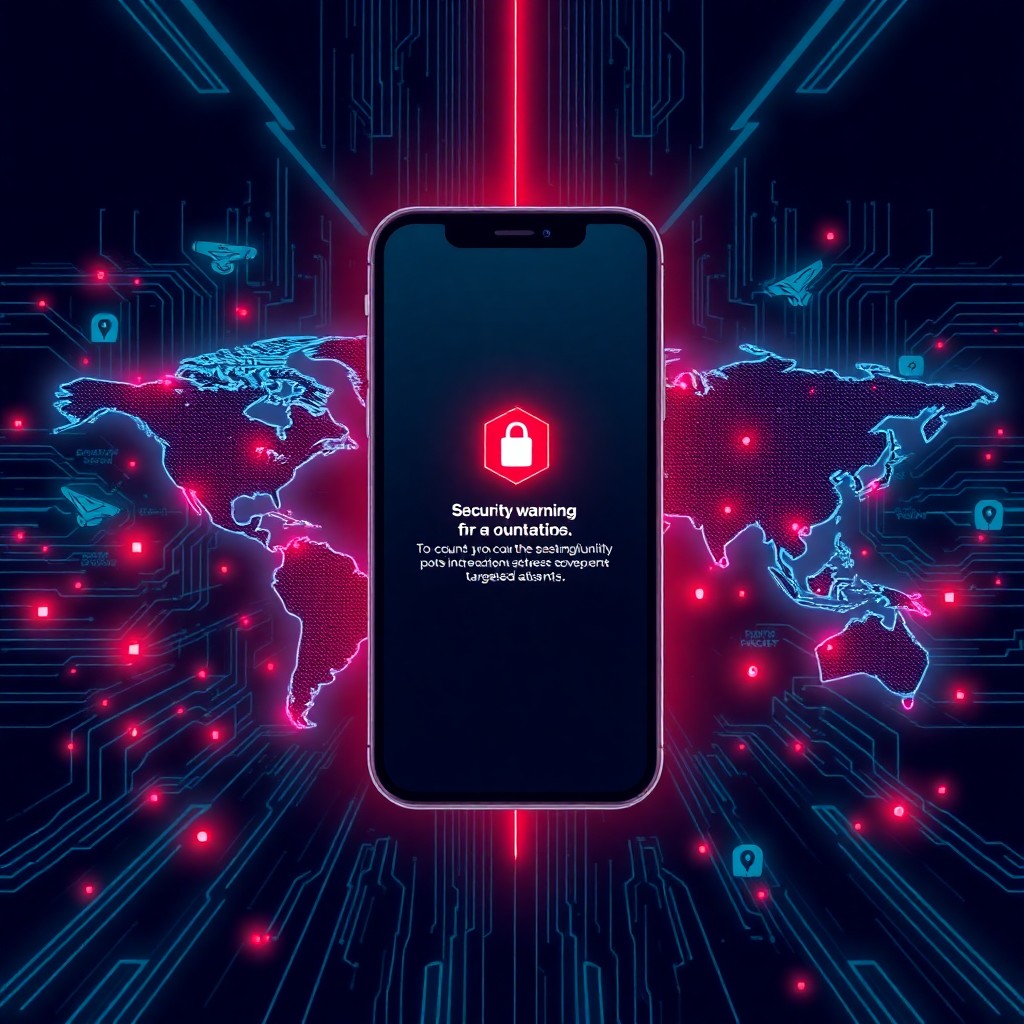
Apple has issued threat notifications to iPhone users in 99 countries warning of sophisticated mercenary spyware attacks. These targeted campaigns represent a distinct wave from previous August 2026 alerts, utilizing advanced techniques to compromise devices of high-value individuals including journalists, activists, and government officials. Organizations must immediately verify iOS device security, enable Lockdown Mode, and implement enhanced monitoring for affected users.
Introduction
On October 30, 2026, security researcher Costin Raiu revealed that Apple initiated a new round of threat notifications targeting iPhone users across 99 countries. These warnings indicate active exploitation attempts using mercenary-grade spyware capabilities that surpass traditional cybercriminal tooling.
The notifications mark Apple’s continued effort to alert high-risk users about state-aligned or commercial surveillance operations. Unlike mass-market threats, these attacks employ zero-click exploits and sophisticated persistence mechanisms designed to evade detection while maintaining long-term access to targeted devices.
The global scope and timing suggest coordinated campaigns by multiple threat actors, potentially leveraging recently developed or acquired exploitation capabilities. Security teams must treat these warnings as indicators of advanced persistent threats requiring immediate defensive action.
Background & Context
Mercenary spyware represents a distinct category of mobile threats developed by private surveillance firms and sold to government agencies or well-funded adversaries. Companies like NSO Group, Cytrox, and Candiru have historically produced iOS exploitation tools including Pegasus, Predator, and other sophisticated frameworks.
These tools typically exploit zero-day vulnerabilities in iOS, iMessage, Safari, and other core components to achieve remote code execution without user interaction. Once deployed, they enable comprehensive device monitoring including:
- Real-time location tracking
- Complete message and email access
- Microphone and camera activation
- Encrypted communication interception
- Credential harvesting
Apple has previously issued threat notifications in over 150 countries since 2021, warning approximately thousands of users about targeted attacks. The August 2026 campaign targeted users in multiple Asian, European, and Middle Eastern countries.
The October wave represents a distinct campaign with different targeting parameters and potentially new exploitation techniques. The 99-country scope indicates either broader targeting by existing operators or the involvement of additional threat actors with global reach.
Technical Breakdown
Mercenary spyware typically employs a multi-stage infection process designed to maximize stealth and minimize forensic artifacts:
Initial Access Vector
Zero-click exploits remain the preferred delivery mechanism, typically leveraging:
- iMessage processing vulnerabilities: Malformed messages trigger memory corruption in the parsing engine
- HomeKit exploitation: Specially crafted HomeKit invitations exploit iOS Home framework
- PassKit attacks: Malicious wallet passes trigger vulnerabilities in PassKit rendering
- WebKit zero-days: Drive-by attacks through Safari or in-app web views
Exploitation Chain
Modern iOS exploitation requires chaining multiple vulnerabilities:
- Memory corruption vulnerability: Initial code execution in sandboxed process
- Sandbox escape: Kernel vulnerability to break application containment
- Privilege escalation: Gain root or kernel-level access
- Persistence mechanism: Survive device reboots through legitimately signed processes
Post-Exploitation Capabilities
Once established, mercenary spyware typically deploys modular implants supporting:
- Keylogging through keyboard process injection
- SSL/TLS interception for encrypted communications
- Application data extraction from sandboxed containers
- Microphone/camera activation with anti-detection measures
- File system access to photos, documents, and backups
Detection Evasion
Advanced techniques include:
- Fileless operation: Maintain presence in memory without persistent files
- Process hollowing: Inject into legitimate Apple processes
- Code signing abuse: Leverage stolen or compromised certificates
- Anti-forensics: Automatically remove traces upon detection attempts
Impact & Risk Assessment
Critical Risk Factors
Targeted Individuals: Journalists covering sensitive topics, human rights activists, government officials, corporate executives, and legal professionals face elevated risk. Any individual whose communications have strategic intelligence value may be targeted.
Organizational Exposure: Companies and organizations employing high-value targets inherit significant risk of corporate espionage, intellectual property theft, and operational security compromise.
Data Sovereignty: Complete device compromise enables access to:
- Corporate email and sensitive documents
- Multi-factor authentication codes
- VPN credentials and network access
- Cloud storage and SaaS applications
- Encrypted messaging platforms
Severity Assessment
The threat severity qualifies as CRITICAL based on:
- Exploitation complexity: Zero-click attacks require no user interaction
- Detection difficulty: Advanced evasion defeats standard security controls
- Impact scope: Complete device and data compromise
- Attribution challenges: Sophisticated operators obscure identity and infrastructure
- Legal limitations: Cross-border operations complicate law enforcement response
Organizations should assume compromised devices provide persistent access to corporate networks and cloud environments accessible from the device.
Vendor Response
Apple’s threat notification email specifically states: “Apple detected that you are being targeted by a mercenary spyware attack that is trying to remotely compromise the iPhone associated with your Apple ID.”
The company emphasizes several key points:
- High confidence attribution: Apple only sends notifications when there is high confidence in the detection
- Targeted nature: These are not mass-market threats but deliberate targeting of specific individuals
- Ongoing evolution: Threat actors continuously adapt techniques to evade detection
- Imperfect detection: Some attacks may evade detection entirely
Apple has not disclosed specific technical indicators or vulnerabilities being exploited, likely to prevent providing operational intelligence to threat actors. The company continues investigating the campaign and will deploy security updates addressing identified vulnerabilities.
Users receiving notifications can access the Threat Notification page in their Apple ID account settings for additional details about the detection timing and affected devices.
Mitigations & Workarounds
Immediate Actions for Notified Users
Enable Lockdown Mode immediately:
- Open Settings → Privacy & Security
- Select Lockdown Mode
- Tap Turn On Lockdown Mode
- Restart device
Lockdown Mode disables high-risk features:
- Blocks most message attachment types
- Disables link previews
- Restricts JavaScript JIT compilation
- Blocks FaceTime calls from unknown contacts
- Prevents configuration profiles installation
Device isolation:
- Use the device only for essential personal communications
- Do not access corporate resources or sensitive data
- Consider using an alternative device for high-security operations
Update immediately:
Settings → General → Software Update
Install all available updates
Enhanced Security Measures
Apple ID hardening:
- Enable two-factor authentication
- Use Security Keys for Apple ID authentication
- Review and remove unnecessary trusted devices
- Enable Advanced Data Protection for iCloud
Communication security:
- Transition to devices not associated with your known identities
- Use anonymous communication channels for sensitive topics
- Implement voice verification for sensitive contacts
Detection & Monitoring
Organizational Detection Strategies
Mobile Device Management (MDM) integration:
- Deploy MDM solutions supporting iOS security posture validation
- Monitor for jailbreak detection indicators
- Enforce mandatory Lockdown Mode for high-risk users
- Implement conditional access based on device compliance
Network monitoring:
Monitor for indicators:
- Unusual outbound connections to cloud infrastructure
- High-frequency data exfiltration patterns
- Connections to known surveillance infrastructure
- Abnormal API calls to Apple services
User behavior analytics:
- Establish baseline communication patterns
- Alert on unusual application installations
- Monitor for off-hours device activity
- Track geographic location anomalies
Forensic Examination
Organizations with affected users should consider:
- Professional device forensics: Engage specialized mobile forensics firms
- Memory analysis: Capture volatile memory for malware artifact identification
- Network traffic capture: Analyze historical network logs for C2 patterns
- Backup analysis: Examine iTunes/iCloud backups for malicious profiles
Best Practices
Organizational Security Framework
Risk-based mobile security:
- Classify users by risk tier: Identify employees likely to be targeted
- Tiered security controls: Implement enhanced protections for high-risk users
- Dedicated devices: Provide separate devices for sensitive operations
- Regular security briefings: Educate users about targeting indicators
Incident response preparation:
Develop procedures for:
- Immediate device isolation
- Forensic evidence preservation
- Alternative communication activation
- Law enforcement coordination
- Legal counsel engagement
Zero-trust architecture:
- Never trust device integrity implicitly
- Require continuous authentication
- Implement micro-segmentation
- Monitor all access patterns
User-Level Practices
Digital hygiene:
- Maintain separate devices for different risk profiles
- Avoid opening unsolicited messages or links
- Regularly review installed applications and profiles
- Keep comprehensive backups on isolated systems
Operational security:
- Assume communications may be monitored
- Use end-to-end encrypted platforms with security numbers verification
- Implement voice verification for sensitive contacts
- Vary communication patterns to complicate targeting
Key Takeaways
- Apple has detected active mercenary spyware campaigns targeting users in 99 countries, representing a distinct threat wave from previous August 2026 alerts
- These sophisticated attacks employ zero-click exploits and advanced evasion techniques beyond typical cybercriminal capabilities
- Users receiving threat notifications should immediately enable Lockdown Mode, update devices, and isolate affected hardware from sensitive operations
- Organizations must identify high-risk employees and implement enhanced mobile security controls including mandatory Lockdown Mode and device isolation
- The global scope suggests coordinated campaigns by multiple nation-state or commercially-aligned threat actors with significant resources
- Detection remains challenging due to advanced anti-forensics capabilities; organizations should assume some compromises evade detection entirely
- Comprehensive security requires layered defenses combining Apple’s built-in protections, organizational controls, and user awareness
References
- Apple Threat Notifications Support Page: https://support.apple.com/threat-notifications
- Costin Raiu Twitter/X Announcement: October 30, 2026
- Apple Lockdown Mode Documentation: https://support.apple.com/lockdown-mode
- Citizen Lab Research on Mercenary Spyware: https://citizenlab.ca
- NSO Group Pegasus Technical Analysis: Amnesty International Security Lab
- Apple Advanced Data Protection: https://support.apple.com/advanced-data-protection
Stay updated at https://cydhaal.com — Your Daily Dose of Cyber Intelligence.
📧 Subscribe to our newsletter at https://cydhaal.com/newsletter/