








BAE Systems Cyber Incident Takes US Bankruptcy Noticing Center Offline for a Week
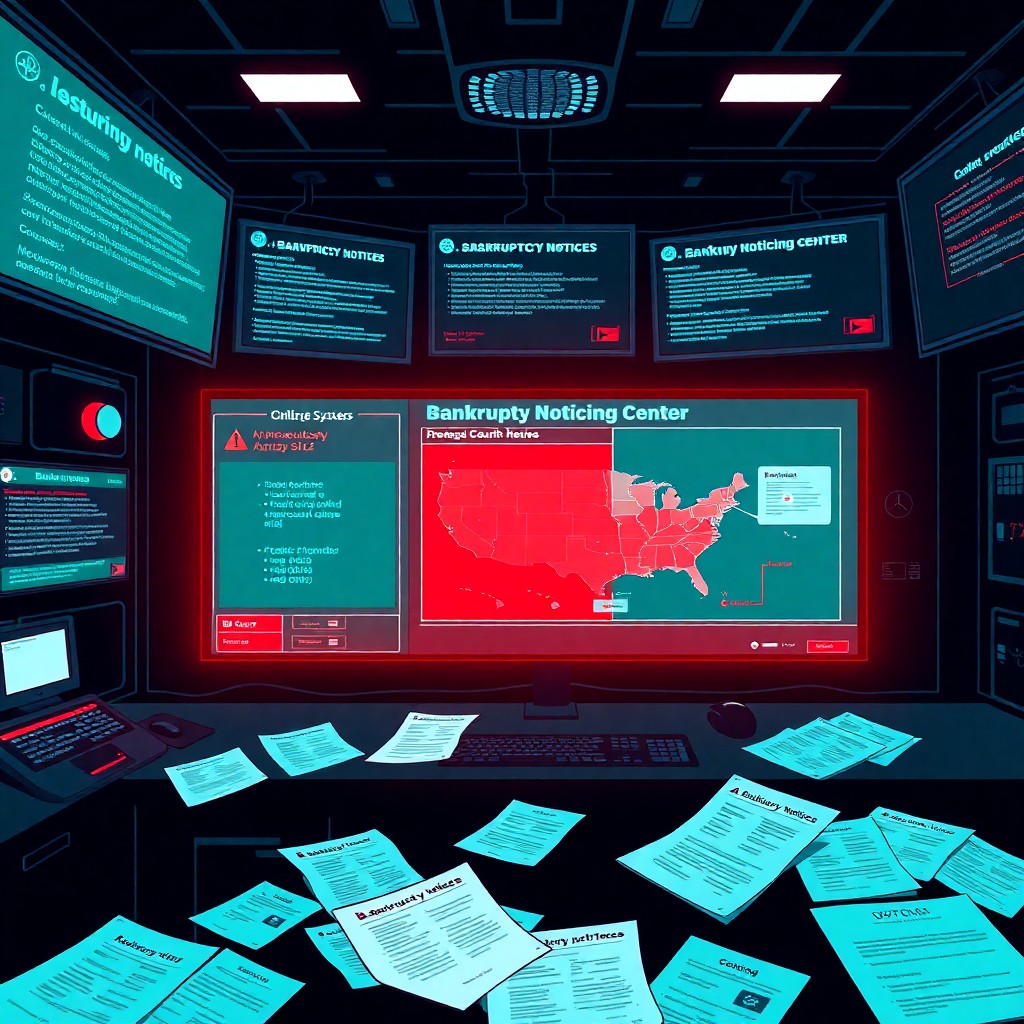
BAE Systems’ US subsidiary suffered a cyber incident on October 9 that disabled the Bankruptcy Noticing Center (BNC) for approximately one week, halting official bankruptcy notices across all US federal courts. The BNC, operated by BAE Systems under contract with the Administrative Office of the US Courts, serves as critical infrastructure for the judicial system. The incident highlights vulnerabilities in government-critical third-party services and raises concerns about business continuity planning for systems that underpin essential legal proceedings affecting millions of Americans.
Introduction
On October 9, a cyber incident at BAE Systems’ United States-based operations forced the complete shutdown of the Bankruptcy Noticing Center, a critical judicial infrastructure component responsible for distributing official bankruptcy notices nationwide. For seven days, federal bankruptcy courts lost the ability to send legally required notifications to creditors, debtors, and other parties in bankruptcy proceedings.
The BNC processes and distributes millions of notices annually for all 94 federal bankruptcy courts. This infrastructure failure demonstrates how a single cyber incident at a government contractor can cascade into nationwide disruption of judicial operations. The event underscores the fragility of critical dependencies on third-party service providers within government systems.
Background & Context
The Bankruptcy Noticing Center has operated since 2004 as the centralized hub for all bankruptcy-related official notices in the US federal court system. BAE Systems, Inc., a subsidiary of the UK-based defense and aerospace conglomerate, has held the contract to operate this service under the Administrative Office of the US Courts.
The BNC serves as a single point of failure for bankruptcy communications. When courts file bankruptcy petitions, motions, or orders requiring notification, the BNC receives electronic data from the Case Management/Electronic Case Files (CM/ECF) system, formats official notices, and distributes them to relevant parties via mail and electronic delivery.
This infrastructure processes an enormous volume of time-sensitive legal communications. Bankruptcy proceedings operate under strict statutory deadlines, and failure to provide proper notice can invalidate legal proceedings, create grounds for appeals, and fundamentally compromise due process rights.
BAE Systems maintains significant government contracts across defense, intelligence, and civilian agencies. The company’s portfolio includes classified work for national security agencies, making any cyber incident at its facilities a matter of heightened concern for security officials.
Technical Breakdown
While BAE Systems has not disclosed specific technical details about the incident, the complete shutdown of BNC operations indicates a significant security event requiring comprehensive response measures.
The seven-day offline period suggests either:
Containment and Investigation Requirements: The incident required isolation of affected systems to prevent lateral movement, necessitating extended forensic analysis to determine scope and impact.
System Reconstruction: Critical systems may have required rebuilding from known-good backups or complete reimaging to ensure no persistence mechanisms remained.
Data Integrity Verification: Given the legal sensitivity of bankruptcy notices, extensive validation was likely necessary to ensure no tampering with notice data or unauthorized access to sensitive case information.
The BNC infrastructure typically consists of:
- Data ingestion systems receiving case information from CM/ECF
- Database systems storing notice templates and party information
- Document generation and formatting systems
- Distribution mechanisms for physical mail and electronic delivery
- Tracking systems for proof of service requirements
A compromise at any of these layers could require comprehensive investigation. The legal implications of compromised notice data—potentially including personal information of debtors and creditors, financial details, and case strategies—make thorough security validation essential before service restoration.
The incident’s timing and duration suggest a controlled, methodical response rather than a rapid ransomware event. Organizations facing ransomware typically see immediate service disruption with ransom demands, while this incident appeared to follow a more traditional incident response lifecycle.
Impact & Risk Assessment
The immediate operational impact affected all 94 federal bankruptcy courts and disrupted proceedings for thousands of cases. Courts had to implement manual workarounds, including direct communication with parties and delayed filings awaiting notice capability restoration.
Legal and Procedural Risks:
Bankruptcy deadlines are statutory requirements. Creditors must receive notice of meetings, hearings, and claim deadlines within specific timeframes. The BNC outage created scenarios where:
- Creditors may have missed claim filing deadlines
- Required meetings of creditors faced postponement
- Court hearings required rescheduling
- Automatic stay violations could occur without proper notice
Data Security Implications:
The BNC contains sensitive information including:
- Personal identifiable information (PII) for debtors and creditors
- Financial records and asset documentation
- Creditor lists and contact information
- Case strategies reflected in notice content
Any unauthorized access to this data creates identity theft risks, potential for fraud, and compromise of legally privileged information.
Supply Chain Concerns:
This incident exemplifies third-party risk materialization. The Administrative Office of the US Courts depends entirely on BAE Systems for this critical function, creating a single point of failure with no immediate redundancy or failover capability.
Broader Infrastructure Vulnerabilities:
BAE Systems’ role as a major defense contractor raises questions about potential targeting by nation-state actors. While no attribution has been made public, any compromise of a contractor with access to classified systems warrants intelligence community attention.
Vendor Response
BAE Systems issued minimal public communication about the incident, confirming only that a “cyber incident” had occurred and that the BNC was temporarily unavailable. The company stated it was “working to restore services as quickly as possible” and coordinating with the Administrative Office of the US Courts.
The Administrative Office of the US Courts notified bankruptcy courts of the outage and provided interim guidance for handling notice requirements during the disruption. Courts were instructed to hold notices pending BNC restoration or implement alternative notification methods where time-sensitive matters required immediate action.
After approximately seven days, BAE Systems restored BNC operations. No public disclosure has been made regarding:
- The nature of the incident (ransomware, intrusion, other)
- Whether data was accessed or exfiltrated
- Specific remediation measures implemented
- Whether law enforcement or intelligence agencies are investigating
This limited transparency is common in government contractor incidents but creates uncertainty for courts and parties potentially affected by data compromise.
Mitigations & Workarounds
During the outage, bankruptcy courts implemented various workarounds:
Direct Court Notices: Some courts manually prepared and sent notices for time-critical matters, bypassing the BNC entirely.
Deadline Extensions: Judges granted extensions for creditor claim deadlines and other statutory timeframes where notice delays occurred.
Electronic Filing System Notifications: Courts utilized CM/ECF system notifications as interim notice mechanisms, though these lack the legal sufficiency of official BNC notices.
Postponed Proceedings: Non-urgent hearings and meetings were rescheduled to dates after anticipated BNC restoration.
For organizations dependent on similar third-party critical services:
- Identify single points of failure in critical workflows
- Establish alternative vendors or manual processes
- Create decision trees for service disruption scenarios
- Define acceptable recovery time objectives (RTO)
Detection & Monitoring
Organizations with dependencies on third-party services should implement monitoring for:
Service Availability Monitoring:
# Example availability check
curl -I https://service-endpoint.example.com/health
if [ $? -ne 0 ]; then
  alert "Critical service unavailable"
  activate_contingency_plan
fi
Communication Monitoring: Establish alerting for vendor status pages, security bulletins, and service notifications.
Transaction Validation: Monitor for successful completion of expected transactions (e.g., expected notice deliveries in this case).
Alternative Data Sources: Cross-reference service status through multiple channels to detect incidents before vendor disclosure.
Best Practices
For Organizations Dependent on Third-Party Critical Services:
Vendor Risk Assessment: Conduct thorough security assessments of vendors providing critical services. Request SOC 2 reports, penetration test results, and incident response plans.
Contractual Protections: Include service level agreements with specific uptime requirements, breach notification timeframes, and financial penalties for outages.
Redundancy Planning: Where possible, maintain alternative vendors or internal capabilities for critical functions.
Incident Response Integration: Coordinate incident response plans with critical vendors to ensure communication protocols during disruptions.
Data Segregation: Minimize sensitive data shared with third parties. Implement encryption and access controls for necessary data transfers.
For Government Agencies and Critical Infrastructure:
Eliminate Single Points of Failure: Critical judicial, financial, or infrastructure functions should have redundant systems and failover capabilities.
Enhanced Contractor Oversight: Implement continuous monitoring of contractor security posture, not just periodic audits.
Incident Disclosure Requirements: Establish clear, mandatory disclosure timelines for contractors experiencing security incidents.
Regular Tabletop Exercises: Conduct exercises simulating vendor compromise to test contingency plans.
Key Takeaways
- Third-party risk is primary risk: Organizations cannot outsource security responsibility along with operational functions. The BNC incident demonstrates how contractor security failures become organizational failures.
- Critical infrastructure needs redundancy: Single points of failure in essential government or business functions create unacceptable risk. The bankruptcy system’s complete dependence on one vendor’s system is a design flaw.
- Transparency matters: Limited public disclosure about incident nature and scope creates uncertainty and prevents affected parties from taking appropriate protective measures.
- Supply chain attacks continue to succeed: Defense contractors, government service providers, and other high-value targets remain attractive to sophisticated threat actors seeking access to sensitive data or downstream targets.
- Business continuity planning must account for vendor failures: Organizations must have tested, practical alternatives for critical vendor-provided services.
- Legal and compliance systems need security prioritization: The judicial system’s infrastructure deserves the same security investment and redundancy as financial or national security systems.
References
- Administrative Office of the US Courts – Bankruptcy Noticing Center information
- BAE Systems public statements regarding the October 9 incident
- Federal Rules of Bankruptcy Procedure regarding notice requirements
- Third-party risk management frameworks (NIST SP 800-161)
- Supply chain security guidance for critical infrastructure
Stay updated at https://cydhaal.com — Your Daily Dose of Cyber Intelligence.
📧 Subscribe to our newsletter at https://cydhaal.com/newsletter/