

US Disrupts Chinese Hacking Arsenal as Seven Nations Expose PRC Global Espionage Campaign
The United States has successfully disrupted sophisticated hacking tools deployed by Chinese state-sponsored actors in a multi-year espionage campaign targeting sensitive data worldwide. Seven allied governments simultaneously issued warnings about People’s Republic of China (PRC) intelligence operations, revealing a coordinated international response to persistent cyber threats. Organizations potentially compromised since 2021 should immediately review their security posture, examine historical logs for indicators of compromise, and prepare for possible victim notifications as the investigation unfolds.
Introduction
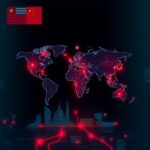
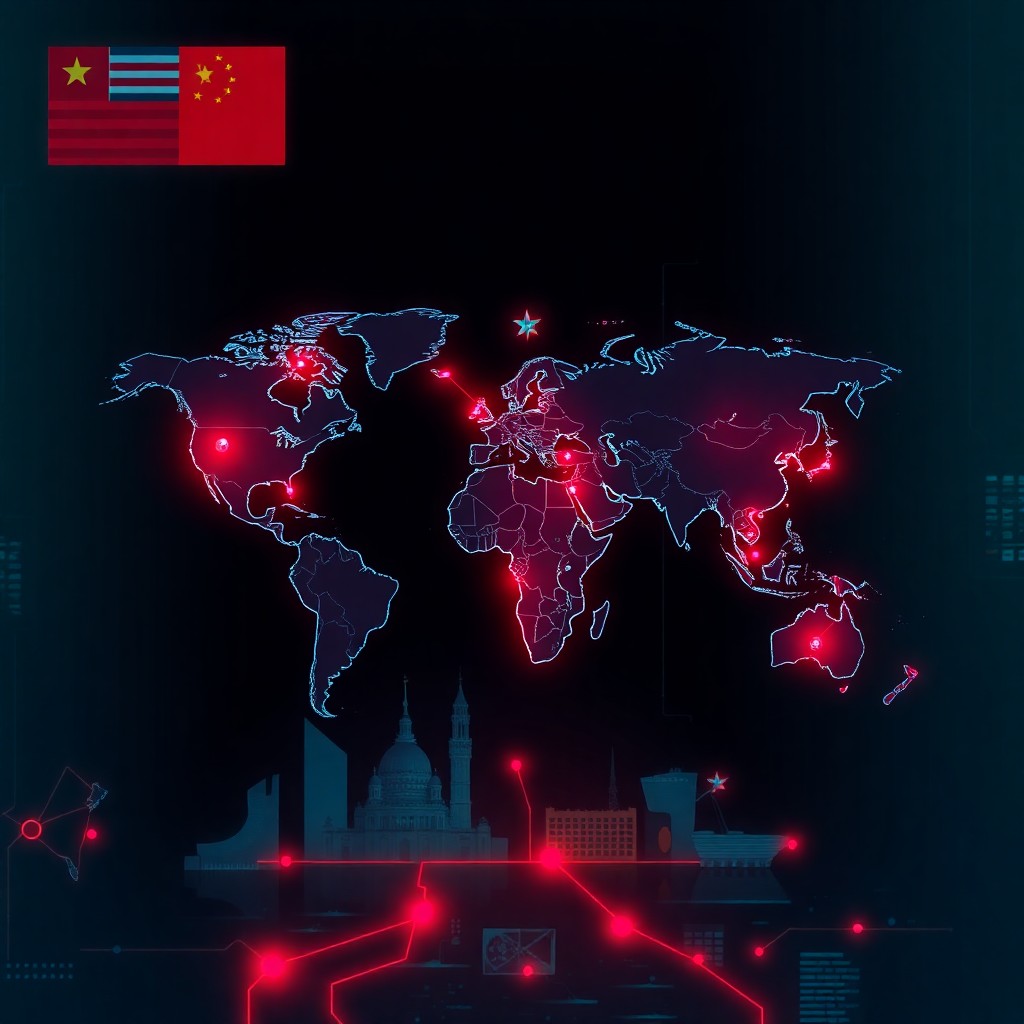
In a landmark coordinated action, US authorities have dismantled critical infrastructure used by Chinese state-sponsored threat actors to conduct extensive intelligence-gathering operations across multiple countries. This disruption comes alongside joint warnings from seven governments—including the US, UK, Canada, Australia, New Zealand, Germany, and Japan—highlighting the scope and sophistication of PRC-backed cyber espionage campaigns targeting government agencies, critical infrastructure operators, and private sector organizations.
The operation represents one of the most significant enforcement actions against nation-state cyber activities in recent years, demonstrating unprecedented international cooperation in confronting persistent threats from advanced persistent threat (APT) groups linked to Chinese intelligence services. The timing and scale of this coordinated response signal a hardening stance toward state-sponsored cyber operations that threaten national security and economic interests.
Background & Context
Chinese state-sponsored APT groups have maintained persistent presence in targeted networks for years, focusing on long-term intelligence collection rather than immediate financial gain. These operations typically target government communications, defense contractors, telecommunications providers, energy sector entities, and organizations possessing intellectual property or sensitive personal information.
The disrupted infrastructure supported operations that date back to at least 2021, though some targeting patterns suggest even longer-running campaigns. PRC-sponsored groups are known for patient, methodical approaches that prioritize stealth and persistence over rapid exploitation. They frequently leverage compromised infrastructure to blend malicious traffic with legitimate communications, making detection challenging even for mature security operations.
Previous public attributions have linked Chinese APT groups to campaigns targeting maritime industries, healthcare research facilities, semiconductor manufacturers, and government diplomatic communications. The current action builds on years of intelligence sharing among Five Eyes partners and expanded cooperation with European and Asian allies who have experienced similar intrusions.
Technical Breakdown
While specific technical details remain classified to protect ongoing investigations, the disrupted tools reportedly included command-and-control infrastructure, custom malware variants, and operational systems used to maintain persistent access to compromised networks. These tools enabled threat actors to:
- Establish and maintain covert communication channels with implanted backdoors
- Exfiltrate sensitive documents and communications over extended periods
- Pivot laterally within compromised networks to access high-value targets
- Evade detection through traffic obfuscation and legitimate service abuse
The infrastructure disruption likely involved coordinated seizure of domain names, server infrastructure, and potentially cryptocurrency wallets used to fund operations. Law enforcement agencies may have deployed network investigative techniques to identify compromised systems and map the full scope of affected organizations.
Evidence suggests the threat actors employed living-off-the-land techniques, utilizing built-in system administration tools to blend with normal network activity. This approach reduces malware signatures and complicates attribution, requiring defenders to focus on behavioral analytics rather than signature-based detection alone.
Initial access vectors likely included spear-phishing campaigns, exploitation of public-facing applications, and compromise of supply chain partners with trusted network access. Once inside target networks, actors established multiple persistence mechanisms to survive system reboots and credential rotations.
Impact & Risk Assessment
The global scale of this espionage campaign presents significant risks across multiple dimensions. Organizations in affected sectors face potential exposure of:
- Classified government communications and policy deliberations
- Proprietary research and intellectual property
- Personal information of government personnel and contractors
- Critical infrastructure operational details and vulnerabilities
- Defense-related technologies and strategic capabilities
Even organizations not directly targeted may face secondary risks if their supply chain partners or service providers were compromised. The multi-year timeline suggests extensive data collection occurred, potentially enabling future operations based on gathered intelligence.
For critical infrastructure operators, the compromise of operational technology (OT) environments or engineering workstations could provide adversaries with detailed knowledge of system architectures, potentially enabling future disruptive attacks. Healthcare and research institutions may have lost years of proprietary research, undermining competitive advantages and national scientific leadership.
The reputational and legal consequences for affected organizations include regulatory scrutiny, potential sanctions for inadequate security controls, and erosion of trust among partners and customers. Government contractors may face review of their security clearances and eligibility for sensitive programs.
Vendor Response
US government agencies including the FBI, CISA, and NSA have issued joint advisories providing technical indicators and recommended defensive measures. These agencies are conducting victim notifications and offering incident response assistance to affected organizations.
Cloud service providers and telecommunications companies whose infrastructure was abused have begun implementing additional monitoring and access controls. Major technology vendors are reviewing their products for potential vulnerabilities that may have been exploited during initial access phases.
International law enforcement partnerships through mechanisms like INTERPOL and bilateral agreements are facilitating information sharing about compromised systems across jurisdictions. Some governments have summoned PRC diplomatic representatives to protest the cyber operations, though official Chinese responses typically deny involvement or characterize attributions as politically motivated.
Private sector threat intelligence firms are updating their reporting on PRC APT groups with new indicators of compromise and tactical patterns observed in this campaign. Managed security service providers are incorporating these indicators into their monitoring capabilities for clients.
Mitigations & Workarounds
Organizations should implement immediate protective measures regardless of suspected compromise:
Network Segmentation: Isolate critical systems from general corporate networks and implement strict access controls between segments.
Credential Management: Rotate all privileged credentials, implement multi-factor authentication universally, and adopt passwordless authentication where feasible.
Patch Management: Prioritize patching of public-facing systems and common initial access vectors including VPNs, email gateways, and collaboration platforms.
Monitoring Enhancement: Increase logging verbosity for authentication events, PowerShell execution, and network connections to external infrastructure.
Organizations in high-risk sectors should consider:
grep -r "Successful login" /var/log/auth.log | awk '{print $1, $2, $3, $11}' | sort | uniq -c | sort -nr

# Identify unusual outbound connections
netstat -an | grep ESTABLISHED | awk '{print $5}' | cut -d: -f1 | sort | uniq -c | sort -nr
Detection & Monitoring
Security operations centers should focus detection efforts on behavioral indicators rather than relying solely on signature-based approaches:
Authentication Anomalies: Monitor for credential use from unusual geographic locations, access time anomalies, and simultaneous use of the same credentials from multiple locations.
Lateral Movement: Detect unusual remote desktop connections, PowerShell remoting sessions, and file share access patterns that deviate from established baselines.
Data Staging: Identify large file archives created in unusual locations, particularly using built-in compression utilities.
Command-and-Control: Analyze DNS queries for domain generation algorithm patterns, connections to newly registered domains, and beaconing behavior with regular timing intervals.
Implement hunting queries focused on living-off-the-land techniques:
# Hunt for suspicious PowerShell encoding
Get-WinEvent -FilterHashtable @{LogName='Windows PowerShell'; ID=4104} |
Where-Object {$_.Message -match 'FromBase64String|EncodedCommand|DownloadString'} |
Select-Object TimeCreated, Message
Leverage threat intelligence feeds incorporating indicators from government advisories to enrich security event correlation and prioritize alerts.
Best Practices
Zero Trust Architecture: Assume breach and implement verification at every access request rather than relying on network perimeter defenses.
Least Privilege Access: Grant minimal necessary permissions and regularly review access rights to sensitive systems and data.
Security Information Sharing: Participate in sector-specific Information Sharing and Analysis Centers (ISACs) to receive timely threat intelligence.
Incident Response Planning: Test and update response plans specifically addressing nation-state threat scenarios with their longer dwell times and sophisticated evasion techniques.
Supply Chain Security: Assess third-party risk and implement contractual security requirements for partners with network access or access to sensitive data.
Continuous Monitoring: Deploy endpoint detection and response (EDR) solutions with behavioral analytics capabilities to identify subtle indicators of compromise.
Regular Security Assessments: Conduct purple team exercises simulating APT tactics, techniques, and procedures to validate detection capabilities.
Key Takeaways
- International Coordination Works: The seven-government joint action demonstrates effective cooperation in confronting state-sponsored threats and may signal increased enforcement against nation-state operations.
- Historical Compromise Likely: Organizations in targeted sectors should assume potential compromise dating to 2021 or earlier and conduct thorough forensic reviews.
- Living-off-the-Land Dominates: Advanced actors increasingly use legitimate tools for malicious purposes, requiring behavioral detection rather than signature-based approaches.
- Victim Notifications Forthcoming: Organizations may receive notifications as investigations progress; prepare incident response capabilities for rapid activation.
- Long-Term Vigilance Required: Infrastructure disruption does not eliminate threat actor capabilities; expect adapted tactics and alternative infrastructure deployment.
References
- US Cybersecurity and Infrastructure Security Agency (CISA) advisories
- FBI public service announcements on PRC cyber threats
- Joint cybersecurity advisory from Seven Eyes partners
- National Counterintelligence and Security Center reporting
- MITRE ATT&CK framework for APT group tactics
Stay updated at https://cydhaal.com — Your Daily Dose of Cyber Intelligence.
📧 Subscribe to our newsletter at https://cydhaal.com/newsletter/