


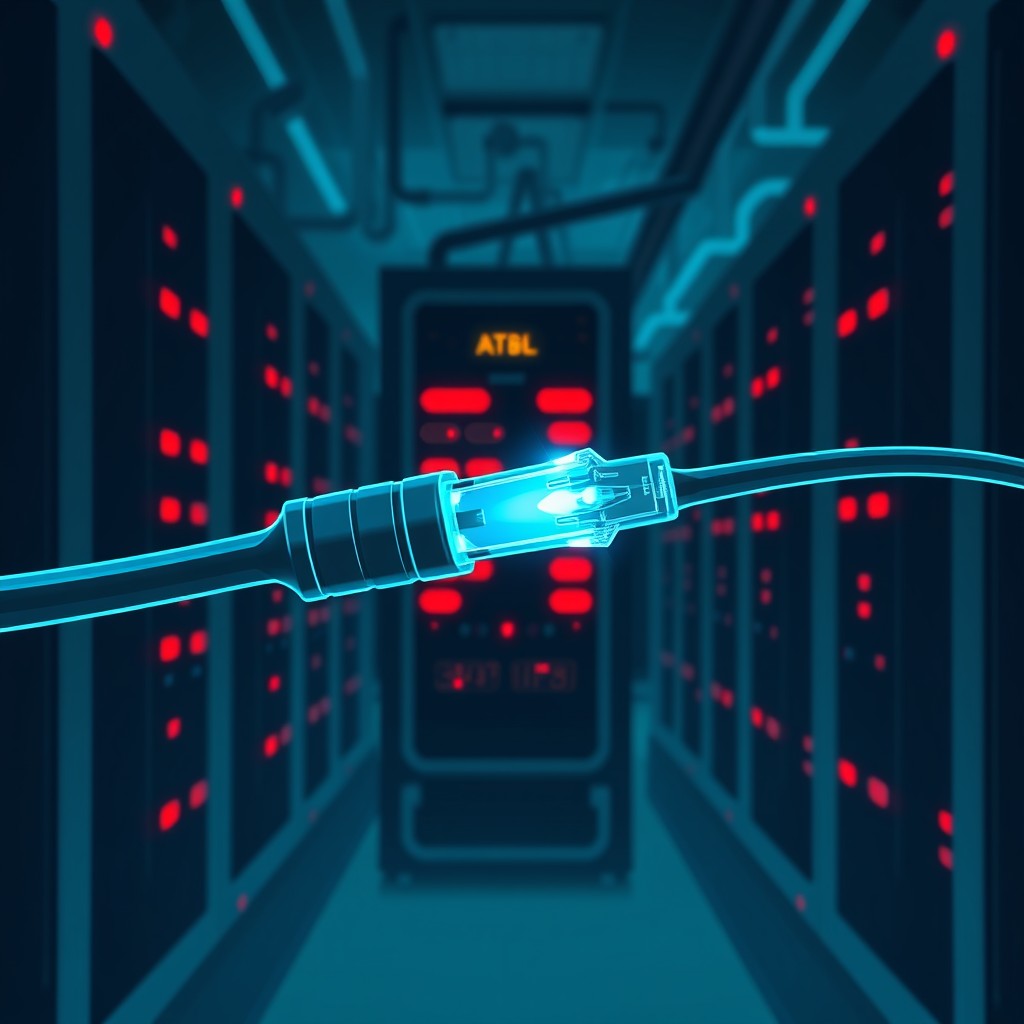
T-Mobile’s cybersecurity team took the extraordinary step of physically cutting a network cable to disconnect Chinese state-sponsored threat actors who had infiltrated their infrastructure. This drastic measure highlights the severity of the intrusion and the challenges telecommunications providers face when defending against advanced persistent threats. The incident is linked to the broader Salt Typhoon campaign targeting U.S. telecom networks, raising serious concerns about critical infrastructure security and the sophistication of nation-state cyber operations.
Introduction
In an unprecedented move that underscores the gravity of modern cyber threats, T-Mobile’s security team resorted to physically severing a network cable to remove Chinese state-sponsored hackers from their systems. This dramatic action represents one of the most aggressive defensive responses seen in recent telecommunications breaches and reveals the extent to which advanced persistent threat (APT) groups have embedded themselves within critical U.S. infrastructure.
The incident forms part of the larger Salt Typhoon campaign, a coordinated Chinese espionage operation that has compromised multiple major U.S. telecommunications providers. The decision to physically disconnect network infrastructure rather than rely solely on digital remediation methods speaks volumes about the persistence mechanisms employed by these threat actors and the challenges defenders face when standard security protocols prove insufficient.
Background & Context
Salt Typhoon represents one of the most significant telecommunications compromises in U.S. history. This Chinese state-sponsored campaign has targeted major carriers including AT&T, Verizon, Lumen Technologies, and T-Mobile, with the objective of conducting long-term espionage and gaining access to sensitive communications data.
The threat actors behind Salt Typhoon have demonstrated exceptional operational security and technical sophistication. Their capabilities extend beyond typical network intrusions, focusing specifically on lawful intercept systems—the infrastructure telecommunications companies use to comply with court-ordered wiretaps. By compromising these systems, the attackers gained access to highly sensitive communications, potentially including those of government officials, corporate executives, and national security personnel.
T-Mobile, one of the largest wireless carriers in the United States, serves over 100 million customers. The company has previously experienced multiple security incidents, including several significant data breaches affecting customer information. However, this Salt Typhoon intrusion represents a fundamentally different threat category—nation-state espionage targeting critical communications infrastructure rather than customer data theft.
The Chinese government has consistently denied involvement in cyber espionage operations, though numerous cybersecurity firms and government agencies have attributed Salt Typhoon and related campaigns to groups operating in China’s national interest.
Technical Breakdown
The decision to physically cut a network cable indicates that T-Mobile’s security team faced adversaries who had established persistence mechanisms that could not be reliably removed through conventional digital means. Several technical factors likely contributed to this extreme measure:
Compromised Network Equipment: The threat actors likely gained access to core network devices such as routers, switches, or telecommunications-specific equipment. These systems often run proprietary operating systems with limited visibility and remediation capabilities.
Firmware-Level Persistence: Advanced threat actors increasingly target device firmware, which persists across reboots and standard security updates. Removing firmware-level implants often requires physical replacement of compromised hardware or, in this case, complete disconnection.
Supply Chain Compromise: The intrusion may have involved pre-compromised equipment inserted into the network through supply chain infiltration, making software-based remediation impossible.
Lawful Intercept System Access: Salt Typhoon specifically targeted lawful intercept infrastructure, which operates on segregated network segments with specialized access controls. Compromises to these systems require extraordinary remediation measures due to their sensitive nature.
The physical cable cutting likely isolated a compromised network segment, preventing the threat actors from maintaining command and control communications or pivoting to other parts of the network. This “air-gap” approach represents the most definitive way to ensure complete disconnection when dealing with sophisticated adversaries who may have multiple backup persistence mechanisms.
# Typical network isolation commands would be insufficient against firmware-level threats
# Standard approach (inadequate for this scenario):
iptables -A INPUT -s [malicious_IP] -j DROP
ip link set [interface] down

# Physical disconnection ensures complete isolation
# when software-based controls cannot be trusted
Impact & Risk Assessment
The impact of this intrusion extends far beyond T-Mobile’s corporate network:
National Security Implications: Access to lawful intercept systems potentially exposed ongoing law enforcement investigations and intelligence operations. Communications involving government officials, defense contractors, and sensitive national security matters may have been compromised.
Customer Privacy Violations: While T-Mobile has not disclosed the full extent of customer data accessed, the nature of the intrusion suggests that call metadata, SMS messages, and potentially call content were exposed for targeted individuals.
Critical Infrastructure Vulnerability: The successful compromise of multiple major telecommunications providers demonstrates systemic vulnerabilities in U.S. critical infrastructure and the telecommunications sector’s insufficient security posture against nation-state threats.
Operational Disruption: The physical disconnection of network infrastructure likely caused service disruptions, though T-Mobile would have taken measures to minimize customer impact through network redundancy and traffic rerouting.
Long-Term Espionage Risk: The extended dwell time of these threat actors—potentially months before detection—allowed comprehensive intelligence collection and network mapping that will benefit future operations.
The risk severity remains CRITICAL due to the nation-state attribution, targeting of critical infrastructure, and potential exposure of sensitive communications.
Vendor Response
T-Mobile has maintained relative silence regarding specific details of the intrusion and remediation efforts, likely due to ongoing law enforcement investigations and national security considerations. However, the company has acknowledged being among the telecommunications providers affected by the broader Salt Typhoon campaign.
The wireless carrier’s security team demonstrated decisive action by implementing physical disconnection, showing a willingness to take disruptive measures when necessary to protect network integrity. This response contrasts with some organizations’ tendency toward passive monitoring or delayed remediation when facing sophisticated threats.
T-Mobile has reportedly been cooperating with federal agencies including the FBI, the Cybersecurity and Infrastructure Security Agency (CISA), and intelligence community partners to investigate the intrusion and implement enhanced security measures.
Industry sources indicate T-Mobile has accelerated network segmentation initiatives, enhanced monitoring of lawful intercept systems, and implemented additional access controls on critical telecommunications infrastructure following this incident.
Mitigations & Workarounds
Organizations facing similar advanced persistent threats should consider these mitigation strategies:
Network Segmentation: Implement strict segmentation of critical infrastructure, particularly lawful intercept systems and administrative networks, with hardware-enforced boundaries.
Zero Trust Architecture: Deploy zero trust principles requiring continuous authentication and authorization, limiting the ability of compromised credentials to enable lateral movement.
Hardware Security Modules: Utilize HSMs and secure enclaves for cryptographic operations, making credential theft and system compromise more difficult.
Supply Chain Validation: Implement rigorous hardware and software validation processes, including firmware integrity verification and trusted supplier programs.
# Implement network segmentation with VLANs and ACLs
# Example configuration for critical system isolation:

# Create isolated VLAN for lawful intercept systems
vlan 999
  name LAWFUL_INTERCEPT_ISOLATED

# Apply strict ACL permitting only authorized access
ip access-list extended LAWFUL_INTERCEPT_ACL
  permit tcp host [authorized_system] host [intercept_system] eq [port]
  deny ip any any log
Physical Security Controls: Recognize that air-gapping and physical disconnection remain the most reliable methods for containing sophisticated threats when digital controls prove insufficient.
Detection & Monitoring
Telecommunications providers and critical infrastructure operators should implement these detection capabilities:
Behavioral Analytics: Deploy advanced analytics monitoring for anomalous access patterns to lawful intercept systems, including unusual query volumes, off-hours access, or geographic anomalies.
Firmware Integrity Monitoring: Implement continuous firmware integrity verification using cryptographic hashing and comparison against known-good baselines.
# Firmware integrity verification example
import hashlib

def verify_firmware_integrity(device_firmware_path, known_good_hash):
    """Verify firmware hasn't been modified"""
    sha256_hash = hashlib.sha256()
    with open(device_firmware_path, "rb") as f:
        for byte_block in iter(lambda: f.read(4096), b""):
            sha256_hash.update(byte_block)

    current_hash = sha256_hash.hexdigest()

    if current_hash != known_good_hash:
        alert_security_team("Firmware integrity violation detected")
        return False
    return True
Network Traffic Analysis: Monitor for unusual outbound connections from critical infrastructure, particularly encrypted tunnels to unexpected destinations.
Privileged Access Monitoring: Implement comprehensive logging and real-time alerting for all privileged account usage, especially on telecommunications infrastructure.
Threat Intelligence Integration: Consume and operationalize threat intelligence regarding Salt Typhoon and related Chinese APT groups, including indicators of compromise and tactics, techniques, and procedures.
Best Practices
Critical infrastructure operators should adopt these security practices:
Assume Breach Mentality: Design security architectures assuming sophisticated adversaries will achieve initial access, focusing on limiting damage through containment and rapid detection.
Defense in Depth: Layer multiple security controls at network, host, and application levels, ensuring single control failures don’t result in complete compromise.
Incident Response Preparation: Develop and regularly exercise incident response plans that include extreme measures such as physical disconnection when circumstances warrant.
Regular Security Assessments: Conduct frequent penetration testing and red team exercises specifically simulating nation-state adversary capabilities and targeting critical systems.
Vendor Security Requirements: Impose rigorous security requirements on equipment vendors and service providers, including secure development practices, supply chain transparency, and incident notification obligations.
Government Collaboration: Maintain strong relationships with CISA, FBI, and sector-specific ISACs to receive timely threat intelligence and coordinate response efforts.
Employee Security Training: Implement comprehensive security awareness programs addressing social engineering, phishing, and insider threat indicators.
Key Takeaways
- T-Mobile physically cut network cables to remove persistent Chinese state-sponsored hackers, demonstrating the severity of the Salt Typhoon campaign
- The intrusion targeted lawful intercept systems, potentially exposing sensitive government and law enforcement communications
- Multiple major U.S. telecommunications providers have been compromised in this coordinated Chinese espionage operation
- Physical disconnection was necessary because digital remediation methods were insufficient against sophisticated persistence mechanisms
- Critical infrastructure operators must implement defense-in-depth strategies and be prepared to take extreme measures when facing nation-state threats
- The incident highlights systemic vulnerabilities in U.S. telecommunications security requiring industry-wide improvements
References
- CISA – Telecommunications Infrastructure Security Guidelines
- NSA/CISA Joint Cybersecurity Advisory – People’s Republic of China State-Sponsored Cyber Actors
- FBI Public Service Announcement – Chinese State-Sponsored Actors Compromise U.S. Telecommunications Infrastructure
- T-Mobile Security Incident Reports and Public Statements
- Industry Reporting on Salt Typhoon Campaign Attribution and Technical Analysis
Stay updated at https://cydhaal.com — Your Daily Dose of Cyber Intelligence.
📧 Subscribe to our newsletter at https://cydhaal.com/newsletter/