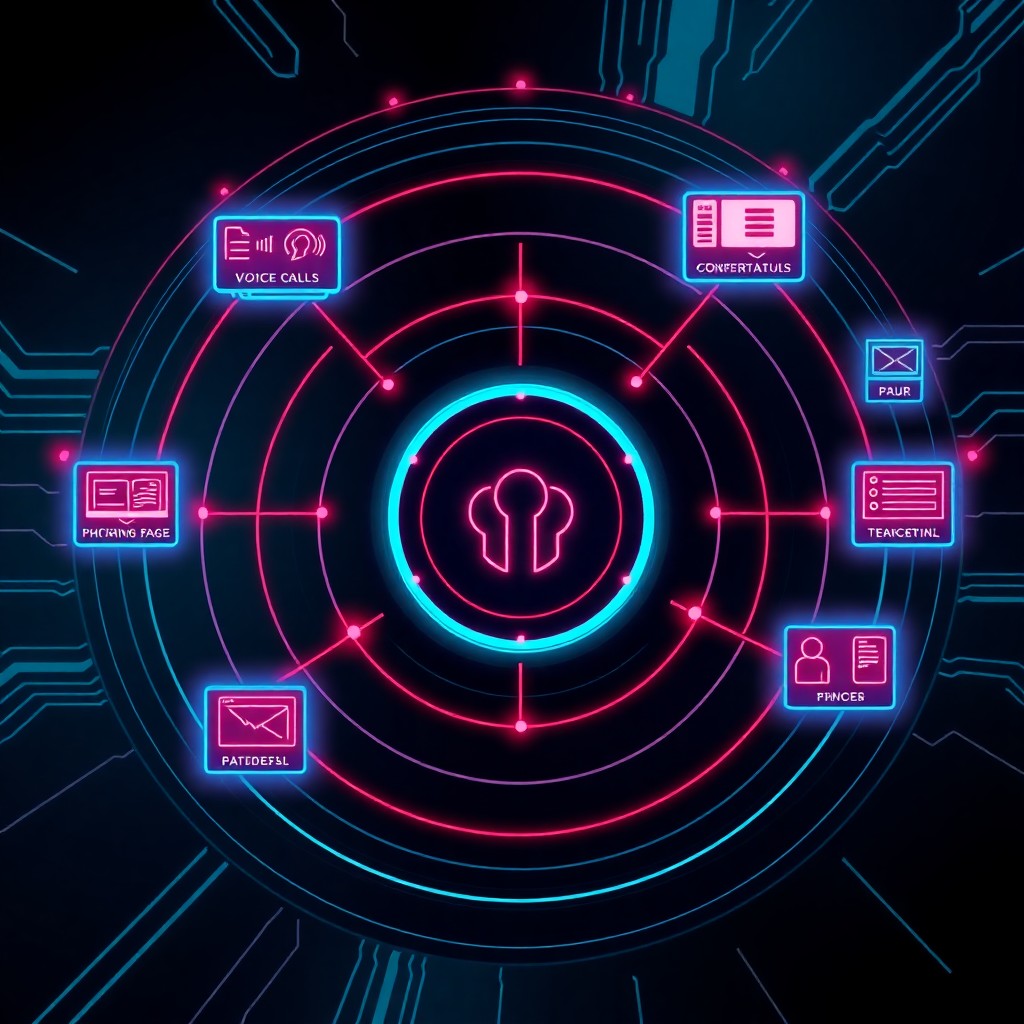
Work Panel has emerged as a sophisticated cybercrime-as-a-service platform that weaponizes social engineering tactics to facilitate large-scale enterprise account takeovers. This unified platform provides criminals with pre-scripted helpdesk impersonation templates, real-time collaboration tools, and automated workflows that transform basic social engineering attacks into industrial-scale credential theft operations. Organizations face heightened risk as the platform democratizes advanced attack techniques previously requiring specialized skills.
Introduction
The cybercrime ecosystem continues its evolution toward commoditization, and Work Panel represents the latest escalation in this trend. This platform has fundamentally changed the economics and accessibility of enterprise account takeover attacks by packaging sophisticated social engineering tactics into an easy-to-use service. Unlike traditional credential stuffing or phishing campaigns, Work Panel operationalizes human-targeted deception at scale, enabling threat actors with minimal technical expertise to execute convincing helpdesk impersonation attacks against enterprise targets.
Security teams now face adversaries armed with professionally crafted scripts, voice changers, spoofed caller IDs, and real-time coaching—all delivered through a single platform subscription. The implications for enterprise security are severe, as traditional technical controls offer limited protection against attacks that exploit the human element of IT support operations.
Background & Context
Account takeover attacks have historically required significant planning, social engineering expertise, and target reconnaissance. Threat actors needed to understand organizational structures, identify IT helpdesk procedures, and craft convincing pretexts to manipulate support personnel into resetting credentials or disabling multi-factor authentication.
Work Panel disrupts this model by industrializing the entire attack chain. First advertised on underground forums in late 2023, the platform gained traction throughout 2024 as operators demonstrated consistent success rates against enterprise targets. The service operates on a subscription model, with tiered pricing based on features and target organization size.
The platform’s creators understood that the weakest link in enterprise security remains the human element. By focusing exclusively on social engineering rather than technical exploits, Work Panel bypasses billions of dollars in security infrastructure investments. The platform specifically targets IT helpdesks and support personnel who possess elevated privileges for password resets, MFA modifications, and access provisioning.
Previous social engineering attacks relied on individual operator skill and creativity. Work Panel removes this variability by providing standardized playbooks, tested scripts, and quality assurance mechanisms that ensure consistent execution across multiple operators.
Technical Breakdown
Work Panel functions as a comprehensive attack orchestration platform with several integrated components:
Pre-Built Attack Templates
The platform maintains an extensive library of organization-specific attack scripts tailored to major enterprises. These templates include:
- Company-specific terminology and internal jargon
- Helpdesk ticketing system references
- Common authentication procedures
- Employee verification processes
- Escalation pathways
Real-Time Collaboration Tools
Operators can coordinate multi-person attacks through integrated communication channels. A typical attack sequence involves:
- Initial reconnaissance using OSINT gathering tools built into the platform
- Target selection based on LinkedIn profiles and organizational charts
- Helpdesk call initiation with spoofed caller ID matching target employee
- Real-time script guidance with branching logic based on helpdesk responses
- Secondary operator ready to pose as “manager” for escalation scenarios
Automation Features
# Example workflow automation sequence
STEP 1: Generate employee profile from LinkedIn scrape
STEP 2: Create spoofed caller ID matching employee mobile
STEP 3: Initiate call recording and voice modulation
STEP 4: Launch script template with dynamic variables
STEP 5: Monitor helpdesk ticket system for password reset
STEP 6: Capture new credentials via automated phishing page
Voice Manipulation Technology
The platform integrates voice-changing capabilities that allow operators to match victim demographics. Age, gender, and accent modulation help create convincing impersonations. Some advanced packages include AI-generated voice cloning when sample recordings are available.
Credential Harvesting Infrastructure
Once helpdesk personnel reset passwords, Work Panel automatically deploys customized phishing pages that capture new credentials. These pages perfectly replicate target organization login portals and include:
- SSL certificates with typosquatted domains
- Session token capture
- MFA code interception via real-time phishing proxies
- Automated credential validation
Impact & Risk Assessment
The availability of Work Panel represents a force multiplier for cybercriminal operations. Organizations face several critical risks:
Reduced Attack Barrier
The platform’s user-friendly interface and pre-built content enable low-skill operators to execute sophisticated attacks. This expansion of the threat actor pool increases overall attack volume against enterprise targets.
Bypassing Technical Controls
Traditional security investments in firewalls, endpoint detection, and network monitoring provide minimal protection against social engineering attacks. Work Panel exploits this gap systematically.
Insider Threat Amplification
Compromised accounts appear as legitimate insider activity, making detection extremely challenging. Attackers using valid credentials can operate within environments for extended periods while conducting reconnaissance, data exfiltration, or lateral movement.
Financial and Reputational Damage
Successful account takeovers enable multiple downstream attack scenarios:
- Wire transfer fraud via compromised executive accounts
- Intellectual property theft
- Ransomware deployment with valid credentials
- Supply chain attacks through trusted partner accounts
- Regulatory compliance violations and breach notification requirements
The average enterprise account takeover results in $1.2 million in direct costs, excluding reputational damage and customer churn.
Vendor Response
Major identity and access management vendors have begun addressing social engineering risks through enhanced verification processes. Microsoft, Okta, and other IAM providers now recommend:
- Callback verification procedures for all password reset requests
- Out-of-band authentication for privilege changes
- Mandatory manager approval workflows for security modifications
- Enhanced logging of helpdesk administrative actions
Several managed service providers have implemented “safe word” systems where employees establish personal verification phrases that helpdesk staff must confirm before processing sensitive requests.
Telecommunications providers are also rolling out STIR/SHAKEN authentication protocols to combat caller ID spoofing, though implementation remains incomplete across carriers.
Mitigations & Workarounds
Organizations can implement several defensive measures to reduce Work Panel attack success rates:
Helpdesk Procedure Hardening
MANDATORY VERIFICATION PROTOCOL:
- Obtain caller's employee ID and department
- Verify through separate communication channel
- Call official company number from employee record
- Confirm request directly with employee
- Require manager approval for MFA changes
- Document all verification steps in ticket
Technical Controls
- Implement phishing-resistant MFA using FIDO2/WebAuthn
- Enforce hardware security keys for privileged accounts
- Deploy conditional access policies blocking unusual geographic locations
- Require re-authentication for sensitive operations
Training and Awareness
Helpdesk personnel require specialized training on:
- Social engineering tactics and manipulation techniques
- Verification procedure importance and compliance
- Pressure and urgency recognition as attack indicators
- Proper escalation pathways for suspicious requests
Detection & Monitoring
Security teams should implement monitoring for social engineering attack indicators:
Behavioral Analytics
alert_conditions:
  - multiple_password_resets:
      threshold: 3
      timeframe: 24_hours
  - mfa_modifications:
      require: manager_approval_verification
  - helpdesk_ticket_volume:
      spike_threshold: 200%
  - credential_use_after_reset:
      unusual_location: true
      unusual_time: true
Audit Log Reviews
Regularly analyze helpdesk ticketing systems for:
- Password reset patterns and frequencies
- Verification step completion rates
- Operator compliance with security procedures
- Failed verification attempts
Threat Intelligence Integration
Monitor underground forums and cybercrime marketplaces for:
- Organization-specific attack templates being sold
- Work Panel operator discussions mentioning your company
- Compromised credential listings from your domain
Best Practices
Organizations should adopt a defense-in-depth approach:
Policy Framework
- Establish formal verification requirements for all credential modifications
- Implement separation of duties for administrative changes
- Create incident response procedures specific to suspected social engineering
- Document and regularly test helpdesk security procedures
Technical Architecture
- Deploy passwordless authentication where feasible
- Implement privileged access management (PAM) solutions
- Use hardware security keys for administrator accounts
- Enable continuous authentication and risk-based access controls
Human Element
- Conduct regular social engineering simulations targeting helpdesk staff
- Establish clear communication channels for verification callbacks
- Create psychological safety for helpdesk personnel to challenge suspicious requests
- Reward security-conscious behavior among support staff
Key Takeaways
- Work Panel represents the industrialization of social engineering attacks, making sophisticated techniques accessible to low-skill operators
- Traditional technical security controls provide limited protection against human-targeted attacks exploiting IT helpdesks
- Organizations must harden helpdesk verification procedures with callback requirements and out-of-band confirmation
- Phishing-resistant MFA using hardware security keys significantly reduces attack success rates
- Helpdesk personnel require specialized training on social engineering recognition and proper verification procedures
- Behavioral analytics and audit log monitoring can detect social engineering attack patterns
- The threat landscape continues shifting toward attacks exploiting human trust rather than technical vulnerabilities
References
- Enterprise Account Takeover Statistics 2024, Cybersecurity Ventures
- Social Engineering Attack Frameworks, MITRE ATT&CK
- FIDO Alliance WebAuthn Implementation Guide
- STIR/SHAKEN Caller ID Authentication Protocol, FCC
- Identity and Access Management Best Practices, NIST SP 800-63
- Cybercrime-as-a-Service Market Analysis, Recorded Future
- Helpdesk Security Training Resources, SANS Institute
Stay updated at https://cydhaal.com — Your Daily Dose of Cyber Intelligence.
📧 Subscribe to our newsletter at https://cydhaal.com/newsletter/