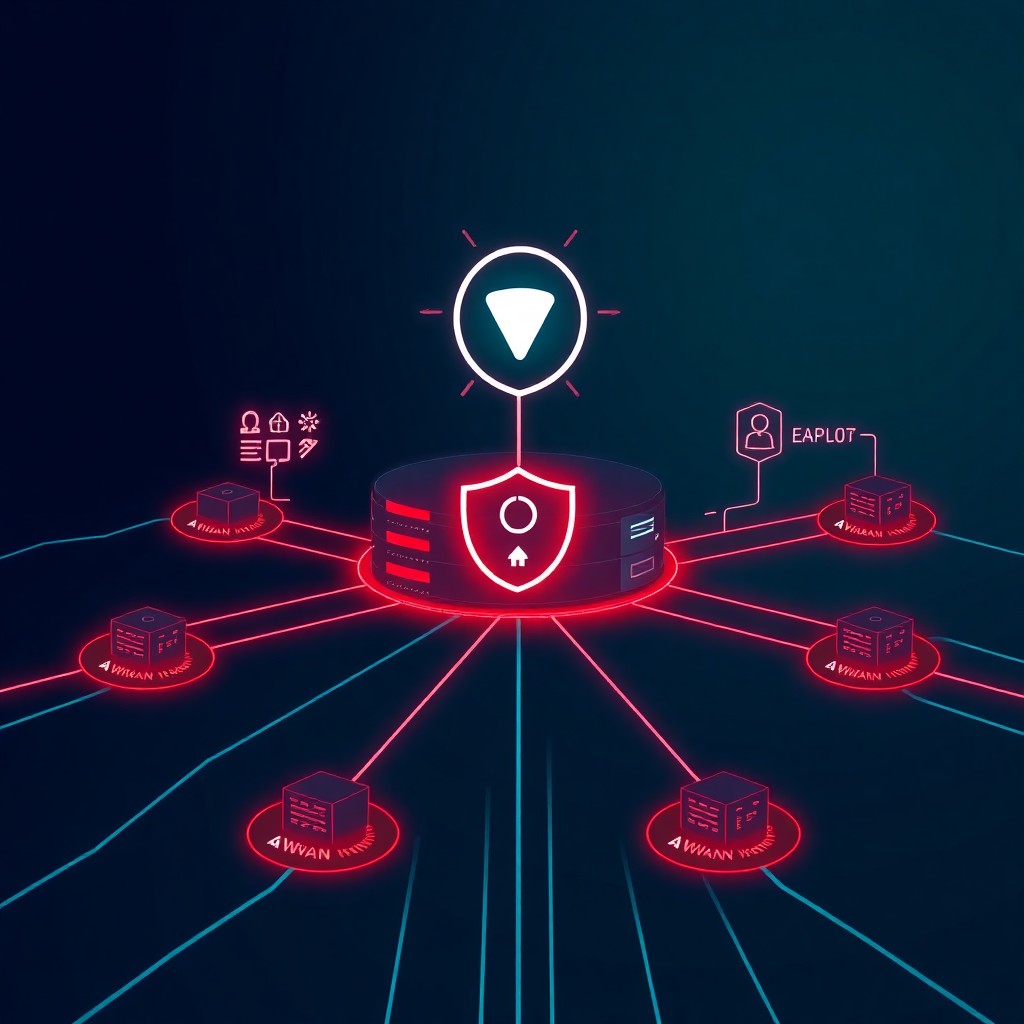










A critical vulnerability in Argo CD’s repo-server component enables authenticated attackers to execute arbitrary code and potentially compromise entire Kubernetes clusters. The flaw, stemming from improper input validation in manifest generation processes, affects multiple Argo CD versions and remains unpatched in several deployments. Organizations running Argo CD must immediately review their configurations and implement compensating controls to prevent cluster takeover.
Introduction
Argo CD, one of the most widely adopted GitOps continuous delivery tools for Kubernetes, faces a severe security challenge. A newly disclosed vulnerability in its repo-server component allows authenticated users with minimal privileges to execute arbitrary code on the server, creating a direct pathway to Kubernetes cluster compromise.
This flaw represents a significant threat to organizations leveraging GitOps workflows. The repo-server component, responsible for generating Kubernetes manifests from various sources, processes user-supplied input in ways that can be manipulated to break out of intended security boundaries. With Argo CD deployed across thousands of production environments managing critical infrastructure, the exploitation potential extends far beyond simple unauthorized access.
The vulnerability particularly concerns organizations that have adopted multi-tenancy models within their Argo CD deployments, where multiple teams share the same instance with supposedly isolated permissions.
Background & Context
Argo CD serves as a declarative GitOps continuous delivery tool for Kubernetes, enabling teams to manage application deployments through Git repositories. The repo-server component acts as the bridge between Git repositories and Kubernetes clusters, responsible for:
- Cloning Git repositories
- Generating Kubernetes manifests from various sources (Helm, Kustomize, plain YAML)
- Processing configuration management plugins
- Serving generated manifests to the application controller
The architecture typically grants repo-server access to sensitive credentials, including Git repository tokens and potentially Kubernetes API credentials, making it a high-value target for attackers.
Argo CD’s plugin system allows extending functionality through custom configuration management tools. This extensibility, while powerful, introduces attack surface when combined with insufficient input validation. The repo-server runs these plugins and processes their output, creating opportunities for command injection if input sanitization fails.
Previous security issues in Argo CD have highlighted the challenges of securing complex GitOps toolchains, including path traversal vulnerabilities and privilege escalation flaws that allowed unauthorized repository access.
Technical Breakdown
The vulnerability exploits weaknesses in how the repo-server processes parameters passed to manifest generation functions. When Argo CD generates manifests from sources like Helm charts or custom plugins, it constructs command-line invocations using user-controllable parameters.
The attack vector works as follows:
- Initial Access: An attacker requires authenticated access to Argo CD with permissions to create or modify applications
- Payload Injection: Malicious parameters are embedded in application specifications, particularly in plugin configurations or Helm value overrides
- Command Injection: The repo-server fails to properly sanitize these inputs when constructing shell commands
- Code Execution: Arbitrary commands execute in the repo-server container context
Example vulnerable configuration:
apiVersion: argoproj.io/v1alpha1
kind: Application
metadata:
  name: malicious-app
spec:
  source:
    repoURL: https://example.com/repo
    plugin:
      name: legitimate-plugin
      env:
        - name: CUSTOM_PARAM
          value: "'; malicious_command; echo '"
The injected parameter breaks out of the intended context, allowing arbitrary command execution. Since the repo-server typically runs with elevated privileges and has access to sensitive secrets, successful exploitation provides attackers with:
- Access to all Git repository credentials stored in Argo CD
- Potential lateral movement to connected Kubernetes clusters
- Ability to modify application definitions and inject backdoors
- Access to Kubernetes service account tokens mounted in the pod
The vulnerability becomes particularly dangerous when combined with Argo CD’s typical deployment patterns, where the repo-server has broad access to cluster resources through service account permissions.
Impact & Risk Assessment
Severity: Critical (CVSS score estimated 8.5-9.0)
The impact of successful exploitation extends across multiple dimensions:
Immediate Technical Impact:
- Complete compromise of the Argo CD repo-server
- Exposure of all managed Git repository credentials
- Unauthorized access to Kubernetes manifests and secrets
- Potential container escape in misconfigured environments
Cluster-Level Impact:
- Full Kubernetes cluster takeover through credential theft
- Deployment of malicious workloads across all managed applications
- Data exfiltration from applications managed by Argo CD
- Establishment of persistent backdoors in GitOps workflows
Organizational Impact:
- Supply chain compromise through poisoned deployments
- Compliance violations due to unauthorized access
- Potential production outages from malicious modifications
- Reputational damage from security incidents
Organizations most at risk include:
- Multi-tenant Argo CD deployments where users have application creation privileges
- Environments with internet-facing Argo CD instances
- Organizations using custom plugins extensively
- Deployments lacking network segmentation between Argo CD and production clusters
The vulnerability requires authentication, reducing the attack surface compared to unauthenticated flaws. However, many organizations grant broad Argo CD access to development teams, significantly expanding the potential attacker pool in insider threat scenarios.
Vendor Response
The Argo CD maintainers have acknowledged the vulnerability and are working on comprehensive fixes. However, the complexity of properly sanitizing all input vectors across multiple manifest generation methods has delayed a complete patch.
Interim guidance from the project team includes:
- Restricting application creation permissions to trusted administrators only
- Disabling custom plugins unless absolutely necessary
- Implementing additional RBAC constraints on application sources
- Enhanced audit logging of application modifications
A partial fix addressing the most obvious injection vectors was released, but security researchers have identified bypass techniques, necessitating further hardening efforts. The maintainers have committed to a more comprehensive architectural review of input validation across the entire codebase.
The project has established a dedicated security advisory and is coordinating with the Cloud Native Computing Foundation (CNCF) security team to ensure proper disclosure and patching timelines.
Mitigations & Workarounds
Until comprehensive patches are available, implement these compensating controls:
Access Control Hardening:
apiVersion: rbac.authorization.k8s.io/v1
kind: Role
metadata:
name: restricted-argo-access
rules:
- apiGroups: ["argoproj.io"]
resources: ["applications"]
verbs: ["get", "list"] # Remove "create", "update"Disable Custom Plugins:
apiVersion: v1
kind: ConfigMap
metadata:
  name: argocd-cm
data:
  configManagementPlugins: ""  # Disable all custom plugins
Repository Restrictions:
Limit allowed Git repository sources to a controlled whitelist:
data:
  repositories: |
    - url: https://trusted-repo.internal.com
Network Segmentation:
Isolate the repo-server component using NetworkPolicies:
apiVersion: networking.k8s.io/v1
kind: NetworkPolicy
metadata:
  name: repo-server-isolation
spec:
  podSelector:
    matchLabels:
      app.kubernetes.io/name: argocd-repo-server
  policyTypes:
  - Egress
  egress:
  - to:
    - namespaceSelector:
        matchLabels:
          name: argocd
Enhanced Audit Logging:
Enable comprehensive audit trails for all application modifications and manifest generation activities.
Detection & Monitoring
Implement these detection strategies to identify potential exploitation attempts:
Log Analysis:
Monitor repo-server logs for suspicious command patterns:
kubectl logs -n argocd deployment/argocd-repo-server | grep -E "sh -c|bash -c|;|&&|\||"Behavioral Monitoring:
Alert on:
- Unexpected network connections from repo-server pods
- Application definitions created or modified outside normal change windows
- Plugin configurations being added to existing applications
- Unusual process executions within repo-server containers
Kubernetes Audit Logs:
Enable and monitor Kubernetes audit logs for application resource modifications:
apiVersion: audit.k8s.io/v1
kind: Policy
rules:
- level: RequestResponse
resources:
- group: "argoproj.io"
resources: ["applications"]Runtime Security:
Deploy runtime security tools like Falco with rules detecting:
- Shell spawning from repo-server processes
- Unexpected file system modifications
- Network connections to external command-and-control infrastructure
SIEM Integration:
Create correlation rules detecting:
- Application modification followed by unusual repo-server activity
- Multiple failed authentication attempts before successful application changes
- Plugin additions combined with outbound network connections
Best Practices
Adopt these long-term security practices for Argo CD deployments:
Principle of Least Privilege:
- Grant application creation rights only to administrators
- Use project-based RBAC to limit user scope
- Separate Argo CD instances for different trust boundaries
GitOps Security:
- Require pull request reviews for all application definitions
- Implement branch protection on Git repositories
- Use signed commits for application manifests
Plugin Management:
- Maintain an approved plugin whitelist
- Conduct security reviews before enabling new plugins
- Run plugins in isolated containers with minimal privileges
Secrets Management:
- Avoid storing secrets directly in Argo CD
- Integrate with external secret managers (Vault, External Secrets Operator)
- Rotate Git credentials regularly
Network Architecture:
- Deploy Argo CD in dedicated, isolated namespaces
- Implement strict ingress/egress controls
- Use mutual TLS for component communication
Regular Security Assessment:
- Conduct periodic security audits of Argo CD configurations
- Review RBAC permissions quarterly
- Perform penetration testing of GitOps workflows
Key Takeaways
- A critical input validation vulnerability in Argo CD’s repo-server enables authenticated attackers to execute arbitrary code and potentially compromise Kubernetes clusters
- The flaw affects multiple versions and remains partially unpatched, requiring immediate implementation of compensating controls
- Organizations must restrict application creation permissions, disable custom plugins, and enhance monitoring until comprehensive fixes are available
- The vulnerability highlights inherent risks in GitOps toolchains that bridge development workflows and production infrastructure
- Multi-layered defense including strict RBAC, network isolation, and runtime monitoring provides the best protection
- Regular security assessments and adherence to GitOps security best practices are essential for maintaining secure continuous delivery pipelines
References
- Argo CD Official Documentation: https://argo-cd.readthedocs.io/
- CNCF Security Advisory Database
- Kubernetes RBAC Best Practices: https://kubernetes.io/docs/reference/access-authn-authz/rbac/
- GitOps Security Principles: https://opengitops.dev/
- CVE Details (pending assignment)
- Argo CD GitHub Security Advisories: https://github.com/argoproj/argo-cd/security/advisories
Stay updated at https://cydhaal.com — Your Daily Dose of Cyber Intelligence.
📧 Subscribe to our newsletter at https://cydhaal.com/newsletter/