




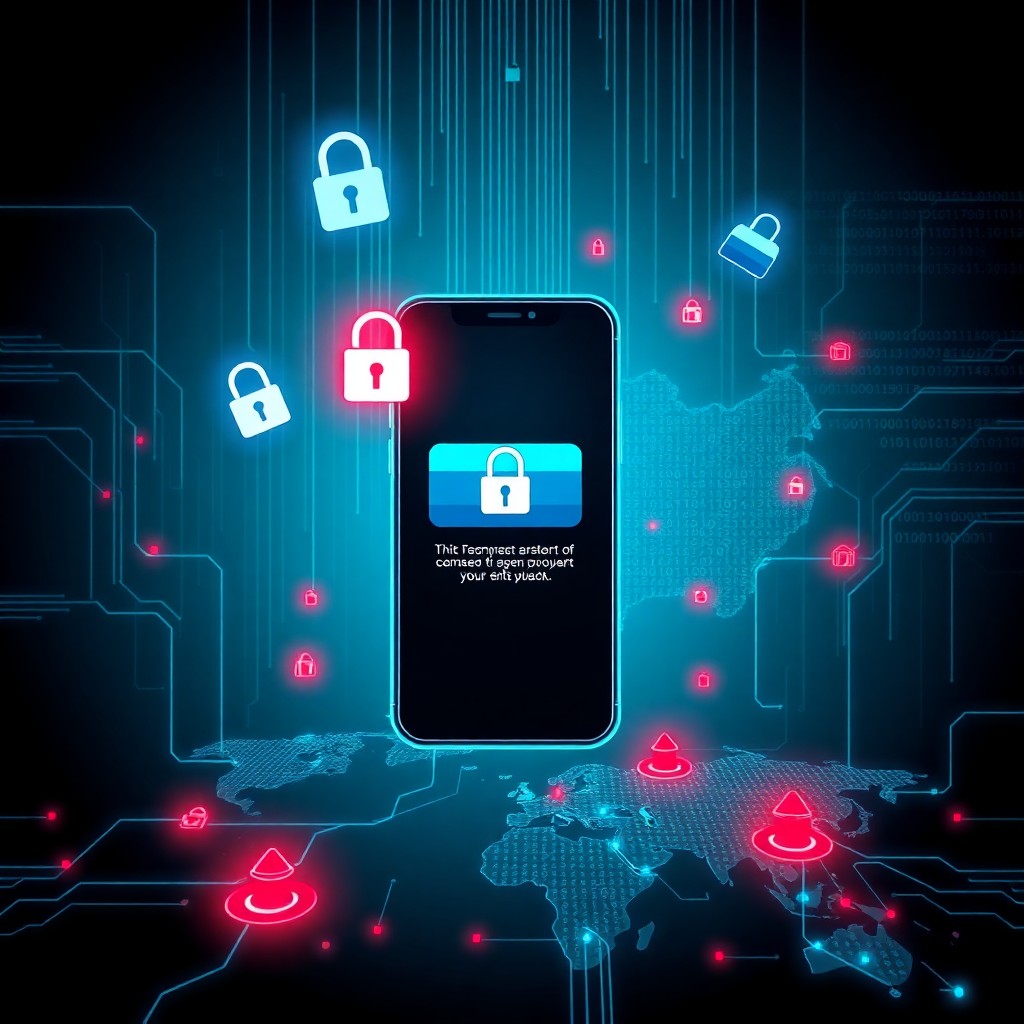
Ukraine’s Security Service (SBU) has exposed a sophisticated SMS phishing campaign orchestrated by Russian intelligence services targeting government officials and critical infrastructure personnel. The operation uses deceptive text messages impersonating legitimate support services to harvest credentials for secure messaging platforms. This campaign represents a significant escalation in social engineering tactics aimed at compromising state communications and intelligence gathering during ongoing geopolitical tensions.
Introduction
The Ukrainian Security Service has revealed details of an active SMS phishing (smishing) campaign attributed to Russian intelligence operatives. The operation specifically targets government officials, military personnel, and employees of critical infrastructure organizations through fraudulent text messages designed to steal authentication credentials for secure messaging applications.
Unlike traditional phishing campaigns that cast wide nets, this operation demonstrates precise targeting and sophisticated social engineering tailored to exploit the heightened security environment. The attackers leverage urgency and authority to manipulate victims into compromising their own communications security.
This incident underscores the evolving threat landscape where nation-state actors increasingly employ mobile-focused attack vectors to bypass traditional email security controls and exploit the personal devices that have become integral to official communications.
Background & Context
Russian intelligence services have consistently demonstrated advanced capabilities in social engineering and credential harvesting operations. Previous campaigns attributed to groups like APT28 (Fancy Bear) and APT29 (Cozy Bear) have successfully compromised government networks through similar deception tactics.
The current geopolitical situation has intensified cyber operations between Russia and Ukraine, with both nations experiencing unprecedented levels of digital intrusion attempts. Government officials in conflict zones face particularly acute risks as adversaries seek intelligence advantages through communications interception.
SMS phishing has emerged as an increasingly effective attack vector for several reasons. Mobile devices often lack the security protections of enterprise networks, users tend to trust text messages more than emails, and the limited screen space makes it harder to identify spoofing indicators. For nation-state actors targeting high-value individuals, smishing provides a direct channel that bypasses organizational email filters and security awareness training focused on traditional phishing.
The targeting of secure messaging credentials represents a strategic objective for intelligence collection. Compromising these platforms provides access not only to current communications but potentially to encrypted message histories and contact networks.
Technical Breakdown
The campaign operates through a multi-stage social engineering attack chain:
Initial Contact Phase:
Attackers send SMS messages impersonating technical support teams for popular secure messaging applications used by Ukrainian government personnel. The messages claim that accounts require urgent security verification or system updates due to detected suspicious activity.
Urgency & Authority Exploitation:
The text messages employ psychological manipulation tactics including:
- Time-sensitive language creating artificial urgency
- Official-sounding terminology mimicking legitimate support communications
- References to security policies or compliance requirements
- Warnings of account suspension or data loss
Credential Harvesting Infrastructure:
Victims are directed to click embedded links leading to convincing phishing pages that replicate legitimate application login interfaces. These pages are hosted on compromised domains or specially registered lookalike domains that closely resemble official services.
The phishing infrastructure typically includes:
https://secure-[legitimate-app]-verify[.]com
https://[app-name]-security-check[.]net
https://support-[service]-ukraine[.]org
Data Exfiltration:
When victims enter their credentials, the information is immediately captured and transmitted to attacker-controlled servers. In more sophisticated variants, the pages function as reverse proxies, forwarding credentials to legitimate services while capturing authentication tokens, enabling real-time account takeover without triggering security alerts.
Post-Compromise Activities:
Once credentials are obtained, attackers can:
- Access message histories and ongoing conversations
- Identify communication networks and organizational structures
- Deploy additional malware or establish persistent access
- Conduct lateral phishing attacks against contacts
- Exfiltrate sensitive documents shared through messaging platforms
Impact & Risk Assessment
Immediate Risks:
The compromise of government officials’ messaging credentials creates multiple critical security implications. Attackers gain access to classified or sensitive discussions regarding military operations, policy decisions, and strategic planning. This intelligence advantage directly supports adversarial decision-making processes.
Operational Security Degradation:
Successful credential theft undermines the confidentiality of supposedly secure communications. Officials may continue using compromised accounts unaware that adversaries are monitoring conversations in real-time, leading to catastrophic information disclosure.
Network Expansion:
Compromised accounts serve as pivot points for lateral attacks. Adversaries can leverage trusted relationships to target additional victims through the compromised accounts, significantly expanding their access within government networks.
Long-Term Intelligence Collection:
Unlike one-time data breaches, compromised messaging credentials provide ongoing access to emerging intelligence. Attackers maintain persistent surveillance capabilities as long as the compromise remains undetected.
Severity Assessment:
For targeted individuals: CRITICAL – Direct compromise of communications security
For government organizations: HIGH – Potential exposure of classified information and operational details
For critical infrastructure: HIGH – Risk of operational disruption through intelligence-driven attacks
Vendor Response
The Ukrainian Security Service has issued public warnings about the campaign and provided indicators of compromise to government agencies. Security services are coordinating with telecommunications providers to identify and block malicious SMS sources.
Messaging platform providers have been notified and are implementing additional authentication verification for accounts associated with Ukrainian government domains. Several platforms have enhanced their suspicious login detection algorithms to identify access patterns consistent with this campaign.
The SBU has established reporting channels for officials to forward suspicious messages and is conducting forensic analysis on compromised accounts to assess the scope of information exposure. Affected organizations are being directly notified through secure channels.
International partners, including CERT teams from allied nations, have been briefed on the campaign tactics to enable detection of similar operations potentially targeting their own government personnel.
Mitigations & Workarounds
Immediate Actions for Potential Targets:
- Enable Multi-Factor Authentication (MFA):
Activate MFA on all messaging platforms
Use hardware tokens or authenticator apps rather than SMS-based codes
Configure application-specific passwords where supported- Verify Unexpected Messages:
Never click links in unsolicited SMS messages claiming to be from support services. Instead, directly access applications through official channels or bookmarked URLs.
- Reset Credentials:
If you suspect compromise, immediately change passwords through official application interfaces and revoke active sessions:
Settings → Security → Active Sessions → Terminate All Other Sessions- Report Suspicious Messages:
Forward suspicious SMS to organizational security teams and delete after reporting.
Organizational Security Measures:
- Deploy mobile device management (MDM) solutions restricting installation of applications from unknown sources
- Implement network-level filtering of known malicious domains
- Conduct targeted security awareness training focused on smishing tactics
- Establish out-of-band verification procedures for sensitive communications
- Require periodic credential rotation for high-value accounts
Detection & Monitoring
User-Level Indicators:
Watch for these red flags in text messages:
- Unsolicited security warnings or verification requests
- Links to domains that don’t match official services
- Grammatical errors or unusual phrasing
- Requests for immediate action under threat of account suspension
- Messages received outside normal business hours for supposed support communications
Technical Detection Methods:
Security teams should monitor for:
# Log analysis for suspicious authentication patterns
grep "login_from_new_location" /var/log/auth.log | \
  grep -E "(RU|unknown)" | \
  awk '{print $1, $2, $3, $11}'
Network Monitoring:
Implement DNS filtering and web proxy logs to detect access to known phishing infrastructure:
Monitor for domains registered recently with government/app-related keywords
Track TLS certificate anomalies for lookalike domains
Analyze HTTP POST requests to unusual destinations from mobile devices
Account Monitoring:
Configure alerts for:
- Logins from unexpected geographic locations
- Multiple concurrent sessions from different IP addresses
- Bulk message access or download activities
- Changes to account recovery settings
- Addition of new devices to trusted lists
Best Practices
For Individual Users:
- Verify Before Trusting: Always independently verify the authenticity of support communications through official channels
- Bookmark Official Sites: Access services through saved bookmarks rather than links
- Review Active Sessions: Regularly audit logged-in devices and locations
- Use Password Managers: Generate unique, complex passwords for each service
- Stay Informed: Monitor security advisories from official government cybersecurity agencies
For Organizations:
- Implement Zero Trust Architecture: Never automatically trust authentication based solely on credentials
- Deploy Endpoint Detection: Monitor mobile devices for indicators of compromise
- Conduct Regular Training: Simulate smishing attacks to test employee awareness
- Establish Clear Protocols: Create and communicate official procedures for support contacts
- Segment Communications: Use separate devices or accounts for highly classified communications
- Maintain Incident Response Plans: Prepare specific procedures for credential compromise scenarios
For Security Teams:
- Threat Intelligence Integration: Subscribe to feeds covering nation-state mobile threats
- Behavioral Analytics: Establish baseline patterns for normal account usage
- Rapid Response Capabilities: Develop automated workflows for credential reset and session termination
- Forensic Readiness: Maintain logging sufficient for post-incident investigation
- Cross-Organization Coordination: Share indicators and tactics with peer agencies
Key Takeaways
- Russian intelligence services are actively targeting Ukrainian government officials through sophisticated SMS phishing campaigns designed to steal secure messaging credentials
- The operation demonstrates nation-state actors’ increasing focus on mobile attack vectors that bypass traditional email security controls
- Compromised messaging credentials provide adversaries with persistent access to sensitive government communications and intelligence
- Multi-factor authentication remains the most effective defense against credential theft operations
- Organizations must extend security awareness training beyond email phishing to include mobile-specific threats
- The campaign highlights the critical importance of verifying unexpected communications through independent channels before taking action
- Rapid detection and response capabilities are essential for minimizing damage from successful compromises
- International coordination and information sharing strengthen collective defense against nation-state cyber operations
References
- Ukrainian Security Service (SBU) Official Statements
- NIST Special Publication 800-63B: Digital Identity Guidelines
- CISA Alert: Protecting Against SMS Phishing Attacks
- MITRE ATT&CK Framework: T1566.002 – Phishing: Spearphishing Link
- ENISA Threat Landscape Report: Nation-State Actors
- Ukraine CERT-UA Advisories on Russian Cyber Operations
Stay updated at https://cydhaal.com — Your Daily Dose of Cyber Intelligence.
📧 Subscribe to our newsletter at https://cydhaal.com/newsletter/