




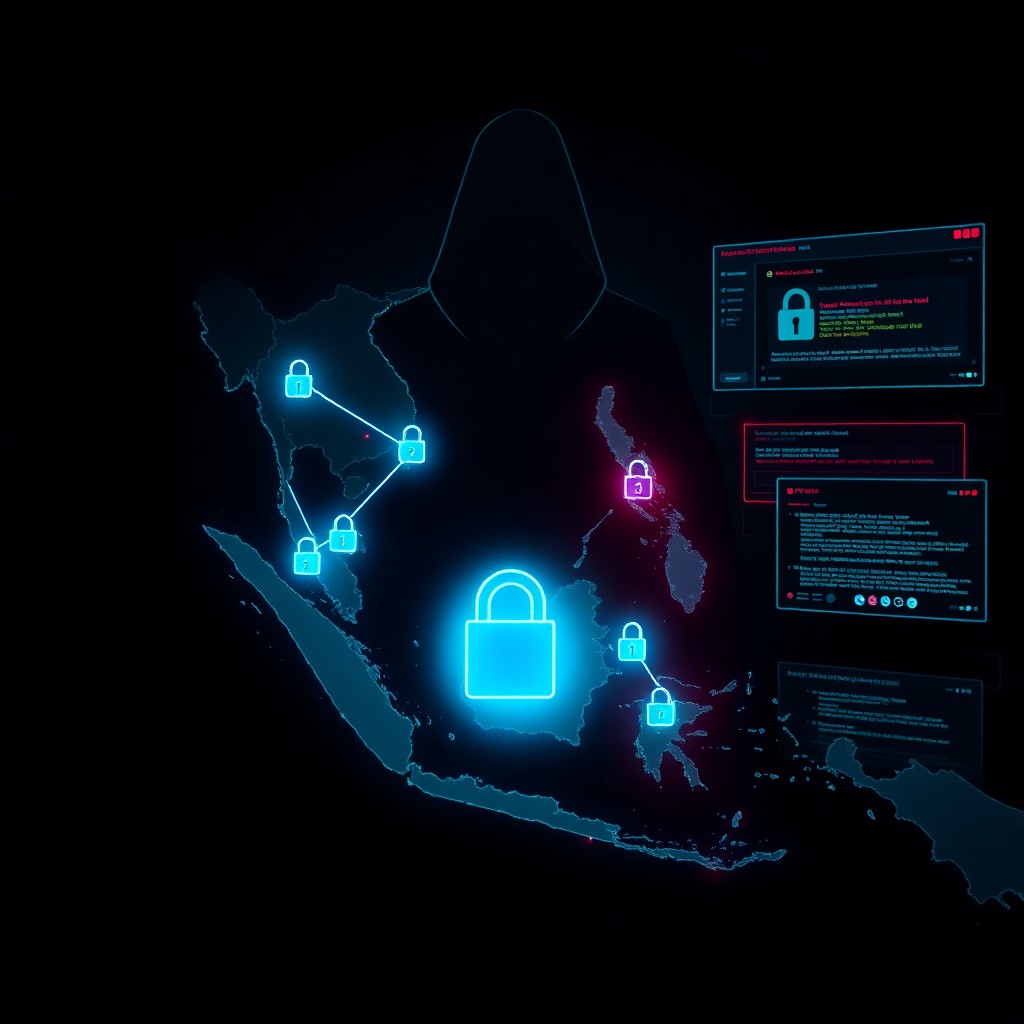
Chinese state-sponsored threat actor CL-STA-1062 has intensified operations targeting critical infrastructure across Southeast Asia, deploying custom malware frameworks designed for long-term espionage and potential disruptive operations. The campaign focuses on energy, telecommunications, and government sectors in countries including Vietnam, Thailand, the Philippines, and Indonesia. The adversary employs sophisticated tradecraft including multi-stage infection chains, living-off-the-land techniques, and custom backdoors optimized for stealth and persistence.
Introduction
A sustained cyber espionage campaign attributed to the Chinese advanced persistent threat (APT) group designated CL-STA-1062 has significantly expanded its targeting footprint across Southeast Asian critical infrastructure networks. Security researchers have observed a marked increase in intrusion attempts and successful compromises throughout 2024, with the threat actor demonstrating enhanced operational security and an evolving malware toolkit specifically engineered to evade detection in industrial control system (ICS) environments.
This campaign aligns with China’s strategic interests in the region, particularly concerning disputed territorial claims in the South China Sea and economic competition through Belt and Road Initiative infrastructure projects. The targeting pattern suggests intelligence collection priorities focused on energy security, telecommunications capabilities, and governmental decision-making processes.
Background & Context
CL-STA-1062 has operated since at least 2019, with early activity focused primarily on Vietnamese government entities. The group shares tactical overlaps with other Chinese APT clusters but maintains distinct infrastructure and custom tooling that suggests a separate operational mandate.
Southeast Asian critical infrastructure has become an increasingly attractive target for state-sponsored actors seeking strategic advantage. The region’s rapid digital transformation, combined with resource constraints in cybersecurity programs, creates opportunities for persistent access operations. Previous campaigns by Chinese APTs in this region, including activities by APT40 and APT41, established intelligence collection networks that CL-STA-1062 appears to be expanding.
The current campaign escalation coincides with increased geopolitical tensions in the Indo-Pacific region and competition for influence among major powers. Critical infrastructure targeting enables both intelligence gathering and the pre-positioning of access for potential future disruptive operations.
Technical Breakdown
CL-STA-1062’s attack chain demonstrates sophisticated understanding of target environments and defensive capabilities:
Initial Access
The threat actor gains initial access through multiple vectors:
- Spear-phishing with weaponized documents exploiting known vulnerabilities
- Compromise of internet-facing applications and VPN appliances
- Supply chain infiltration through third-party IT service providers
- Watering hole attacks targeting industry-specific web portals
Custom Malware Arsenal
The campaign employs several custom malware families:
LIGHTDOOR: A modular backdoor framework providing comprehensive remote access capabilities. Written in C++, it implements encrypted C2 communications using custom protocols over HTTPS to blend with legitimate traffic.
STEELFRAME: A credential harvesting tool specifically designed to extract authentication data from industrial control systems, SCADA interfaces, and specialized engineering workstations.
SHADOWPAD (Modified): While SHADOWPAD is a known tool used by multiple Chinese APTs, CL-STA-1062 deploys a customized variant with additional modules for ICS network reconnaissance and lateral movement in air-gapped segments.
Persistence Mechanisms
The adversary establishes persistence through:
- Registry key modifications in
HKLM\SOFTWARE\Microsoft\Windows\CurrentVersion\Run - Scheduled tasks masquerading as legitimate system maintenance
- Service creation with names mimicking common Windows services
- DLL side-loading through legitimate signed binaries
Example persistence technique:
schtasks /create /tn "SystemMaintenanceTask" /tr "C:\Windows\System32\svchost.exe -k netsvcs" /sc onlogon /ru SYSTEMLiving-Off-the-Land Tactics
CL-STA-1062 extensively uses legitimate system tools to minimize forensic artifacts:
# PowerShell reconnaissance commands observed
Get-WmiObject Win32_NetworkAdapterConfiguration | Where-Object {$_.IPEnabled -eq $true}
Get-Process | Select-Object ProcessName,Id,Path
net group "Domain Admins" /domain
The threat actor leverages Windows Management Instrumentation (WMI) for lateral movement and remote execution, making detection significantly more challenging as these activities blend with legitimate administrative functions.
Impact & Risk Assessment
The campaign poses severe risks across multiple dimensions:
Operational Impact
Compromised critical infrastructure organizations face:
- Potential for service disruption affecting millions of citizens
- Exposure of sensitive operational technology (OT) configurations
- Risk of physical damage through ICS manipulation
- Long-term espionage enabling strategic disadvantage
Intelligence Compromise
The adversary’s access enables collection of:
- Government policy deliberations and strategic planning
- Energy sector contracts and exploration data
- Telecommunications metadata revealing communication patterns
- Infrastructure vulnerabilities and security configurations
Strategic Implications
This campaign demonstrates:
- Chinese intelligence services’ prioritization of regional influence
- Capability development for potential future cyber-physical operations
- Investment in long-term access rather than immediate exploitation
- Sophisticated understanding of ICS/SCADA environments
Organizations in affected sectors should assume breach and conduct comprehensive threat hunting operations. The sophistication level indicates that undetected compromises likely exist across multiple organizations.
Vendor Response
Multiple cybersecurity vendors have published indicators of compromise (IOCs) and detection rules:
Mandiant issued a comprehensive threat intelligence report in October 2024 detailing CL-STA-1062’s infrastructure and malware characteristics.
CrowdStrike added detection signatures to its Falcon platform, identifying the campaign under the tracking designation “Wicked Panda Extended Operations.”
Microsoft published threat intelligence updates through its Defender Threat Intelligence platform, including network indicators and behavioral analytics.
Cisco Talos released Snort rules specifically targeting LIGHTDOOR C2 traffic patterns.
Regional CERTs in Vietnam, Thailand, and the Philippines have issued advisories to critical infrastructure operators with localized indicators and recommended defensive measures.
Mitigations & Workarounds
Organizations should implement the following defensive measures:
Immediate Actions
- Audit all external-facing systems for compromise indicators
- Reset credentials for administrative and service accounts
- Review and restrict VPN access logs for anomalous connections
- Isolate OT networks from IT networks with hardware segmentation
- Deploy multi-factor authentication across all remote access systems
Network Segmentation
Implement robust segmentation:
Internet <-> DMZ <-> IT Network <-> OT DMZ <-> OT NetworkEach boundary should enforce strict allow-listing and deep packet inspection.
Configuration Hardening
Disable unnecessary services and protocols:
# Disable WMI for workstations where not required
Set-Service -Name Winmgmt -StartupType Disabled
# Restrict PowerShell execution
Set-ExecutionPolicy AllSigned -Force
Access Controls
- Implement privileged access management (PAM) solutions
- Enforce principle of least privilege across all systems
- Monitor and alert on lateral movement attempts
- Deploy application allow-listing on critical systems
Detection & Monitoring
Security teams should enhance monitoring capabilities with focus on:
Network Detection
Monitor for:
- Unusual outbound HTTPS connections to IP addresses rather than domains
- Extended sessions from workstations to server infrastructure
- Data exfiltration patterns indicating large transfers to external hosts
- DNS queries to newly registered domains or suspicious TLDs
Endpoint Detection
Implement behavioral analytics for:
Process: powershell.exe
CommandLine: Contains encoded commands (-EncodedCommand)
Parent: Unusual parent processes like excel.exe, winword.exe
Network: Outbound connections immediately after execution
Log Analysis
Centralize and analyze:
- Windows Security Event ID 4688 (Process Creation)
- Event ID 4624/4625 (Logon attempts)
- PowerShell Script Block Logging (Event ID 4104)
- Sysmon Event ID 1 (Process creation with full command line)
ICS-Specific Monitoring
- Baseline normal OT network traffic patterns
- Alert on any unexpected communication from HMI systems
- Monitor for configuration changes to PLCs and RTUs
- Track abnormal read/write operations to industrial protocols
Best Practices
Organizations should adopt comprehensive security frameworks:
Zero Trust Architecture
Implement verification at every access point:
- Continuous authentication and authorization
- Micro-segmentation of network resources
- Encryption of all data in transit and at rest
- Assume breach mentality in security operations
Threat Intelligence Integration
- Subscribe to regional CERT advisories
- Participate in information sharing communities
- Integrate threat feeds into SIEM platforms
- Conduct regular threat modeling exercises
Incident Response Readiness
- Maintain updated incident response playbooks
- Conduct tabletop exercises quarterly
- Establish relationships with regional incident response firms
- Implement offline backups with air-gapped storage
Supply Chain Security
- Vet all third-party providers with access to networks
- Require security audits from managed service providers
- Implement network segmentation for vendor access
- Monitor third-party connections continuously
Security Awareness
- Train employees on spear-phishing recognition
- Conduct simulated phishing campaigns
- Establish clear reporting procedures for suspicious activity
- Educate staff on living-off-the-land techniques
Key Takeaways
- Active and Expanding Threat: CL-STA-1062 represents a sophisticated, well-resourced adversary actively expanding operations across Southeast Asian critical infrastructure.
- Custom Tooling Advantage: The group’s custom malware framework demonstrates significant investment in capabilities specifically designed for long-term persistence in targeted environments.
- ICS/OT Focus: Unlike many APT campaigns focused solely on IT networks, this threat actor demonstrates clear interest in operational technology systems, elevating risk to physical infrastructure.
- Regional Strategic Priority: The targeting pattern reflects Chinese geopolitical interests in the region and suggests intelligence collection supporting broader strategic objectives.
- Detection Challenges: Sophisticated use of living-off-the-land techniques and legitimate tool abuse requires advanced behavioral analytics beyond signature-based detection.
- Assume Breach Posture: Given the sophistication and duration of the campaign, organizations in targeted sectors should conduct comprehensive threat hunting assuming potential compromise.
- Collaboration Necessity: Effective defense requires information sharing between government agencies, private sector entities, and international partners.
References
- Mandiant Threat Intelligence, “CL-STA-1062: Chinese APT Targeting Southeast Asian Critical Infrastructure,” October 2024
- CrowdStrike Global Threat Report, “Wicked Panda Extended Operations Analysis,” Q3 2024
- MITRE ATT&CK Framework, “Tactics and Techniques for Industrial Control Systems”
- Vietnam National Cyber Security Center, Advisory VNCERT-2024-0847
- Thailand Computer Emergency Response Team, Alert TH-CERT/AL/2024/089
- Recorded Future, “Chinese State-Sponsored Activity in Southeast Asia: Strategic Analysis”
- Cisco Talos Intelligence, “LIGHTDOOR Malware Technical Analysis”
- Microsoft Defender Threat Intelligence, “Nation-State Activity Targeting Energy Sector”
Stay updated at https://cydhaal.com — Your Daily Dose of Cyber Intelligence.
📧 Subscribe to our newsletter at https://cydhaal.com/newsletter/