







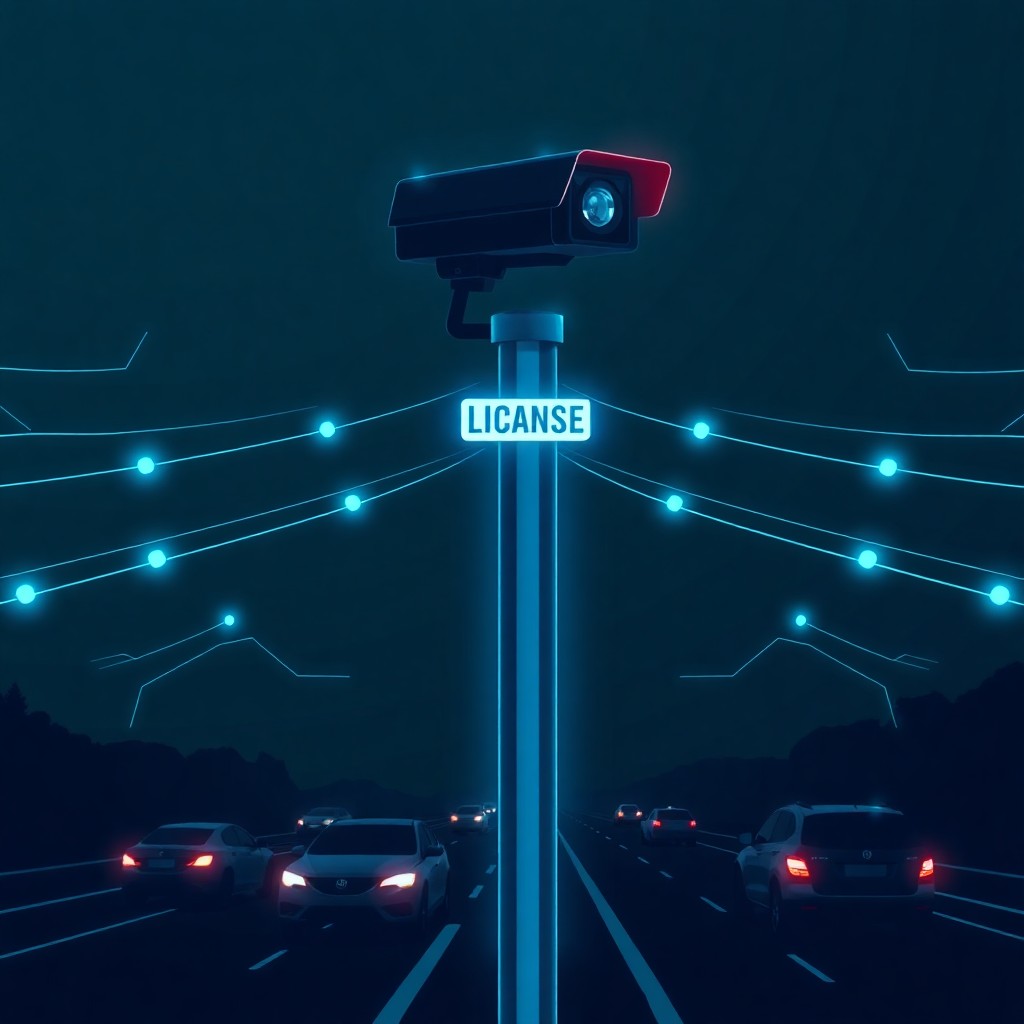
License Plate Readers Now Track Your Phone Too: The Evolution of Automated Surveillance
Automated License Plate Readers (ALPRs) have evolved beyond capturing vehicle information to now tracking mobile devices, creating unprecedented surveillance capabilities. Modern ALPR systems integrate Bluetooth, WiFi, and cellular signal detection to link vehicles with phone MAC addresses and device identifiers. This convergence of physical and digital tracking enables law enforcement and private companies to build comprehensive movement profiles, raising significant privacy concerns. Organizations and individuals should understand these capabilities, implement device privacy controls, and advocate for transparent usage policies.
Introduction
The surveillance landscape has fundamentally shifted as Automated License Plate Reader (ALPR) technology merges with wireless device tracking. What began as simple camera systems photographing license plates has transformed into sophisticated multi-sensor platforms capable of correlating vehicle movements with mobile device identifiers.
Recent deployments by companies like Motorola Solutions and Flock Safety demonstrate that modern ALPR systems simultaneously capture license plates, vehicle characteristics, and nearby wireless signals from smartphones, tablets, and IoT devices. This technological convergence creates a surveillance ecosystem far more invasive than traditional traffic monitoring.
This development represents a significant privacy inflection point. While license plates are publicly visible, mobile devices emit signals that can uniquely identify individuals, track their associations, and reveal patterns invisible through vehicle data alone. Understanding these enhanced capabilities is critical for privacy-conscious organizations and individuals.
Background & Context
Traditional ALPR systems have existed for over two decades, primarily used by law enforcement for locating stolen vehicles and investigating crimes. These systems photograph license plates, convert images to text via OCR, and store location-stamped records in searchable databases.
The technology’s scope expanded dramatically around 2018-2020 when manufacturers began integrating wireless signal detection capabilities. This evolution was driven by several factors:
Commercial demand: Private companies recognized value in linking vehicle and device data for marketing and analytics. Repo companies, parking enforcement, and insurance investigators became major customers.
Law enforcement requests: Agencies sought more granular tracking to identify suspects who switch vehicles or passengers traveling with persons of interest.
Technical accessibility: Bluetooth Low Energy (BLE), WiFi probe requests, and other wireless protocols continuously broadcast unique identifiers that commodity hardware can capture inexpensively.
Companies like DRN (Digital Recognition Network) and Flock Safety now operate networks of thousands of cameras across municipalities, often funded through crime reduction partnerships that place equipment in neighborhoods at minimal cost to local governments.
The legal framework hasn’t kept pace. Most U.S. jurisdictions lack specific regulations governing combined vehicle-device tracking, creating a regulatory void where deployment outpaces oversight.
Technical Breakdown
Enhanced ALPR systems integrate multiple sensor types into unified platforms:
Optical Components
- High-resolution cameras capture license plates, vehicle make/model, color, and distinguishing features
- Infrared illumination enables 24/7 operation regardless of lighting conditions
- Advanced OCR algorithms achieve 95%+ accuracy in plate recognition
Wireless Signal Detection
Modern units incorporate software-defined radios (SDRs) that monitor multiple frequency bands:
Bluetooth Classic (2.4 GHz)
- Captures BD_ADDR (device MAC addresses)
- Range: ~100 meters
Bluetooth Low Energy (BLE)
- Captures advertising packets with UUID
- Range: ~200 meters
- Commonly emitted by fitness trackers, smartwatches
WiFi (2.4/5 GHz)
- Probe requests containing MAC addresses
- Range: ~300 meters
- Smartphones constantly probe for known networks
Data Correlation Engine
Backend systems link captured data through temporal-spatial correlation:
if (license_plate_detection.timestamp - bluetooth_detection.timestamp) < 30s:
    if distance(license_plate_detection.location, bluetooth_detection.location) < 50m:
        create_association(vehicle_id, device_mac)
Privacy Circumvention
Despite randomized MAC addresses (iOS and Android privacy features), systems defeat these protections through:
- Sequence analysis: Identifying patterns in randomization intervals
- Signal fingerprinting: Unique RF characteristics of specific device chipsets
- Companion device clustering: Grouping randomized addresses traveling together
- WiFi SSID leakage: Probe requests revealing home/work network names
The aggregated data creates comprehensive profiles linking vehicles, devices, locations, and movement patterns across time.
Impact & Risk Assessment
The privacy implications are substantial and multifaceted:
Individual Privacy Risks
- Movement tracking: Continuous location history without warrant or consent
- Association mapping: Identifying who travels together, revealing relationships
- Pattern analysis: Inferring home/work locations, religious attendance, medical visits
- Persistent identification: Tracking individuals across vehicle changes
Organizational Risks
- Competitive intelligence: Tracking employee movements to competitor locations
- Trade secret exposure: Identifying supplier relationships through delivery patterns
- Executive targeting: High-value individuals become surveillance targets
- Data breach exposure: Centralized databases create honeypots for threat actors
Societal Concerns
- Chilling effects: Deterring attendance at protests, medical clinics, or religious services
- Disparate impact: Over-surveillance of minority communities where cameras concentrate
- Mission creep: Data collected for one purpose repurposed without public input
- Private surveillance networks: Minimal oversight compared to law enforcement databases
The data retention policies vary dramatically—some vendors store information for weeks, others indefinitely. Several major breaches have already exposed ALPR databases, with one incident compromising 3+ billion plate scans including timestamps and locations.
Vendor Response
Major ALPR vendors have offered varying responses to privacy concerns:
Flock Safety positions device tracking as optional, claiming their systems focus on vehicle characteristics rather than occupant devices. However, their technology partnerships include wireless detection capabilities that customers can enable.
Motorola Solutions markets combined vehicle-device tracking explicitly for law enforcement, emphasizing investigative value while promoting "privacy-by-design" features like automated data expiration.
DRN/Vigilant Solutions maintains extensive historical databases and offers device tracking as premium features for commercial clients.
Common vendor arguments include:
- Data is collected from public spaces with no expectation of privacy
- Information helps solve serious crimes and recover stolen vehicles
- Systems include access controls and audit logging
- Customers (agencies/companies) determine retention and usage policies
Privacy advocates counter that vendors profit from surveillance creep while deflecting responsibility to customers for implementation decisions. The technological capabilities enable abuses that policies alone cannot adequately prevent.
Mitigations & Workarounds
Individuals and organizations can implement multiple defensive measures:
Device-Level Controls
# iOS: Disable WiFi/Bluetooth scanning
Settings > Privacy > Location Services > System Services
- Disable "Networking & Wireless"
- Disable "WiFi Networking"
# Android: Limit scanning
Settings > Location > WiFi scanning [OFF]
Settings > Location > Bluetooth scanning [OFF]Operational Practices
- Enable airplane mode when not actively using connectivity
- Power off devices during sensitive travel
- Use faraday bags for complete signal isolation
- Separate devices from vehicles when parked
Organizational Measures
- Implement mobile device policies addressing tracking risks
- Provide company vehicles without associated personal devices
- Use dedicated "travel devices" without personal identifiers
- Conduct regular privacy training for executives and sensitive personnel
Technical Countermeasures
- MAC address randomization (verify enabled)
- VPN usage (doesn't prevent tracking but adds privacy layer)
- Disable automatic WiFi connection features
- Remove vehicle Bluetooth pairings when selling/servicing
Advocacy and Policy
- Support legislation requiring warrants for tracking data access
- Demand vendor transparency about capabilities and data sharing
- Advocate for data minimization and retention limits
- Request public disclosure when municipalities deploy enhanced systems
Detection & Monitoring
Identifying enhanced ALPR deployments in your area requires active investigation:
Visual Identification
Modern enhanced systems typically feature:
- Larger equipment enclosures (housing additional radios)
- Multiple antenna elements beyond camera lenses
- Solar panels or hardwired power (continuous operation)
- Cellular backhaul antennas for data transmission
Public Records Requests
Submit FOIA/open records requests to local agencies:
Request template:
- All contracts with ALPR vendors (past 5 years)
- Technical specifications of deployed systems
- Data sharing agreements with other agencies
- Usage policies and retention schedules
- Access logs showing queries performed
Community Mapping
Projects like the EFF's Atlas of Surveillance crowdsource ALPR locations. Contributing observations helps build public awareness.
Network Monitoring
While direct detection is difficult, organizations can:
- Monitor for unusual wireless scanning activity near facilities
- Deploy RF monitoring equipment at sensitive locations
- Log when company devices detect scanning attempts
Best Practices
For Individuals
- Minimize wireless signal emissions during travel
- Regularly audit device privacy settings
- Understand local surveillance infrastructure
- Exercise rights to access data collected about you
- Support privacy-preserving legislation
For Organizations
- Conduct privacy impact assessments for employee vehicle programs
- Implement clear policies about company device usage in vehicles
- Consider tracking risks in threat models for executives
- Provide privacy training addressing modern surveillance capabilities
- Evaluate vendors for surveillance exposure risks
For Communities
- Demand transparency before ALPR deployment
- Require public hearings on surveillance technology adoption
- Advocate for strong oversight and audit requirements
- Support data retention limits and access restrictions
- Ensure equitable deployment avoiding over-surveillance of specific neighborhoods
Key Takeaways
- Enhanced ALPR systems now combine license plate recognition with Bluetooth, WiFi, and cellular signal detection to track mobile devices
- This convergence enables linking vehicles to specific individuals and creating comprehensive movement profiles
- Default smartphone settings often enable continuous wireless broadcasting that these systems exploit
- Privacy protections like MAC randomization provide incomplete protection against sophisticated correlation techniques
- Minimal legal frameworks govern this surveillance expansion, creating accountability gaps
- Practical mitigations include device setting changes, operational practices, and faraday isolation
- Organizational awareness is critical—executive movements and competitive intelligence are at risk
- Community advocacy and transparency demands remain essential for establishing appropriate oversight
- The technology enables capabilities far beyond original ALPR purposes, with data retention creating long-term exposure
The convergence of vehicle and device tracking represents a qualitative shift in surveillance capabilities. As these systems proliferate, understanding their technical operation and implementing practical countermeasures becomes essential for privacy-conscious individuals and security-aware organizations.
References
- Electronic Frontier Foundation - "Atlas of Surveillance" (https://atlasofsurveillance.org)
- Flock Safety Technical Documentation - Product Specifications
- Motorola Solutions - Public Safety ALPR Systems Overview
- ACLU - "You Are Being Tracked: How License Plate Readers Are Being Used to Record Americans' Movements"
- National Institute of Justice - "License Plate Readers for Law Enforcement"
- IEEE Security & Privacy - "Tracking Untrackability: Challenges in Modern MAC Randomization"
- Digital Recognition Network - Commercial ALPR Services Documentation
- State Privacy Laws Database - ALPR Regulations by Jurisdiction
Stay updated at https://cydhaal.com — Your Daily Dose of Cyber Intelligence.
📧 Subscribe to our newsletter at https://cydhaal.com/newsletter/