









The Federal Communications Commission (FCC) has eliminated the July 2026 deployment deadline for Amazon’s Project Kuiper low Earth orbit (LEO) satellite broadband constellation. This regulatory relief removes pressure on Amazon to launch half of its planned 3,236 satellites by the original deadline, potentially impacting the competitive landscape of space-based internet services and raising questions about orbital debris management, spectrum allocation security, and the critical infrastructure implications of commercial satellite networks.
Introduction
The FCC’s decision to lift deployment deadlines for Amazon’s Project Kuiper represents a significant regulatory shift in the rapidly evolving space-based telecommunications sector. While seemingly administrative, this decision has substantial cybersecurity and national security implications as satellite broadband networks become critical infrastructure supporting everything from military communications to IoT device connectivity. The extension provides Amazon additional time to build out its constellation but also delays the implementation of security controls, encryption protocols, and resilience features that would come with an operational network. As nation-states increasingly view space assets as strategic targets and cyber-physical attack surfaces, understanding the security posture of emerging satellite networks becomes paramount.
Background & Context
Project Kuiper was approved by the FCC in 2020 with ambitious timelines requiring Amazon to deploy 50% of its constellation by July 2026 and complete the full network by July 2029. The project aims to provide global broadband coverage through 3,236 satellites operating in LEO at altitudes between 590 and 630 kilometers. Amazon has invested over $10 billion in the initiative and secured launch contracts with multiple providers including Blue Origin, United Launch Alliance, and Arianespace.
The original FCC milestones were established to prevent spectrum warehousing—a practice where companies secure valuable orbital slots and radio frequencies without timely deployment. These regulations ensure that limited space resources are utilized efficiently and that competitors can access spectrum if licensees fail to meet obligations.
However, Amazon encountered significant delays due to supply chain disruptions, rocket development setbacks at Blue Origin, and the complex engineering challenges of mass-producing advanced satellites. The company successfully launched two prototype satellites in October 2023 but has not yet begun full-scale production deployment. SpaceX’s Starlink, by contrast, already operates over 5,000 satellites and serves more than two million customers globally.
The FCC’s decision to grant relief came after Amazon petitioned for more flexible deployment timelines, arguing that technological improvements and economies of scale would allow faster deployment once production begins at full capacity.
Technical Breakdown
From a security architecture perspective, LEO satellite constellations present unique attack surfaces and defensive challenges compared to traditional geostationary satellites or terrestrial networks.
Communication Architecture
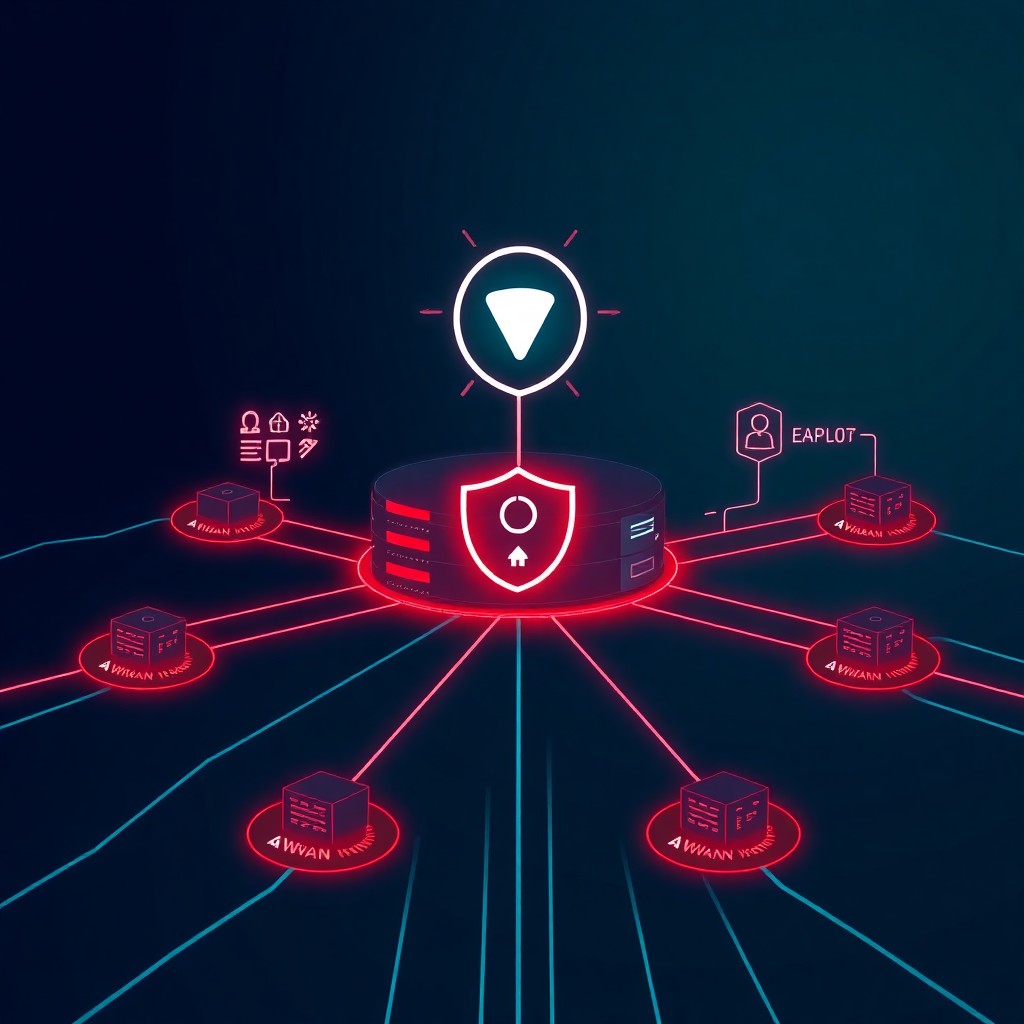
Project Kuiper satellites will communicate using Ka-band and Ku-band frequencies, creating ground-to-space links that must be secured against interception, jamming, and spoofing. The network architecture includes:
- User terminals: Ground-based antennas that establish encrypted connections to overhead satellites
- Satellite mesh network: Inter-satellite laser links enabling space-based routing without ground relay
- Gateway stations: Ground infrastructure connecting the satellite network to terrestrial internet backbone
- Network operations center: Centralized command and control for fleet management
Each component represents potential compromise points requiring robust authentication, encryption, and intrusion detection capabilities.
Security Challenges in LEO Networks
LEO satellites face distinct security challenges:
Signal Vulnerability: Lower orbital altitude means weaker signals compared to geostationary satellites, making them more susceptible to ground-based interference and requiring more sophisticated anti-jam technology.
Rapid Topology Changes: Satellites move quickly across the sky, requiring constant handoffs between spacecraft. This dynamic routing creates opportunities for man-in-the-middle attacks if proper authentication isn’t implemented.
Supply Chain Risks: Mass-producing thousands of satellites increases supply chain attack surface. Compromised components introduced during manufacturing could provide persistent backdoors.
Limited Physical Security: Once deployed, satellites cannot be physically inspected or patched easily. Security controls must be implemented correctly before launch, with remote update capabilities carefully secured.
RF Spectrum Conflicts: Sharing crowded orbital and frequency space with potentially adversarial actors creates interference opportunities—both accidental and intentional.
Impact & Risk Assessment
Critical Infrastructure Implications
The delay in deploying Project Kuiper affects the timeline for establishing redundant space-based internet infrastructure. As organizations increasingly depend on satellite connectivity for:
- Remote operations and industrial control systems
- Military and intelligence communications
- Emergency response networks
- Maritime and aviation connectivity
- IoT sensor networks in agriculture and utilities
Any delay in creating competitive alternatives to existing providers concentrates risk. Starlink’s current market dominance means single points of failure in satellite internet access, creating systemic risk if that network experiences widespread compromise or disruption.
Competitive Intelligence Concerns
Amazon’s extended timeline provides competitors additional market capture opportunity but also extends the period during which Project Kuiper’s technical specifications, security architecture, and operational procedures remain in development—and potentially vulnerable to intelligence collection by nation-state actors seeking to understand weaknesses before operational deployment.
Orbital Debris and Space Sustainability
From a security perspective, space debris represents both a physical and strategic threat. Delayed deployment timelines affect orbital slot utilization and may influence collision risk calculations. Compromised satellites that cannot execute proper deorbit maneuvers contribute to the debris problem, creating hazards for all space assets.
Regulatory Precedent
The FCC’s flexibility in granting deadline relief may encourage other licensees to seek similar extensions, potentially slowing the development of resilient, competitive space-based infrastructure networks that enhance cybersecurity through redundancy and diversity.
Vendor Response
Amazon has publicly welcomed the FCC’s decision, stating that it removes unnecessary pressure while maintaining commitment to rapid deployment once full production begins. The company emphasizes that quality and security should not be sacrificed for arbitrary deadlines.
Amazon representatives have highlighted investments in:
- Advanced satellite manufacturing facilities in Washington state
- Partnerships with multiple launch providers to ensure schedule flexibility
- Customer terminal development with integrated security features
- Ground infrastructure across global gateway locations
The company has not provided detailed security architecture documentation publicly, which is typical for critical infrastructure projects but limits independent security assessment.
AWS (Amazon Web Services) integration plans suggest Project Kuiper will leverage Amazon’s cloud infrastructure for network management, potentially inheriting both the security capabilities and vulnerabilities of the AWS ecosystem.
Mitigations & Workarounds
For organizations planning to integrate satellite broadband into their networks:
Implement Zero Trust Architecture
Never assume satellite links are inherently secure. Deploy:
# Example: Force all satellite traffic through VPN
iptables -A OUTPUT -o sat0 -m state --state NEW -j DROP
iptables -A OUTPUT -o tun0 -m state --state NEW -j ACCEPT
Encrypt All Communications
Use application-layer encryption regardless of provider claims:
# Generate strong certificates for end-to-end encryption
openssl req -x509 -newkey rsa:4096 -keyout key.pem -out cert.pem -days 365 -nodes
Monitor for RF Interference
Deploy spectrum monitoring capabilities to detect jamming or spoofing attempts:
- Software-defined radio (SDR) monitoring at remote sites
- Automated alerts for signal degradation patterns
- Backup connectivity via diverse satellite or terrestrial providers
Vendor Diversity Strategy
Avoid single-provider dependence:
- Maintain contracts with multiple satellite providers
- Implement automatic failover between providers
- Test failover procedures regularly
Detection & Monitoring
Organizations using satellite connectivity should implement comprehensive monitoring:
Network Layer Monitoring
# Monitor satellite interface for anomalies
tcpdump -i sat0 -w /var/log/satellite-traffic.pcap
# Analyze for unexpected protocols or destinations
tshark -r /var/log/satellite-traffic.pcap -q -z io,phs
Performance Baseline
Establish normal performance metrics:
- Latency patterns (LEO satellites typically 20-40ms)
- Throughput consistency
- Packet loss rates
- Handoff frequency
Deviations may indicate interference, capacity issues, or potential attacks.
Authentication Logging
Monitor authentication events to satellite network:
# Example logging configuration
logger -t satellite-auth "Connection established to gateway $(ip route get 1.1.1.1 | grep -oP 'src \K\S+')"
Geolocation Validation
For fixed installations, verify that connected satellites match expected orbital positions—unexpected satellite connections could indicate redirection attacks.
Best Practices
For Organizations Awaiting Project Kuiper Deployment
Conduct Risk Assessments: Evaluate dependency on satellite connectivity for critical operations and develop contingency plans for extended delays or service interruptions.
Engage Early: Participate in beta programs to influence security requirements and understand architectural limitations before production deployment.
Document Requirements: Clearly specify security, privacy, and compliance requirements in service agreements, including:
- Encryption standards (minimum AES-256)
- Authentication protocols (mutual TLS, certificate validation)
- Logging and monitoring capabilities
- Incident response procedures and SLAs
- Data sovereignty and lawful intercept protections
For Satellite Network Defenders
Implement Defense in Depth: Layer security controls across user terminals, transport encryption, application security, and monitoring.
Plan for Compromise: Assume satellites may be compromised or impersonated. Design systems resilient to untrusted network paths.
Update Capabilities: Ensure secure remote update mechanisms for both satellites and ground terminals with cryptographic verification.
Coordinate with Space Traffic Management: Participate in orbital coordination to prevent conflicts that could be exploited for disruptive purposes.
Key Takeaways
- The FCC’s deadline extension for Project Kuiper delays the availability of competitive satellite broadband options, concentrating risk in existing providers
- LEO satellite constellations represent complex security challenges requiring specialized defensive approaches across RF spectrum, space operations, and network layers
- Organizations should not assume satellite links are secure by default and must implement end-to-end encryption and zero trust architectures
- The extended timeline provides Amazon opportunity to enhance security features but also increases the period during which architectural details may be vulnerable to intelligence collection
- Space-based internet infrastructure is becoming critical to national security and economic function, making the security posture of these networks a strategic concern
- Vendor diversity and backup connectivity options are essential mitigations against single-provider risks
- Monitoring and detection capabilities must account for the unique characteristics of satellite networks including dynamic topology and RF vulnerabilities
References
- Federal Communications Commission – International Bureau Satellite Division Public Notices
- Amazon Project Kuiper Technical Specifications and FCC Filings (2020-2024)
- Space-based Internet Architecture Security Considerations – NIST Special Publication 800-187
- “Security Challenges in Low Earth Orbit Satellite Networks” – IEEE Communications Magazine
- FCC Spectrum Management Guidelines for Non-Geostationary Satellite Orbit Systems
- Inter-satellite Link Security Framework – International Telecommunication Union (ITU)
Stay updated at https://cydhaal.com — Your Daily Dose of Cyber Intelligence.
📧 Subscribe to our newsletter at https://cydhaal.com/newsletter/