







A newly identified China-linked threat cluster designated OP-512 has been observed deploying a sophisticated web shell framework specifically targeting Internet Information Services (IIS) servers. The malware employs cryptographic uniqueness per deployment, advanced obfuscation techniques, and modular capabilities that enable persistent access, credential harvesting, and lateral movement within compromised networks. Organizations running IIS infrastructure face significant risk from this campaign, which demonstrates operational security practices consistent with state-sponsored actors.
Introduction
The cybersecurity landscape continues to evolve as state-sponsored threat actors refine their toolsets and operational techniques. Security researchers have identified a new China-linked threat cluster, designated OP-512, conducting targeted intrusions against organizations running Microsoft Internet Information Services (IIS) web servers. What distinguishes this campaign from typical web shell deployments is the framework’s sophisticated architecture, which generates cryptographically unique implementations for each victim, significantly complicating detection and analysis efforts.
This threat cluster’s tactics, techniques, and procedures (TTPs) align with known Chinese state-sponsored activity patterns, including targeting of specific industries, operational timing consistent with Chinese business hours, and infrastructure overlaps with previously attributed campaigns. The web shell framework itself represents a significant evolution in attacker tradecraft, combining stealth, persistence, and extensive post-exploitation capabilities within a single toolset.
Background & Context
Web shells remain one of the most effective methods for maintaining persistent access to compromised web servers. IIS, Microsoft’s web server platform, powers millions of websites globally and is particularly prevalent in enterprise environments, government agencies, and critical infrastructure sectors. This makes IIS servers attractive targets for espionage-focused adversaries seeking long-term access to sensitive networks.
Chinese state-sponsored threat actors have historically demonstrated particular interest in IIS exploitation, with groups like APT41, APT10, and others deploying custom web shells as standard operational tools. The designation OP-512 follows clustering methodology based on unique infrastructure, malware characteristics, and targeting patterns that don’t yet definitively map to previously tracked groups.
The timing of this campaign coincides with heightened geopolitical tensions and increased focus on intellectual property theft, particularly targeting technology, manufacturing, telecommunications, and defense industrial base sectors. Web shells provide adversaries with a low-noise persistence mechanism that often evades traditional security controls, operating within legitimate web traffic patterns.
Technical Breakdown
The OP-512 web shell framework demonstrates several advanced technical characteristics that separate it from commodity tools:
Cryptographic Uniqueness: Each deployment generates a unique cryptographic key used for authentication and command encryption. This per-victim uniqueness means traditional signature-based detection fails, as no two deployments share identical indicators. The framework uses AES-256 encryption with randomly generated initialization vectors for all command and control communications.
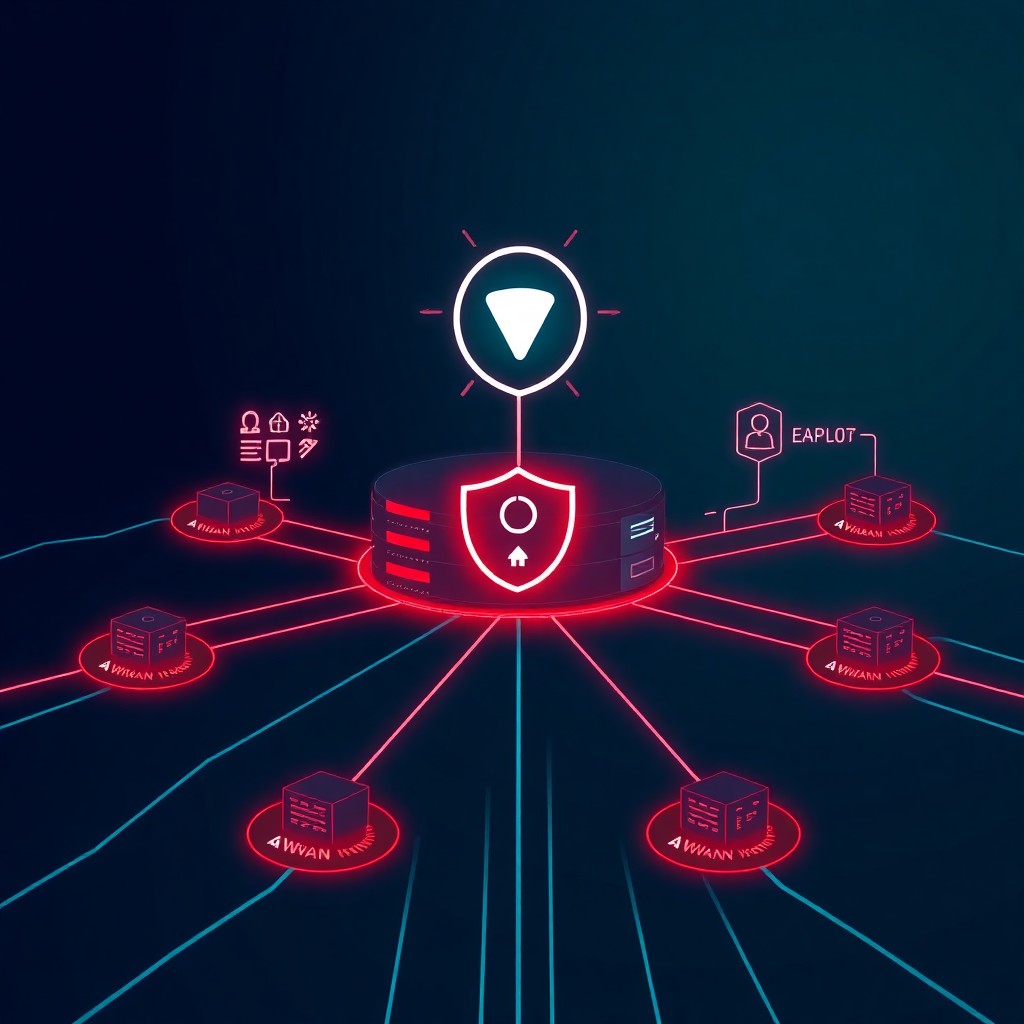
Modular Architecture: Rather than a monolithic codebase, the framework consists of a lightweight core loader and multiple capability modules loaded dynamically based on operator requirements. Observed modules include:
// Core modules identified:
- FileSystemModule (file operations)
- CredentialHarvesterModule (LSASS dumping, registry extraction)
- NetworkScannerModule (internal reconnaissance)
- ProxyModule (tunneling for lateral movement)
- PersistenceModule (scheduled tasks, service manipulation)
Obfuscation Layers: The web shell employs multiple obfuscation techniques including control flow flattening, string encryption, and dynamic method resolution. Analysis reveals the use of commercial-grade obfuscators combined with custom protection schemes.
Authentication Mechanism: Access requires multi-stage authentication involving a cryptographic handshake that verifies operator identity before exposing any functionality. Failed authentication attempts result in the web shell responding identically to legitimate HTTP requests, providing no indication of compromise.
Memory-Resident Operation: Critical components operate entirely in memory without writing artifacts to disk after initial deployment. The framework leverages .NET reflection and dynamic compilation to execute code without traditional file-based indicators.
Covert Communication: C2 traffic masquerades as legitimate HTTP/HTTPS requests, with payloads hidden in HTTP headers, cookies, and POST parameters designed to blend with normal application traffic patterns.
Impact & Risk Assessment
The OP-512 campaign poses significant risk across multiple dimensions:
Confidentiality Impact: Organizations compromised by this web shell face complete data exposure. The credential harvesting capabilities enable adversaries to collect authentication tokens, passwords, and access keys. File system access provides unrestricted data exfiltration capabilities.
Integrity Risk: The framework includes file manipulation capabilities that could enable adversaries to modify application code, databases, or configuration files, potentially introducing backdoors or altering business logic.
Availability Concerns: While not observed in current campaigns, the framework’s architecture could easily support destructive actions. The proxy module enables attackers to leverage compromised servers as infrastructure for additional attacks.
Lateral Movement: Compromised IIS servers often reside in DMZ networks or have privileged network access. The built-in proxy and scanning capabilities enable adversaries to pivot deeper into internal networks, expanding compromise scope.
Attribution Challenges: The per-victim cryptographic uniqueness significantly complicates incident response and threat intelligence sharing, as organizations cannot easily compare indicators across incidents.
Detection Difficulty: The framework’s stealth characteristics, including its ability to masquerade as legitimate traffic and operate memory-resident, challenge traditional security controls and extend dwell time.
Industries at elevated risk include technology and telecommunications providers, manufacturing firms with valuable intellectual property, government contractors, and critical infrastructure operators—sectors historically targeted by Chinese state-sponsored actors.
Vendor Response
Microsoft has been notified of the OP-512 campaign and the associated web shell framework. The company has released updated detection signatures for Microsoft Defender and Azure Sentinel, though the cryptographic uniqueness of each deployment limits signature effectiveness.
Security vendors have begun incorporating behavioral detection rules and heuristics designed to identify the framework’s operational characteristics rather than specific file signatures. Managed detection and response (MDR) providers have updated threat hunting playbooks to include OP-512 indicators and TTPs.
No specific IIS patches address this threat, as the web shell typically gains initial access through separate vulnerabilities, compromised credentials, or supply chain vectors rather than IIS-specific exploits. However, organizations should ensure all IIS servers and associated applications are current with security updates to limit initial access vectors.
Mitigations & Workarounds
Organizations can implement several defensive measures to reduce risk from OP-512 and similar web shell threats:
Application Whitelisting: Implement strict application control policies that prevent unauthorized DLLs and executables from loading in IIS worker processes:
# Example AppLocker rule for IIS
New-AppLockerPolicy -RuleType Publisher -User Everyone `
  -Path "C:\Windows\System32\inetsrv\*" -Action Allow
File Integrity Monitoring: Deploy FIM solutions that alert on any changes to web application directories, particularly .aspx, .ashx, and .asmx files:
# Example using OSSEC

  C:\inetpub\wwwroot
Network Segmentation: Isolate IIS servers in dedicated network segments with strict ingress and egress filtering. Limit outbound connections to only required destinations.
Runtime Application Self-Protection: Consider RASP solutions that monitor application behavior at runtime and can detect malicious code execution within web server processes.
Credential Protection: Enable Credential Guard and implement least-privilege access models to limit credential harvesting effectiveness.
Detection & Monitoring
Security teams should implement multiple detection layers:
Process Monitoring: Alert on unusual child processes spawned by IIS worker processes (w3wp.exe):
Parent: w3wp.exe
Children: powershell.exe, cmd.exe, net.exe, nltest.exe, whoami.exe
Network Anomalies: Monitor for unusual outbound connections from IIS servers, particularly to IP addresses without legitimate business justification. Look for HTTP/HTTPS traffic with anomalous header patterns or payload sizes.
Memory Analysis: Conduct periodic memory forensics on IIS worker processes to identify injected code or unexpected loaded modules:
# Memory dump for analysis
Get-Process w3wp | ForEach-Object {
  procdump.exe -ma $_.Id
}
Authentication Patterns: Establish baselines for web application authentication patterns and alert on deviations, particularly requests with unusual header combinations or cookie values.
Log Analysis: Correlate IIS logs with authentication logs and file access logs. Look for:
- Requests to unusual file paths
- Time-based anomalies (access during non-business hours)
- Geographic inconsistencies
- Successful authentication followed immediately by administrative actions
Best Practices
Organizations should adopt comprehensive security practices for IIS environments:
Regular Security Assessments: Conduct periodic penetration testing and web application security assessments focusing on web shell detection and server hardening.
Patch Management: Maintain rigorous patch management for IIS, web applications, and all server components. Many web shell deployments follow exploitation of known vulnerabilities.
Access Controls: Implement strict access controls for IIS server administration. Require multi-factor authentication for all administrative access and limit management network access to jump boxes.
Change Management: Enforce formal change management processes for all web application updates. Require code reviews and integrity verification before deployment.
Security Logging: Enable comprehensive logging at the IIS, application, and operating system levels. Forward logs to a centralized SIEM for correlation and long-term retention.
Incident Response Planning: Develop and test incident response playbooks specifically for web shell compromises, including forensic collection procedures and containment strategies.
Threat Intelligence Integration: Subscribe to threat intelligence feeds covering Chinese state-sponsored activity and web shell indicators. Integrate these feeds into detection platforms.
Key Takeaways
- OP-512 represents a sophisticated China-linked threat cluster deploying advanced web shell capabilities against IIS infrastructure
- The framework’s cryptographic uniqueness per victim significantly challenges traditional detection approaches
- Organizations running IIS servers face espionage risk, particularly in sectors historically targeted by Chinese state-sponsored actors
- Effective defense requires layered security controls including behavioral detection, network segmentation, and comprehensive monitoring
- The campaign underscores the continuing evolution of web shell technology and the persistence of server-side threats
- Detection must focus on behavioral indicators and operational patterns rather than relying solely on signature-based approaches
References
- Microsoft IIS Security Best Practices: https://docs.microsoft.com/en-us/iis/security/
- MITRE ATT&CK – Server Software Component: Web Shell (T1505.003)
- CISA Web Shell Detection and Prevention Guidance
- NIST SP 800-123 Guide to General Server Security
- OWASP Web Shell Detection Handbook
Stay updated at https://cydhaal.com — Your Daily Dose of Cyber Intelligence.
📧 Subscribe to our newsletter at https://cydhaal.com/newsletter/